
Showing Posts From
Ampacity
Ampacity content focuses on choosing conductors that can carry load current under real installation conditions — ambient temperature, bundling, and insulation ratings included.
Pair these articles with ampacity and wire-size calculators when preparing feeder or branch-circuit estimates.
Guides in this tag
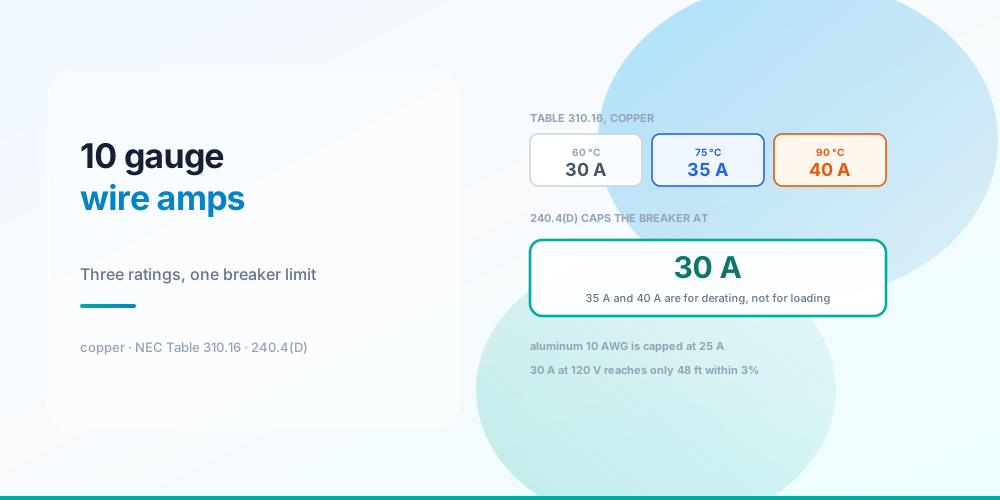
- 10 Gauge Wire Amps: Ratings, Breaker Match, and Max Run Length
10 AWG copper is rated 30, 35 and 40 A in the three columns of Table 310.16. You may load it to 30 A - and at 30 A on 120 V it only reaches 48 feet before voltage drop stops you.
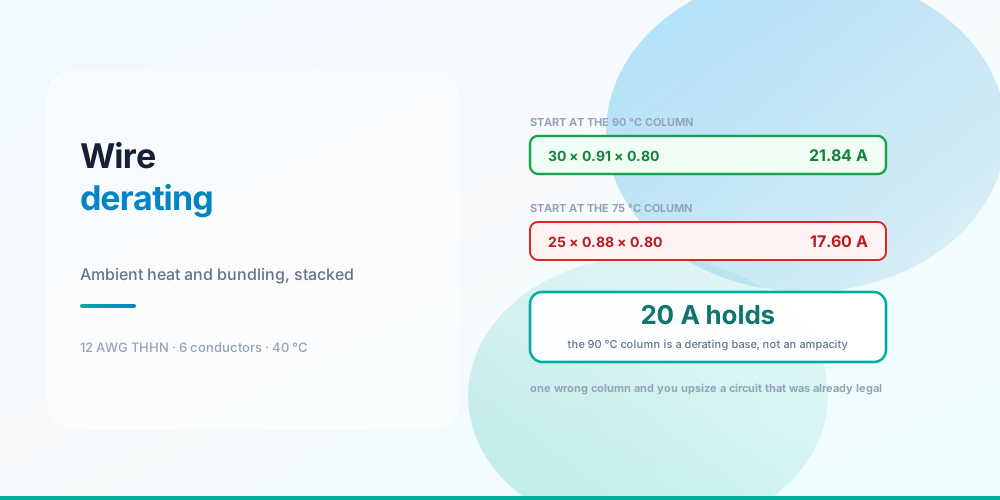
- Wire Derating Explained: Ambient Temperature and Conductor Bundling
Six 12 AWG conductors at 40 °C derate to 21.84 A and hold a 20 A breaker. Start from the wrong temperature column and you get 17.60 A - and upsize a circuit that was already legal.
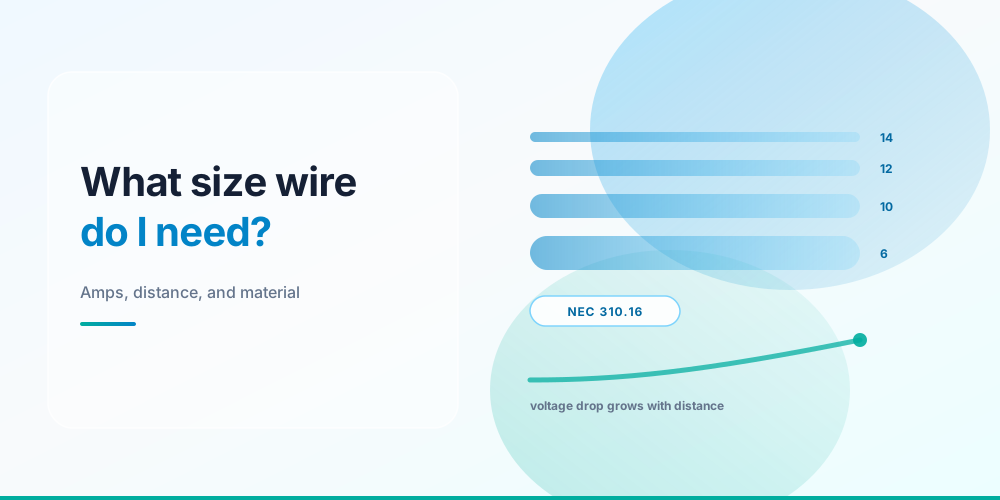
- What Size Wire Do I Need? AWG by Amps, Distance, and Material
How to size wire the way the NEC does: run the ampacity test against Table 310.16, run the voltage drop test against the length, and take whichever answer is larger. Includes an amps-to-AWG chart for copper and aluminum.
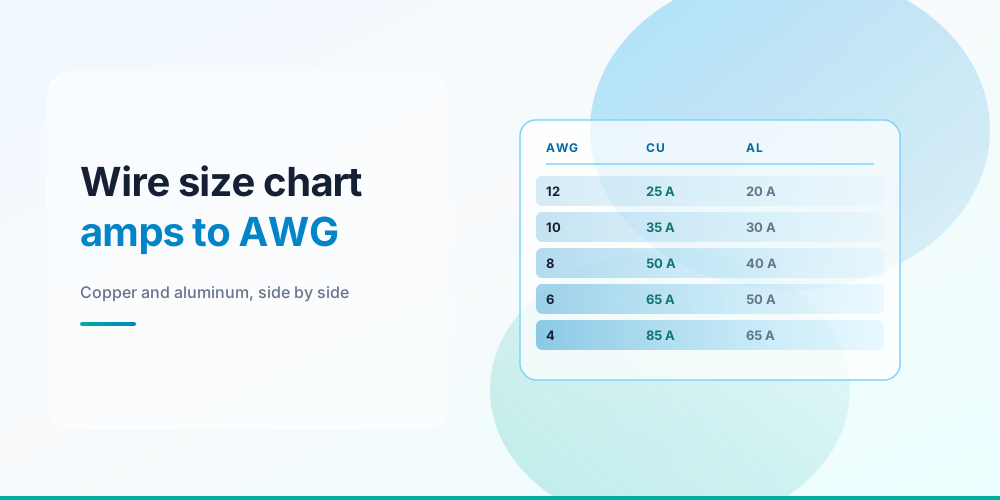
- Wire Size Chart: Amps to AWG for Copper and Aluminum
The full NEC Table 310.16 wire size chart - copper and aluminum ampacity at 60, 75, and 90 °C, which column actually applies to your job, and the 240.4(D) breaker caps that override it.
- 12 Gauge Wire Amps: 20 A, 25 A, or 30 A - and When Each Applies
12 AWG copper is listed at 20, 25, and 30 amps depending on the column - and all three are correct in different contexts. Which one is your breaker, which one is the derating base, and why 12 gauge never goes on a 30-amp breaker.
Related resources
- 04 Aug, 2026
10 Gauge Wire Amps: Ratings, Breaker Match, and Max Run Length
10 AWG copper is rated 30, 35 and 40 A in the three columns of Table 310.16. You may load it to 30 A - and at 30 A on 120 V it only reaches 48 feet before voltage drop stops you.
- 04 Aug, 2026
Wire Derating Explained: Ambient Temperature and Conductor Bundling
Six 12 AWG conductors at 40 °C derate to 21.84 A and hold a 20 A breaker. Start from the wrong temperature column and you get 17.60 A - and upsize a circuit that was already legal.
- 03 Aug, 2026
What Size Wire Do I Need? AWG by Amps, Distance, and Material
How to size wire the way the NEC does: run the ampacity test against Table 310.16, run the voltage drop test against the length, and take whichever answer is larger. Includes an amps-to-AWG chart for copper and aluminum.
- 03 Aug, 2026
Wire Size Chart: Amps to AWG for Copper and Aluminum
The full NEC Table 310.16 wire size chart - copper and aluminum ampacity at 60, 75, and 90 °C, which column actually applies to your job, and the 240.4(D) breaker caps that override it.

- 03 Aug, 2026
12 Gauge Wire Amps: 20 A, 25 A, or 30 A - and When Each Applies
12 AWG copper is listed at 20, 25, and 30 amps depending on the column - and all three are correct in different contexts. Which one is your breaker, which one is the derating base, and why 12 gauge never goes on a 30-amp breaker.
Frequently asked questions
Common questions about Ampacity guides on the TradesQuote blog.
What will I find under Ampacity?+
This tag lists 5 published guides tagged or categorized as Ampacity. Topics typically include sizing, cost estimating, diagnostics, and practical contractor workflows tied to that subject.
Are these articles a substitute for code or engineered design?+
No. TradesQuote guides explain concepts and estimating shortcuts so you can work faster and communicate clearly. Always follow applicable codes, manufacturer instructions, and professional engineering requirements for the job.
How do these pages relate to TradesQuote tools?+
Many articles link to free HVAC or electrical calculators and to TradesQuote estimating features. Use the guides to understand the topic, then use the tools to produce numbers for proposals and field checks.