
Showing Posts From
Basic electrical theory
Basic electrical theory posts refresh the fundamentals that support safer sizing and troubleshooting — relationships between voltage, current, resistance, and power.
They are useful for apprentices and for estimators who want clearer intuition behind calculator outputs.
Guides in this tag
- How to Use a Multimeter: Volts in Parallel, Amps in Series
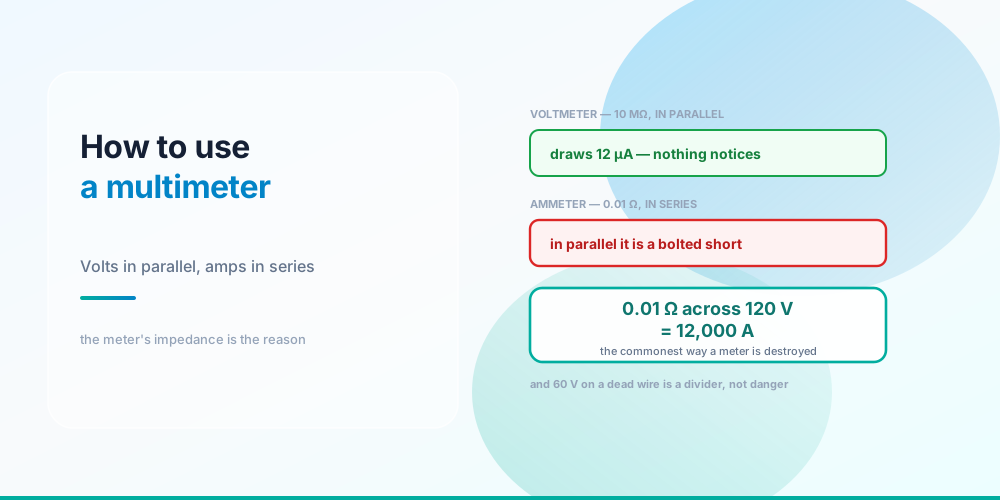
A voltmeter draws 12 µA. An ammeter's shunt across 120 V is a 12,000 A short. Why the meter's own impedance decides where it goes, and why 60 V on a dead wire is a divider, not danger.
- How a Circuit Breaker Works: Two Mechanisms in One Device
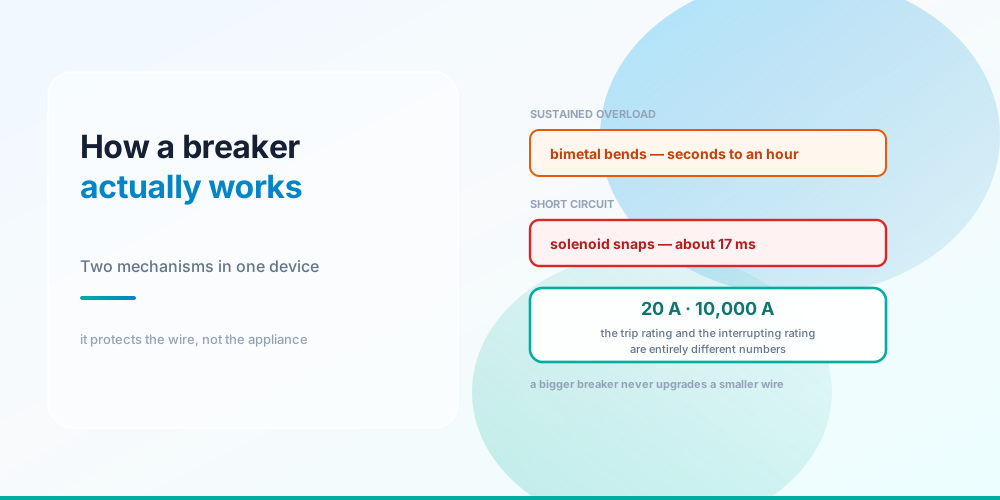
A bimetal strip handles overload over seconds to an hour; a solenoid clears a short in about 17 ms. Why a breaker protects the wire rather than the appliance, and why 20 A isn't its only rating.
- Split-Phase 120/240 V: Where Two Voltages Come From One Winding
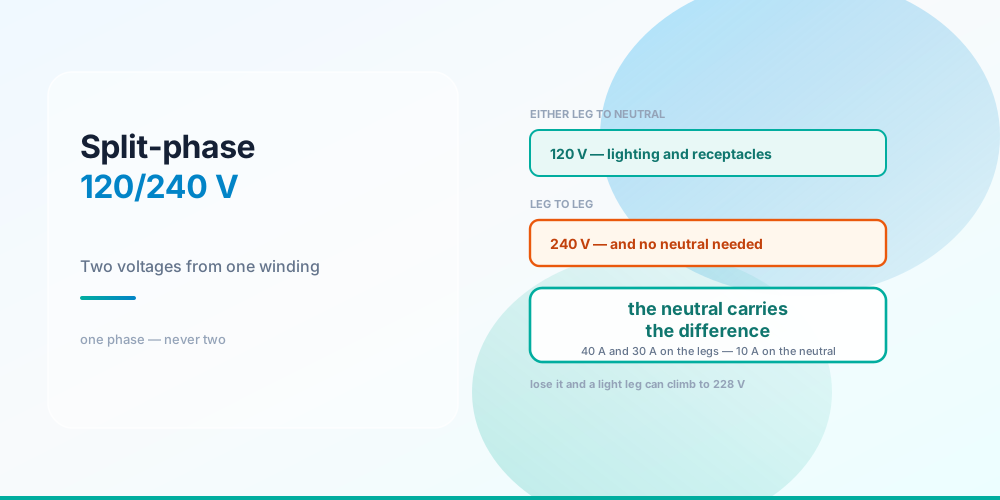
One centre-tapped transformer gives a house both voltages. Why the neutral carries the difference, why 240 V loads need no neutral, and why an open neutral pushes a light leg to 228 V.
- Hot, Neutral and Ground: What Each Wire Actually Does
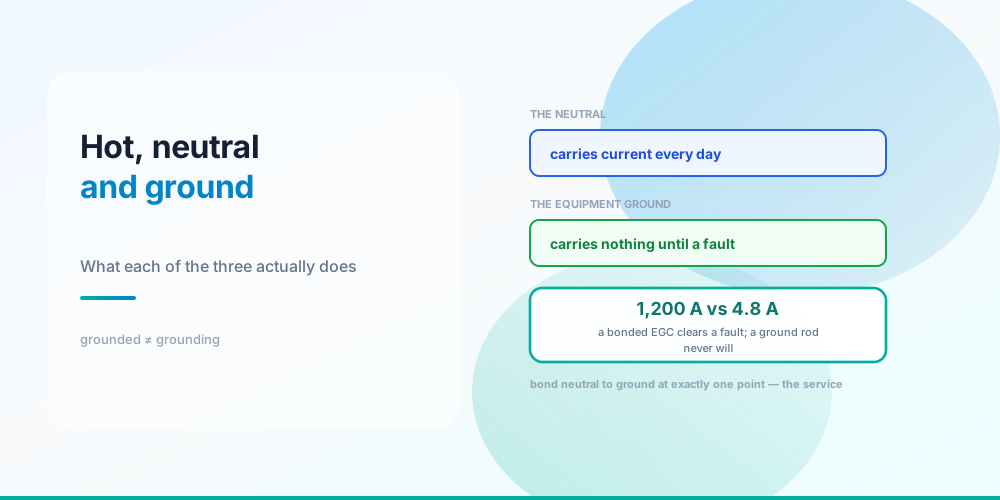
The neutral carries current every second the load runs. The ground carries none until something fails. Both connect to earth - which is exactly why swapping them looks fine and isn't.
- AC vs DC: What Alternating Current Actually Means
Your 120 V outlet peaks at 169.7 V and reverses 120 times a second. What RMS really measures, why the grid is AC, and why DC arcs are the dangerous ones.
- Series vs Parallel Circuits: Why Every Building Is Wired in Parallel
Three 40 Ω elements draw 120 W in series and 1,080 W in parallel - nine times the power from identical parts. The rule that separates them, and the one series circuit you never wanted.
Related resources
- 06 Aug, 2026
How to Use a Multimeter: Volts in Parallel, Amps in Series
A voltmeter draws 12 µA. An ammeter's shunt across 120 V is a 12,000 A short. Why the meter's own impedance decides where it goes, and why 60 V on a dead wire is a divider, not danger.
- 06 Aug, 2026
How a Circuit Breaker Works: Two Mechanisms in One Device
A bimetal strip handles overload over seconds to an hour; a solenoid clears a short in about 17 ms. Why a breaker protects the wire rather than the appliance, and why 20 A isn't its only rating.
- 06 Aug, 2026
Split-Phase 120/240 V: Where Two Voltages Come From One Winding
One centre-tapped transformer gives a house both voltages. Why the neutral carries the difference, why 240 V loads need no neutral, and why an open neutral pushes a light leg to 228 V.
- 06 Aug, 2026
Hot, Neutral and Ground: What Each Wire Actually Does
The neutral carries current every second the load runs. The ground carries none until something fails. Both connect to earth - which is exactly why swapping them looks fine and isn't.
- 06 Aug, 2026
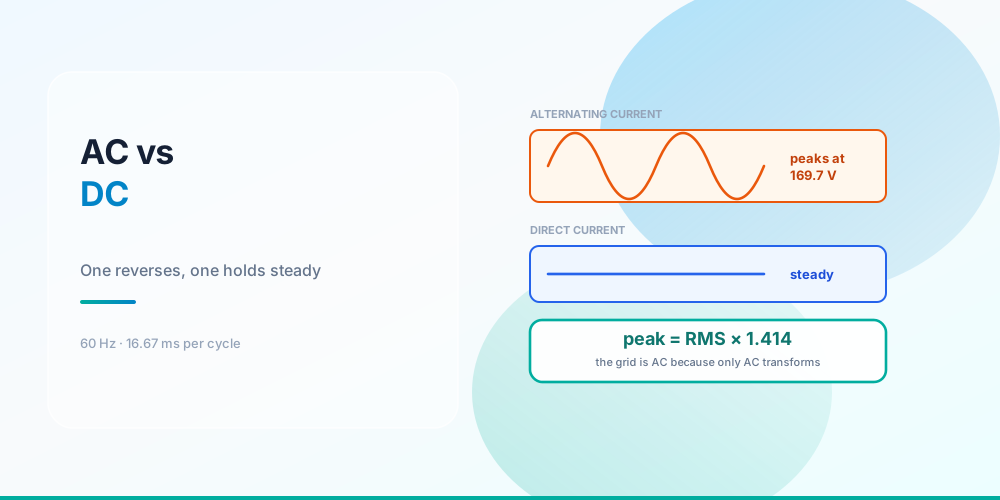
AC vs DC: What Alternating Current Actually Means
Your 120 V outlet peaks at 169.7 V and reverses 120 times a second. What RMS really measures, why the grid is AC, and why DC arcs are the dangerous ones.
- 06 Aug, 2026
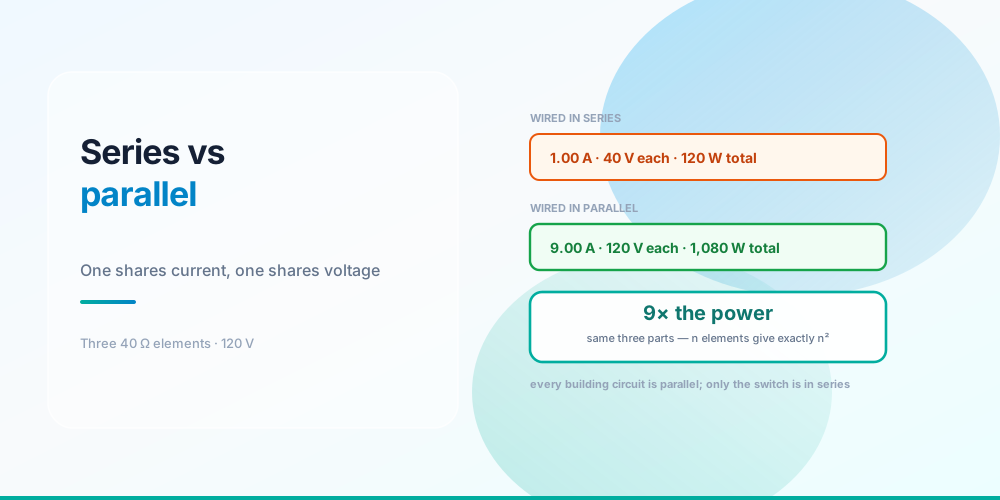
Series vs Parallel Circuits: Why Every Building Is Wired in Parallel
Three 40 Ω elements draw 120 W in series and 1,080 W in parallel - nine times the power from identical parts. The rule that separates them, and the one series circuit you never wanted.
Frequently asked questions
Common questions about Basic electrical theory guides on the TradesQuote blog.
What will I find under Basic electrical theory?+
This tag lists 6 published guides tagged or categorized as Basic electrical theory. Topics typically include sizing, cost estimating, diagnostics, and practical contractor workflows tied to that subject.
Are these articles a substitute for code or engineered design?+
No. TradesQuote guides explain concepts and estimating shortcuts so you can work faster and communicate clearly. Always follow applicable codes, manufacturer instructions, and professional engineering requirements for the job.
How do these pages relate to TradesQuote tools?+
Many articles link to free HVAC or electrical calculators and to TradesQuote estimating features. Use the guides to understand the topic, then use the tools to produce numbers for proposals and field checks.