
Heat Pump Water Heaters: Great Efficiency, Slow Recovery
- 04 Sep, 2026
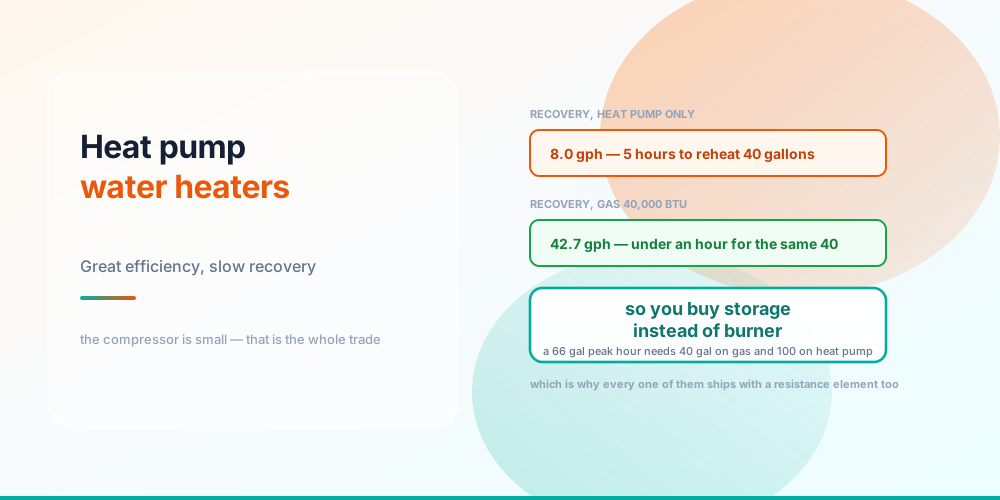
A heat pump water heater is genuinely the most efficient way to heat domestic water, and the reason it works is also the reason it needs sizing differently: it moves heat rather than making it, using a very small compressor.
Efficiency is about the energy you buy. Recovery is about the heat delivered per hour. Those are different quantities and a heat pump is excellent at one and poor at the other.
The trade, in gallons per hour
The compressor is small — that is the whole trade
At a 90 °F rise:
- Heat pump only, COP 3.5 — 8.0 gph — 301 minutes to reheat 40 gallons
- Electric resistance, 4,500 W — 20.5 gph — 117 minutes
- Gas, 40,000 BTU at 80% — 42.7 gph — 56 minutes
Resistance recovers 2.6 times as fast as heat-pump-only, and gas over five times as fast. A heat pump uses roughly a third of the electricity per gallon, and takes five hours to do what a gas burner does in under one.
That is not a defect. It is the direct consequence of a compressor small enough to be efficient, and it is why every real heat pump water heater ships with a resistance element and a “hybrid” mode that quietly uses it.
So you buy storage instead
Slow recovery is paid for in storage
That peak hour is 66 gallons. To cover it:
- Gas at 40,000 BTU — a 40 gallon tank
- Electric resistance — a 75 gallon tank
- Heat pump only — a 100 gallon tank
Same house, same demand, tanks two and a half times apart. First-hour rating is 70% of the stored volume plus one hour of recovery, so when recovery is small the storage term has to carry almost all of it.
This is the single most useful thing to know before buying one: do not replace a 50 gallon gas heater with a 50 gallon heat pump heater and expect the same experience. Size on first-hour rating, not on gallons — the method is in what size water heater do I need and the Water Heater Size Calculator runs it.
Hybrid mode is the practical answer for most households. The heat pump handles ordinary demand at high efficiency and the element fires when the tank falls behind. That is a real efficiency compromise — resistance backup is exactly the expensive heat you were trying to avoid — but it is far better than a cold shower, and how often it engages depends almost entirely on whether the tank was sized generously.
The room decides more than the household does
The room decides this more than the household does
Air volume. It extracts heat from room air, so it needs a supply of it — manufacturers typically specify a minimum space volume or ducting. A sealed utility closet starves it and it falls back to resistance permanently, which is the worst of both worlds.
A dedicated circuit — around $450, and it is frequently a panel problem rather than a circuit problem.
A condensate path — around $200. It dehumidifies as it works, and that water has to go somewhere.
It cools the space it sits in. Excellent in a garage in Texas. Actively unhelpful in a heated basement in Maine, where you pay to heat the room and then pay again for the heat the water heater removed.
It makes noise. A compressor and a fan. Not a silent appliance, and that matters next to a bedroom.
Headroom. Taller than the tank it replaces, because the unit sits on top of it.
Installed, that comes to roughly $3,895 against $2,095 for a 50 gallon gas swap — a gap wider than the appliance prices alone, and the full breakdown is in what a water heater costs to replace.
Where they are excellent
Warm climates, where the incoming water needs a smaller rise and the space cooling is a benefit.
Garages and unconditioned basements, where the air is free and nobody minds the noise.
Moderate, predictable demand — the household whose hot water use is steady rather than concentrated.
Where electricity is expensive, because the saving is proportional to the rate.
With a generous tank. A 66 gallon peak hour needs a 100 gallon heat pump tank, and a household that buys 80 gallons is buying resistance mode.
Where they are a poor fit
A sealed closet with no air. A finished basement you pay to heat. A household with concentrated simultaneous demand. And any installation where nobody was told to size on first-hour rating, which is how most disappointing ones happen.
Frequently asked questions
What size heat pump water heater do I need?
Larger than the tank you are replacing. A 66 gallon peak hour that a 40 gallon gas heater covers needs a 100 gallon heat pump tank in heat-pump-only mode, because recovery of about 8 gph contributes very little to the first-hour rating. Size on first-hour rating, never on gallons.
Why is heat pump water heater recovery so slow?
Because the compressor is small — typically around 500 W, delivering roughly 5,971 BTU/hr at a COP of 3.5. A 4,500 W resistance element delivers 15,354 BTU/hr and a 40,000 BTU gas burner delivers 32,000. Efficiency is about energy bought; recovery is about heat delivered per hour.
How long does a heat pump water heater take to reheat?
At a 90 °F rise, about 301 minutes to reheat 40 gallons in heat-pump-only mode, against 117 minutes for electric resistance and 56 for a 40,000 BTU gas burner. Hybrid mode shortens that considerably by bringing the element in.
What is hybrid mode and should I use it?
A mode where the heat pump handles normal demand and the resistance element fires when the tank falls behind. For most households, yes — it is the practical setting. It is a genuine efficiency compromise, and how often the element engages depends mostly on whether the tank was sized generously.
Can a heat pump water heater go in a closet?
Usually not without ducting. It extracts heat from room air and manufacturers specify a minimum space volume, so a sealed closet starves it and it falls back to resistance permanently — paying the heat pump price for resistance performance. Check the manufacturer’s air requirement before anything else.
Does a heat pump water heater cool the room?
Yes, and it dehumidifies it. That is a genuine benefit in a garage in a warm climate and a genuine cost in a heated basement, where you pay to heat the space and then pay again for the heat the water heater removes.
What does a heat pump water heater cost to install?
Around $3,895 fully installed against about $2,095 for a like-for-like 50 gallon gas swap. The gap is wider than the appliance prices because it also needs a dedicated electrical circuit (about $450) and a condensate drain (about $200) that a gas tank does not.
Are heat pump water heaters worth it?
They have the strongest energy case of any water heater and the worst installation constraints. They suit warm climates, unconditioned spaces, steady demand and expensive electricity. They suit sealed closets, heated basements and spiky simultaneous demand badly — and a household that undersizes one is buying resistance mode at a heat pump price.
Sources & standards: Recovery is computed as delivered BTU per hour divided by 8.33 lb per gallon and the temperature rise, at the 90 °F rise this site’s water heater size calculator uses. First-hour rating follows the US DOE method — 70% of stored volume treated as usable plus one hour of recovery — and peak-hour demand uses the DOE first-hour-rating worksheet’s per-use gallon figures. Compressor wattage and COP are representative figures for a residential unit, not a specific product: real heat pump water heaters vary in compressor size, COP falls as ambient air cools, and published first-hour ratings are measured under test conditions that may not match your installation. Check the specific model’s submittal data and its minimum space volume requirement. Cost figures are US national-average assumptions for 2026 carrying a plus or minus 18% band, not code and not quotes. A dedicated circuit and any panel work fall under the electrical code and a licensed electrician.