
Showing Posts From
Plumbing
This plumbing category collects contractor-focused guides built on the International Plumbing Code — supply pipe sizing against both velocity and pressure, drainage fixture units into drain size, the fall a run actually needs, vent and trap arm limits, water heater selection, and what a repipe really costs.
Every guide names the table or section behind its answer and shows the working, because the IPC is a model code: roughly fifteen states enforce the UPC or a derivative such as California's CPC instead, and local amendments override either one. Knowing which rule governed an answer is what lets you defend it to an inspector.
Pair the reading with the free plumbing calculator hub when you need the numbers rather than the reasoning — fixture units, pipe size, slope, vent size, water heater sizing, and job pricing all have interactive tools.
Guides in this category
- Plumbing Formulas in Google Sheets: Stop Filling Down
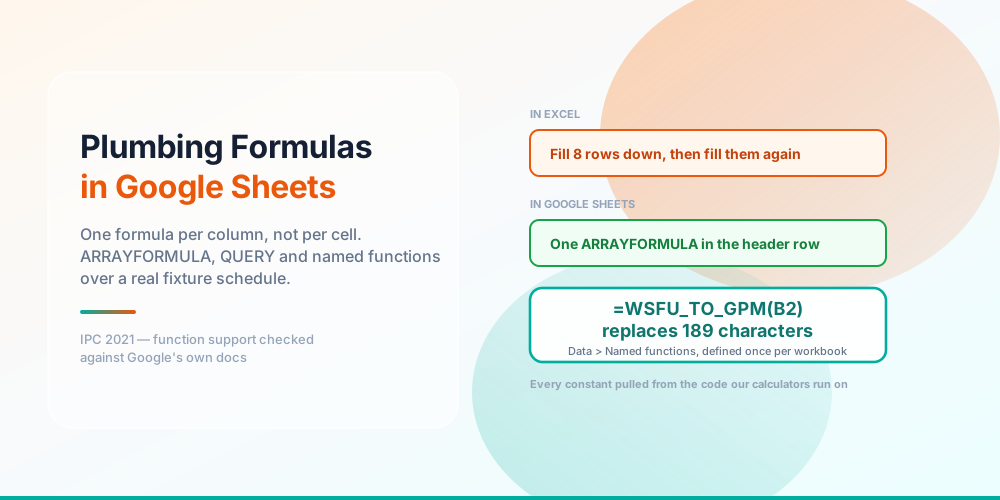
Every plumbing formula pastes into Google Sheets unchanged, so the interesting question is what you would build differently. One formula per column instead of one per cell, QUERY instead of a pivot table, and a 189-character interpolation collapsing to =WSFU_TO_GPM(B2).
- Drain Cleaning Cost: What You Are Actually Paying For
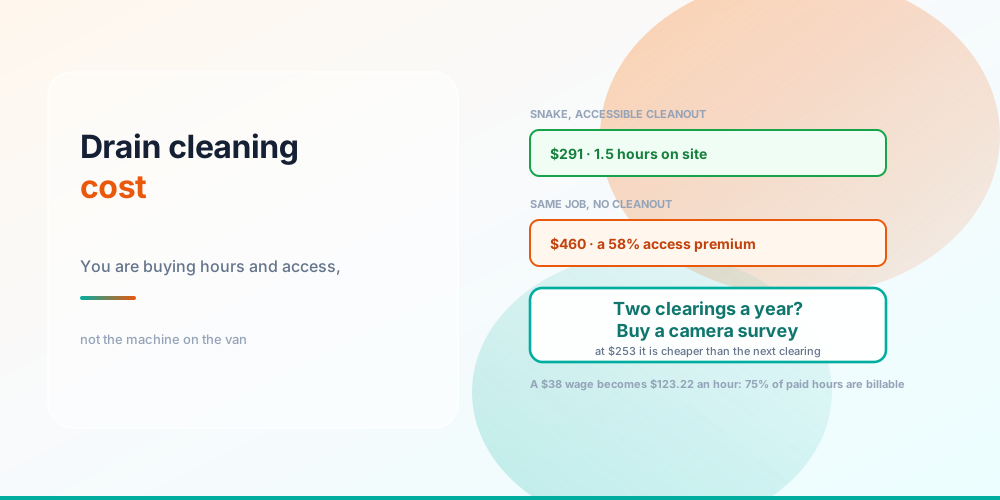
Snaking through an accessible cleanout prices at $291. The same work off a roof vent is $460 — a 58% premium bought entirely by access. And two clearings a year means buy a camera, not a third clearing.
- Sewer Line Replacement Cost: How the Number Is Built
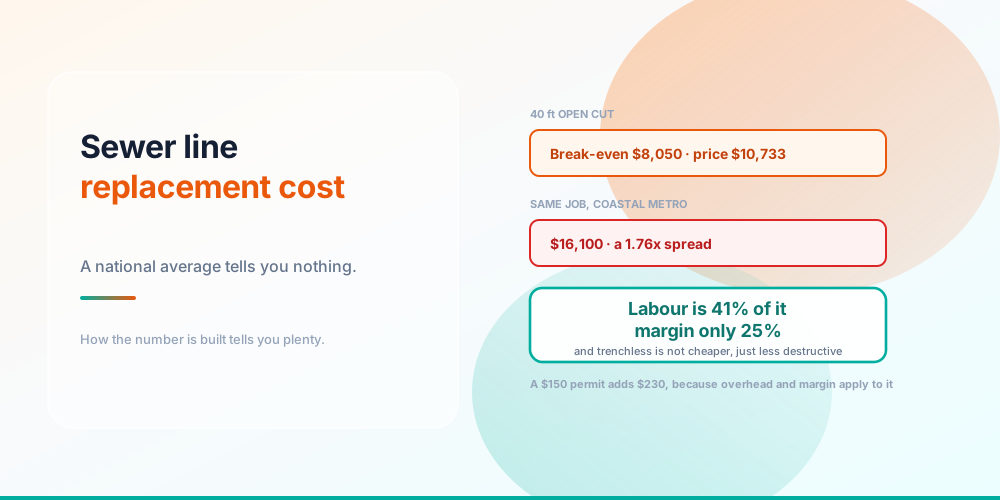
A 40-foot open-cut replacement breaks even at $8,050 and prices at $10,733 — labour is 41% of it and margin only 25%. The regional spread is wider than the difference between a 40 and a 70 foot run.
- Sewer Smell in the House: Where It Comes From, In Order
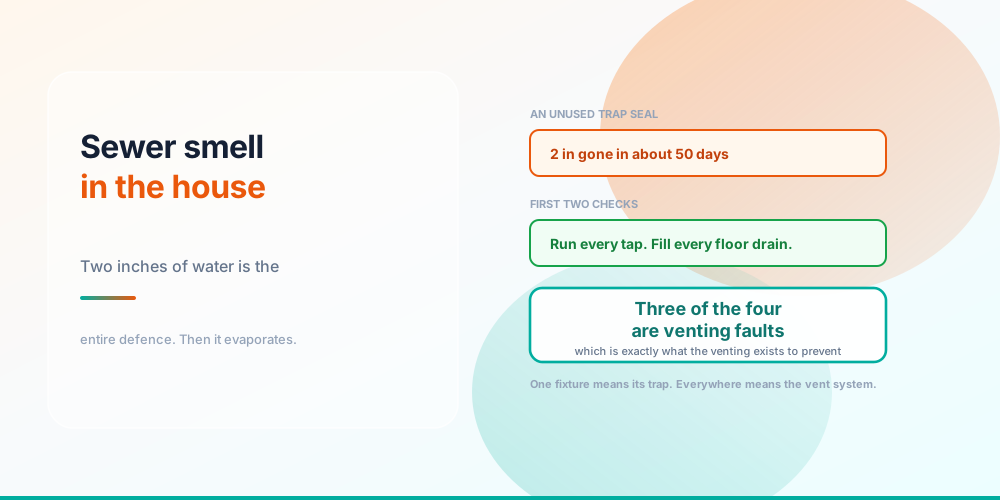
A trap seal is two inches of water and it evaporates away in about fifty days. Which is why the smell in the guest bathroom arrives after a holiday — and why the first two things to check cost nothing.
- How Many GPM Does a Shower Use? And How Much of It Is Hot
2.5 gpm is the federal maximum, so a ten-minute shower is 25 gallons. But only 1.528 gpm of it is hot — and that is already twice what a 40,000 BTU heater can make.
- What Size Sump Pump Do I Need? Head First, Horsepower Second
Thirty gpm up twelve feet through 40 ft of 1-1/2 inch PVC is 14.4 feet of total dynamic head — of which twelve is the lift. Reduce the discharge to 1-inch and the same job needs 30.7.
Related resources
- 07 Sep, 2026
Plumbing Formulas in Google Sheets: Stop Filling Down
Every plumbing formula pastes into Google Sheets unchanged, so the interesting question is what you would build differently. One formula per column instead of one per cell, QUERY instead of a pivot table, and a 189-character interpolation collapsing to =WSFU_TO_GPM(B2).
- 06 Sep, 2026
Drain Cleaning Cost: What You Are Actually Paying For
Snaking through an accessible cleanout prices at $291. The same work off a roof vent is $460 — a 58% premium bought entirely by access. And two clearings a year means buy a camera, not a third clearing.
- 06 Sep, 2026
Sewer Line Replacement Cost: How the Number Is Built
A 40-foot open-cut replacement breaks even at $8,050 and prices at $10,733 — labour is 41% of it and margin only 25%. The regional spread is wider than the difference between a 40 and a 70 foot run.
- 06 Sep, 2026
Sewer Smell in the House: Where It Comes From, In Order
A trap seal is two inches of water and it evaporates away in about fifty days. Which is why the smell in the guest bathroom arrives after a holiday — and why the first two things to check cost nothing.
- 06 Sep, 2026
How Many GPM Does a Shower Use? And How Much of It Is Hot
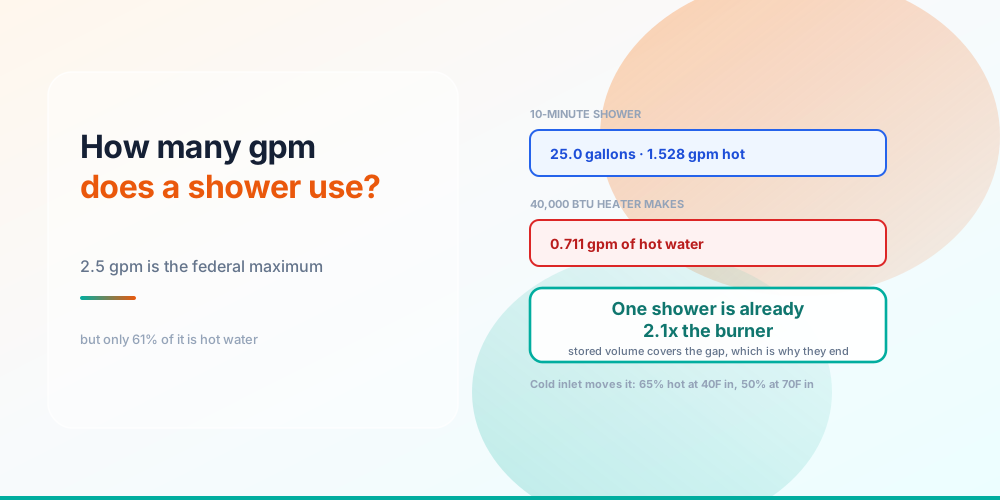
2.5 gpm is the federal maximum, so a ten-minute shower is 25 gallons. But only 1.528 gpm of it is hot — and that is already twice what a 40,000 BTU heater can make.
- 06 Sep, 2026
What Size Sump Pump Do I Need? Head First, Horsepower Second
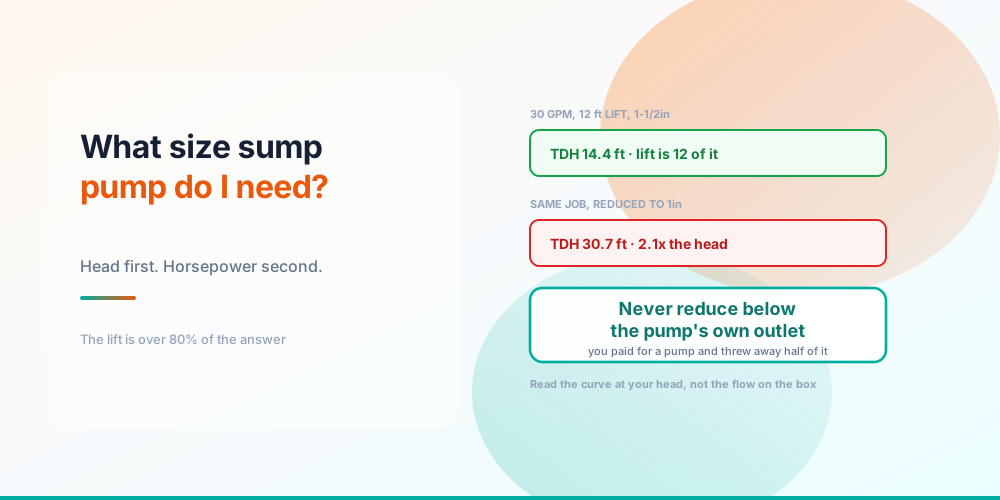
Thirty gpm up twelve feet through 40 ft of 1-1/2 inch PVC is 14.4 feet of total dynamic head — of which twelve is the lift. Reduce the discharge to 1-inch and the same job needs 30.7.
- 06 Sep, 2026
Plumbing Formulas in Excel: Which Ones Survive a Spreadsheet
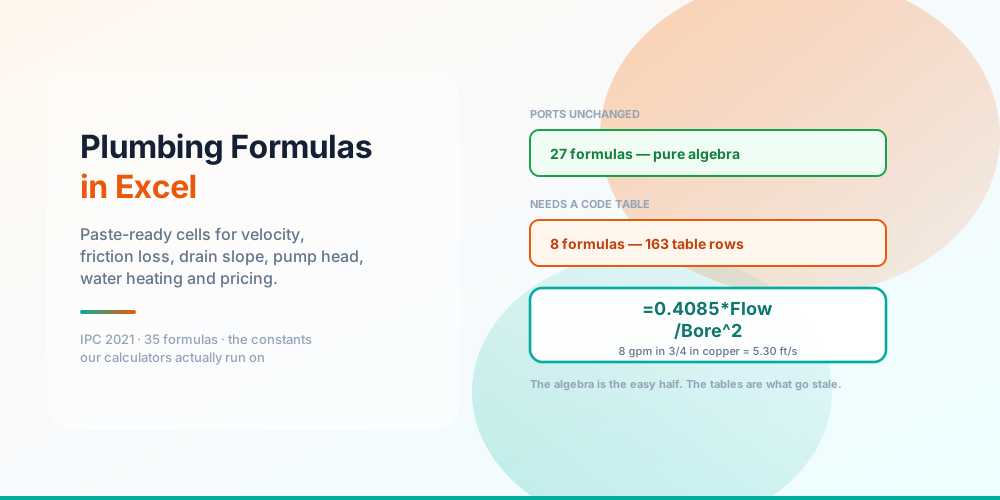
Twenty-seven of the thirty-five plumbing formulas paste into a cell unchanged. Eight are IPC code tables wearing a formula as a hat — and those are the ones that quietly go stale in your sheet.
- 06 Sep, 2026
Water Hammer: Why Pipes Bang, and What Actually Fixes It
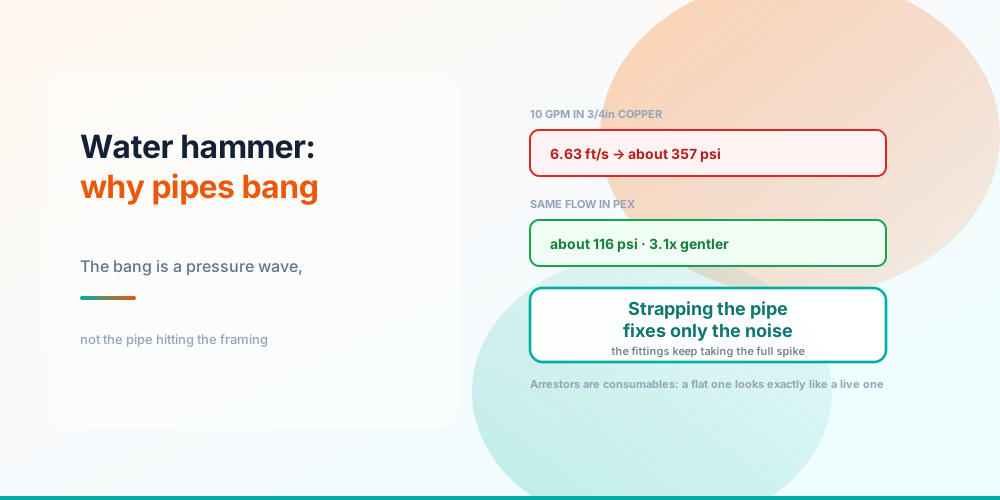
Slamming a valve at 10 gpm in 3/4-inch copper spikes the line to about 357 psi. The same flow in PEX gives 116. Strapping the pipe silences the bang and leaves the pressure untouched.
- 06 Sep, 2026
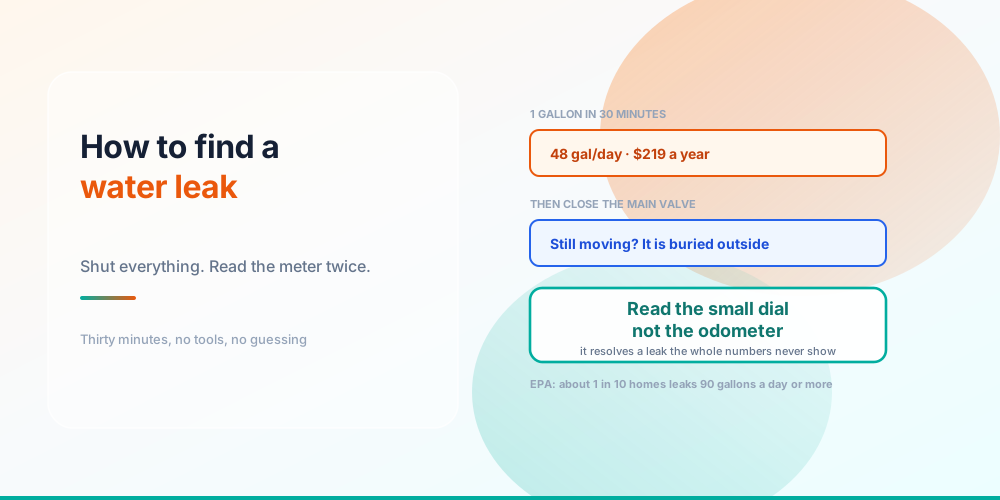
How to Find a Water Leak: The Meter Test, Step by Step
Shut everything, read the meter, wait thirty minutes. One gallon registered is 48 gallons a day and $219 a year — and closing the main valve tells you whether it is buried outside or inside the house.
- 06 Sep, 2026
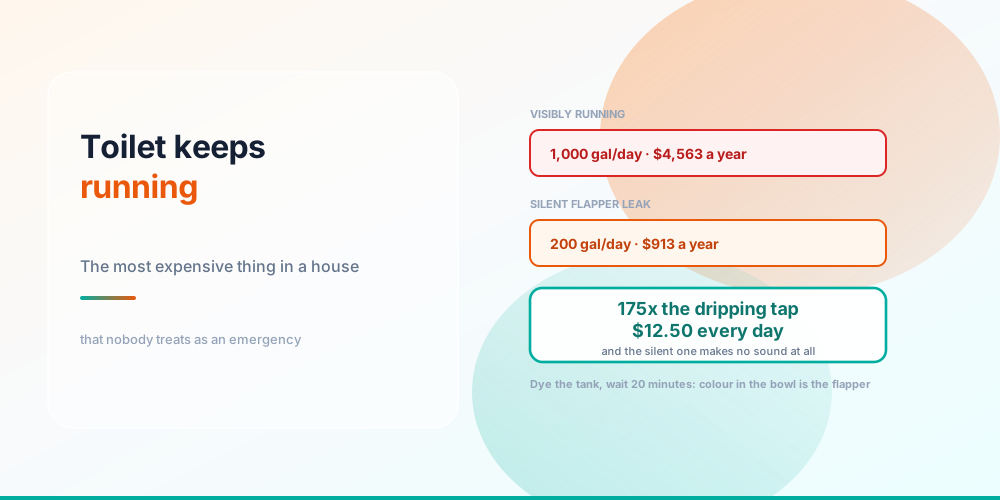
Toilet Keeps Running? What It Costs and How to Find the Cause
A visibly running toilet wastes 1,000 gallons a day — $4,563 a year on typical rates, 175 times the dripping tap you actually worry about. Here is the dye test that finds the cause in twenty minutes.
- 05 Sep, 2026
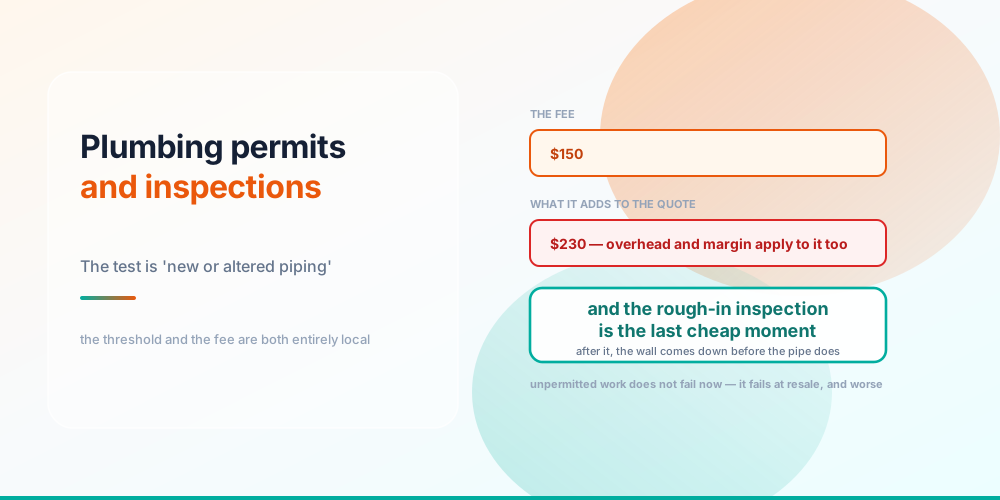
Plumbing Permits and Inspections: What Needs One and What It Costs
The test is usually 'new or altered piping'. And a permit is not a pass-through — a $150 fee adds about $230 to a quoted price, because overhead and margin apply to it like any other cost.
- 05 Sep, 2026
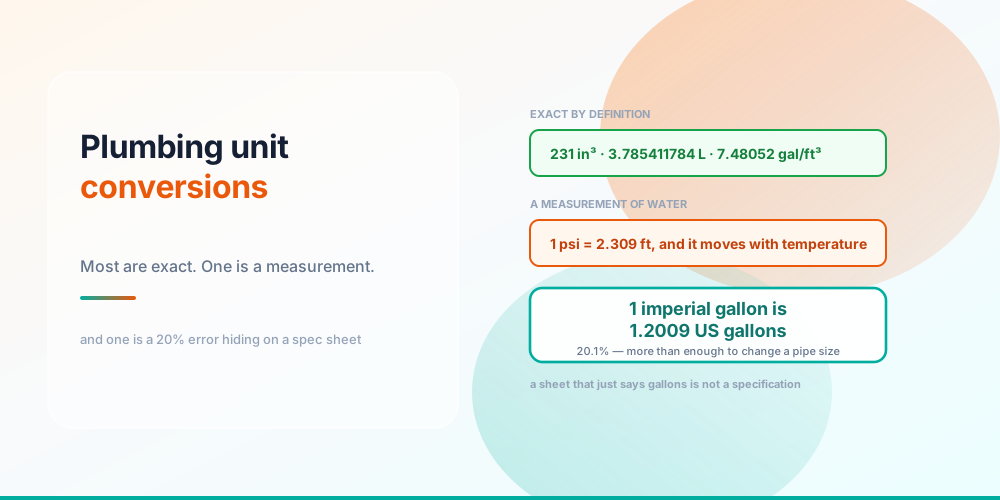
Plumbing Unit Conversions: GPM, LPM, PSI, Head — and the Imperial Gallon Trap
Most plumbing conversions are exact definitions. One is a measurement of water density, and one is a 20% error waiting on a spec sheet that only says 'gallons'.
- 05 Sep, 2026
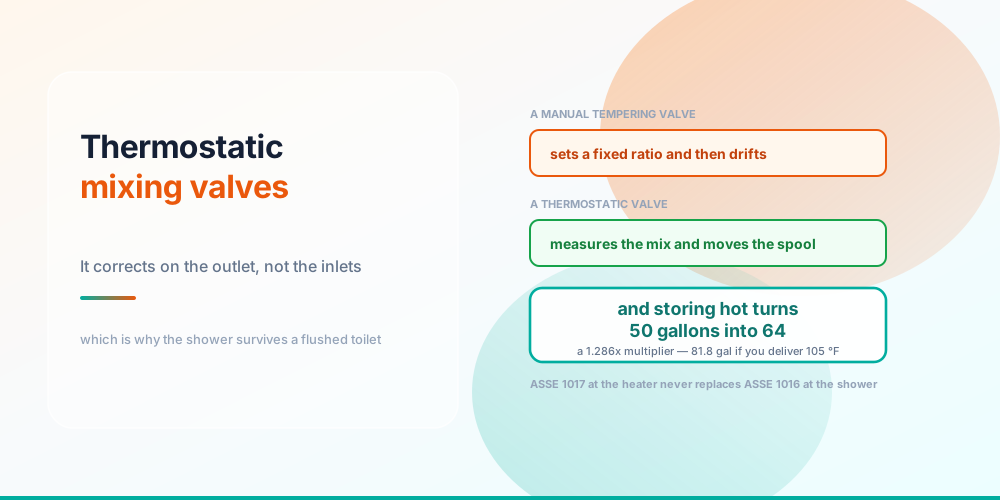
Thermostatic Mixing Valves: How Storing Hot Stretches a Tank
It corrects on the outlet, not the inlets — which is why it holds temperature when someone flushes a toilet. And it turns a 50 gallon tank into 64 gallons of usable water as a side effect.
- 05 Sep, 2026
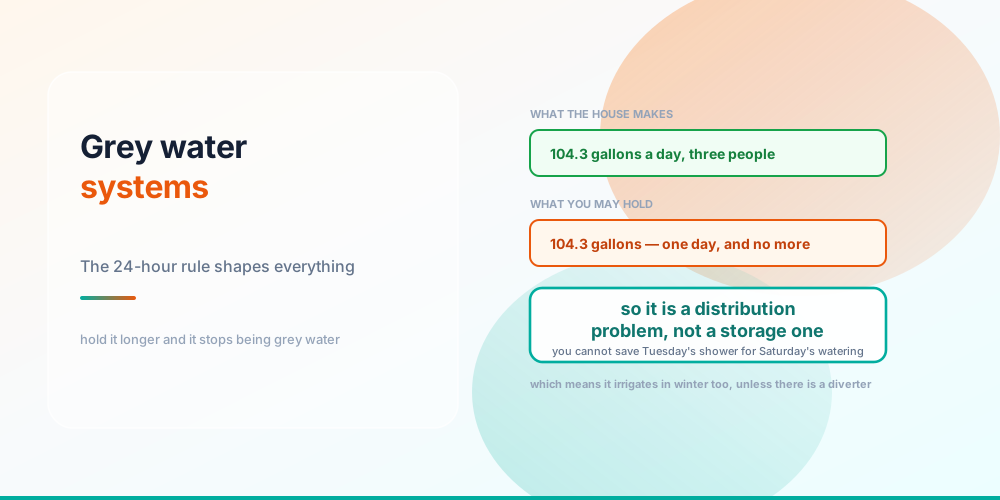
Grey Water Systems: The 24-Hour Rule That Shapes Everything
Untreated grey water goes septic within a day, so you may not store it. That single constraint makes grey water a distribution problem rather than a storage one — and explains every design decision.
- 05 Sep, 2026
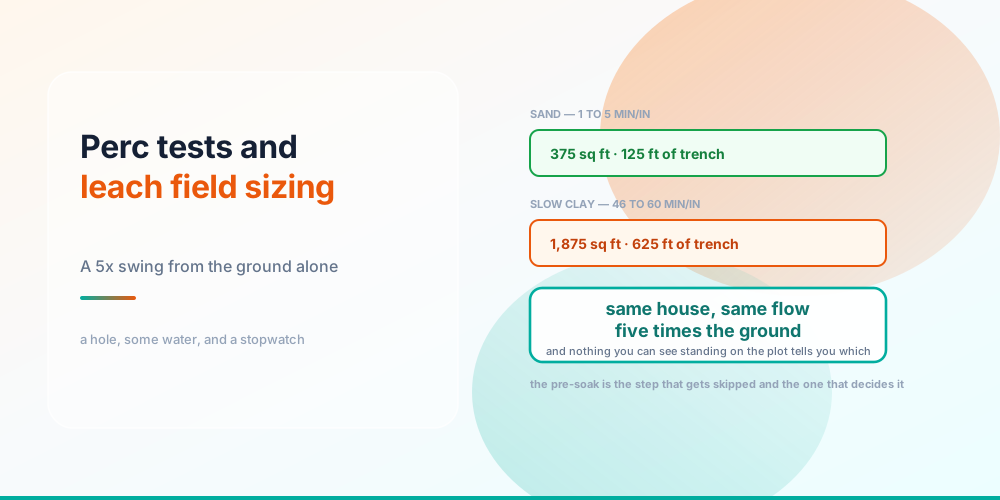
Perc Tests and Leach Field Sizing: A 5x Swing From the Ground Alone
The same three-bedroom house needs 375 square feet of field on sand and 1,875 on slow clay. Nothing you can see standing on the plot tells you which — that is why the test exists.
- 05 Sep, 2026
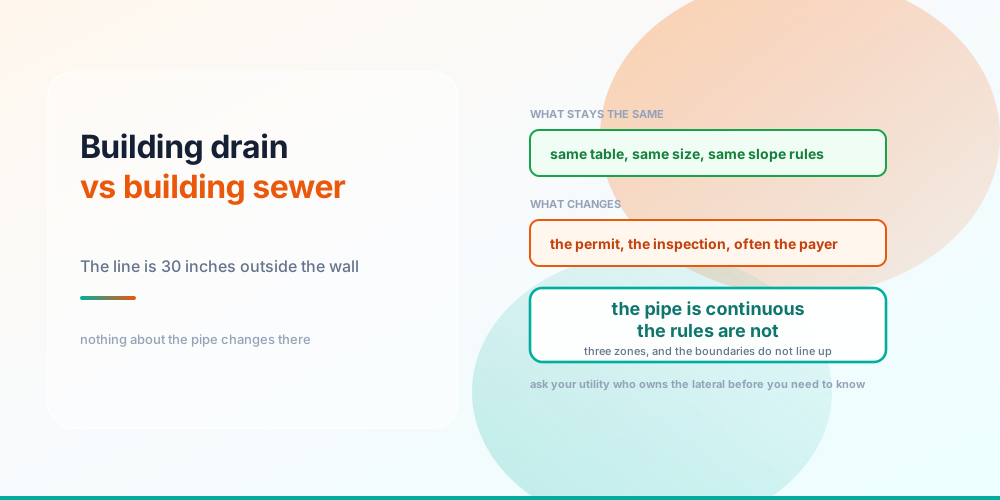
Building Drain vs Building Sewer: Where One Ends and the Other Starts
The boundary is 30 inches outside the wall. Nothing about the pipe changes there — the permit does, the inspection does, and on a bad day the question of who pays does.
- 05 Sep, 2026
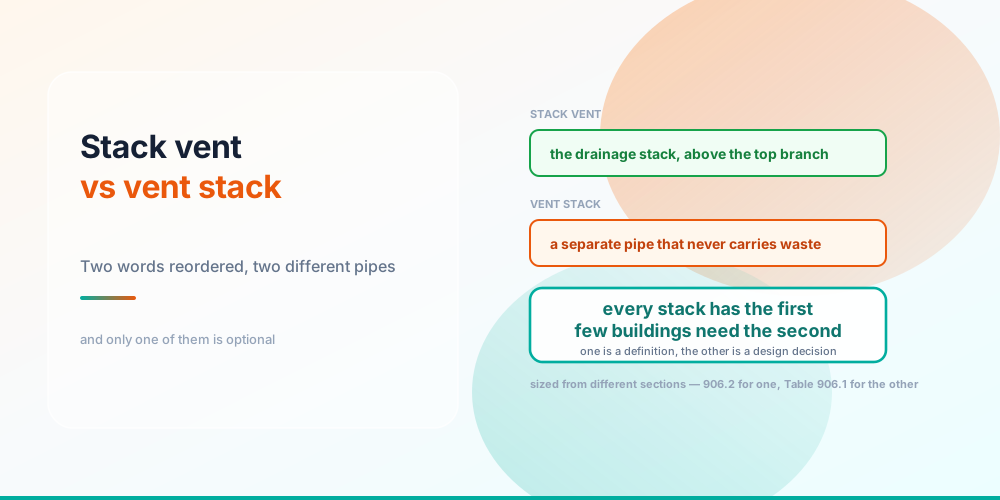
Stack Vent vs Vent Stack: Two Different Things With One Name
Two words in a different order, two different pipes. One is the drainage stack continuing upward; the other never touches waste at all — and only one of them is optional.
- 04 Sep, 2026
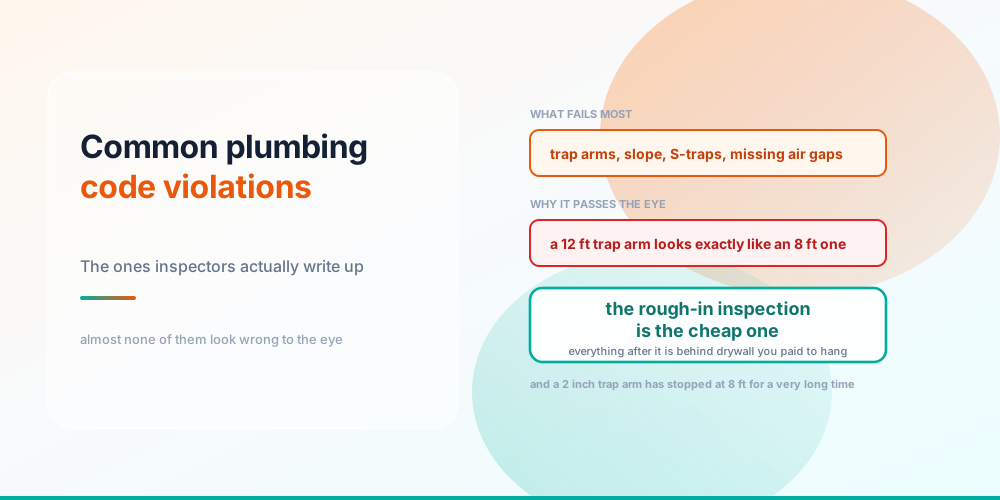
Common Plumbing Code Violations and Why Inspectors Catch Them
Almost none of them look wrong. Five of the seven most common failures need a tape measure to find — and the same defect costs far more after tile than it does at rough-in.

- 04 Sep, 2026
Markup vs Margin for Plumbers: 25% Markup Is a 20% Margin
Same profit, two denominators, and they can never be equal. The conversion both ways, why the gap widens with ambition, and what a 25% mix-up costs across a year of ordinary work.
- 04 Sep, 2026
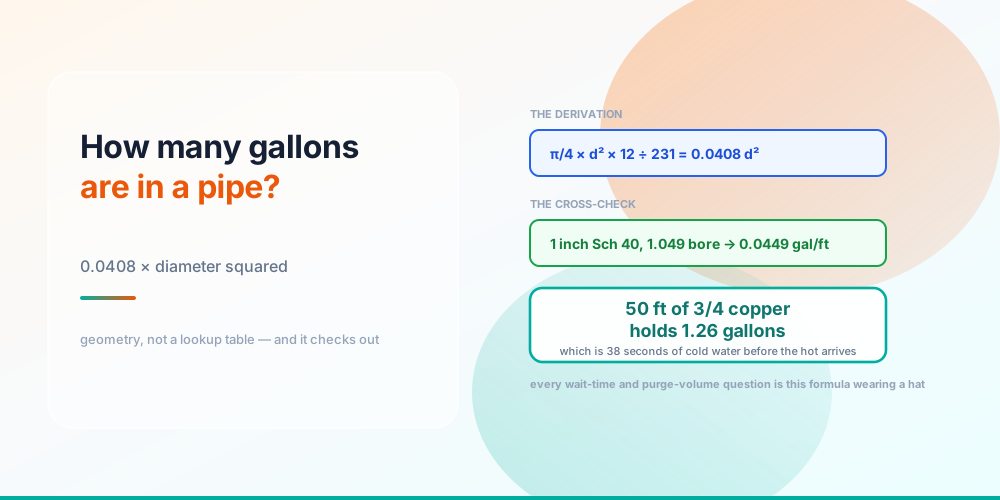
How Many Gallons Are in a Pipe? 0.0408 x Diameter Squared
The constant is geometry, not a lookup table — π/4 × d² × 12 ÷ 231. Use the bore, never the nominal size, and the same figure gives you wait time, purge volume and the weight on your hangers.
- 04 Sep, 2026
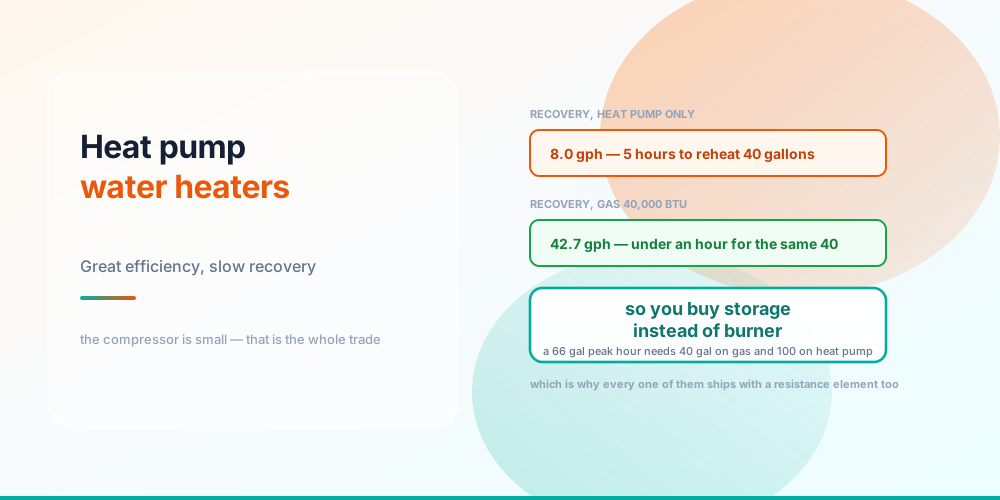
Heat Pump Water Heaters: Great Efficiency, Slow Recovery
In heat-pump-only mode it recovers 8.0 gallons an hour against gas at 42.7. The same peak hour needs a 40 gallon gas tank or a 100 gallon heat pump tank — you buy storage instead of burner.
- 04 Sep, 2026
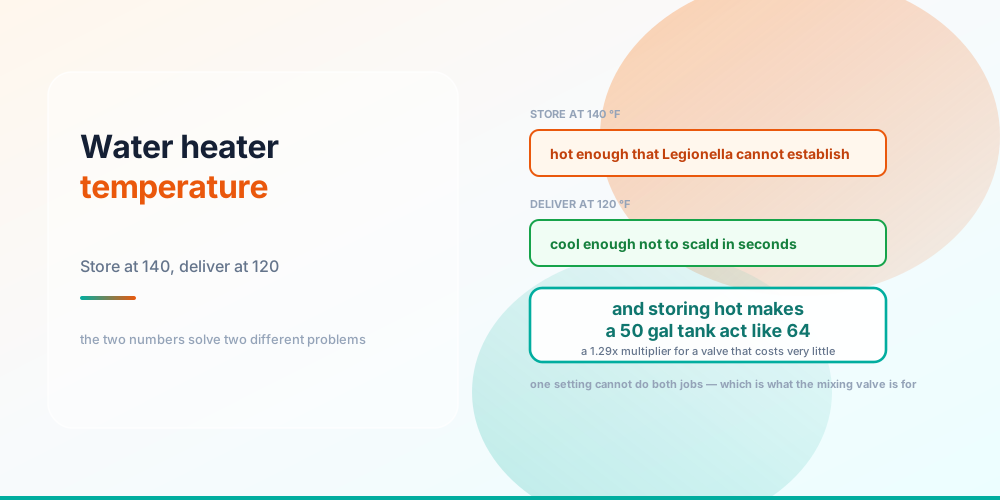
Water Heater Temperature: Store at 140, Deliver at 120, and Why
Two hazards pull in opposite directions and no single setting satisfies both. Storing at 140 and mixing down to 120 solves it — and makes a 50 gallon tank behave like 64.
- 04 Sep, 2026
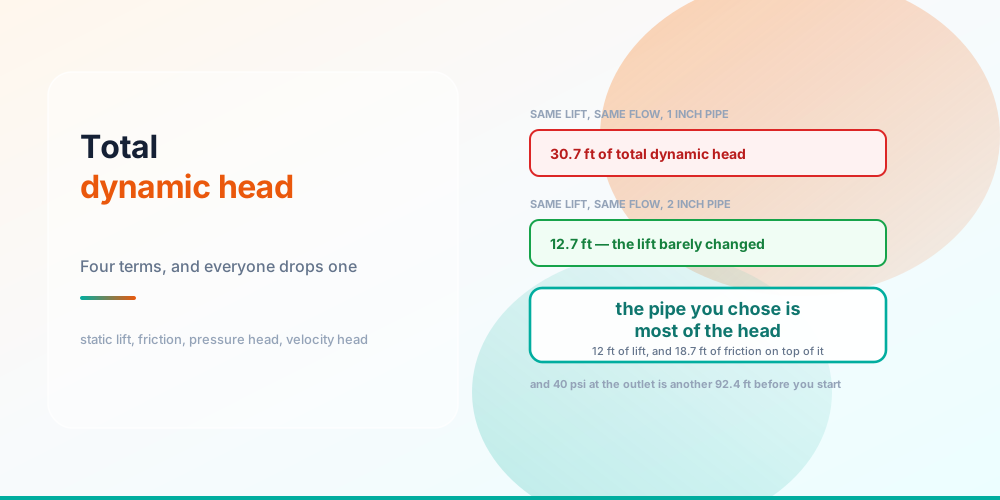
Total Dynamic Head: Static Lift, Friction, Pressure, and the Term Everyone Drops
Same lift, same flow: 1 inch discharge pipe needs 30.7 ft of head and 2 inch needs 12.7. The pipe you chose is most of the head — and a 40 psi discharge requirement is another 92.4 ft.
- 04 Sep, 2026
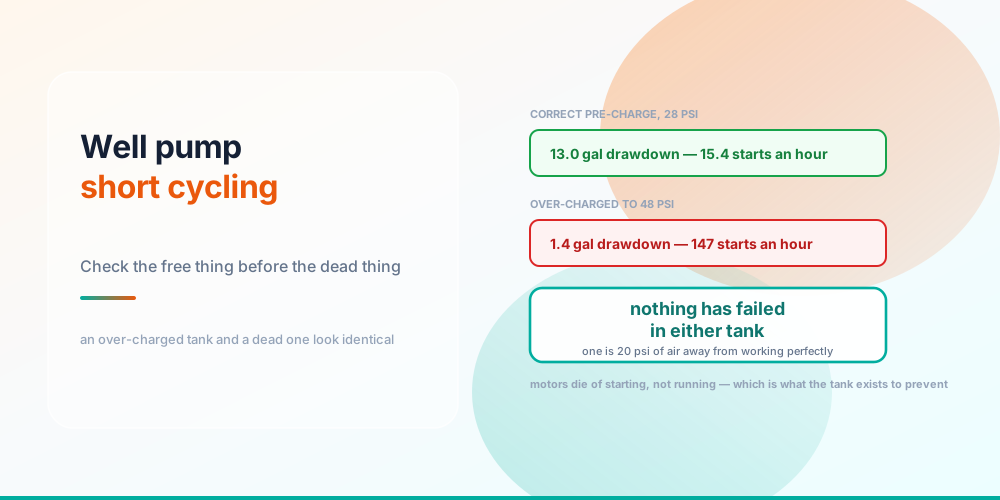
Well Pump Short Cycling: An Over-Charged Tank Looks Exactly Like a Dead One
Twenty psi of surplus air takes a pump from 11.5 starts an hour to 110 — with nothing broken. Check the free thing before the dead thing, because the two failures are indistinguishable.
- 04 Sep, 2026
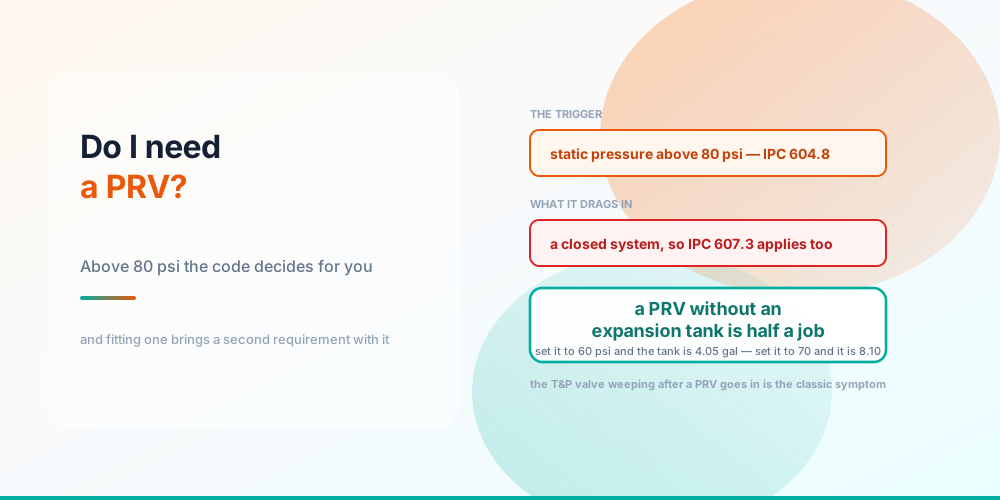
Do I Need a PRV? IPC 604.8 and the Expansion Tank It Drags With It
Above 80 psi the code decides for you. What most people are not told is that fitting one closes the system — and where you set it then triples or thirds the expansion tank it now requires.
- 04 Sep, 2026
Sizing a Rainwater Harvesting System: The Dry Spell, Not the Roof
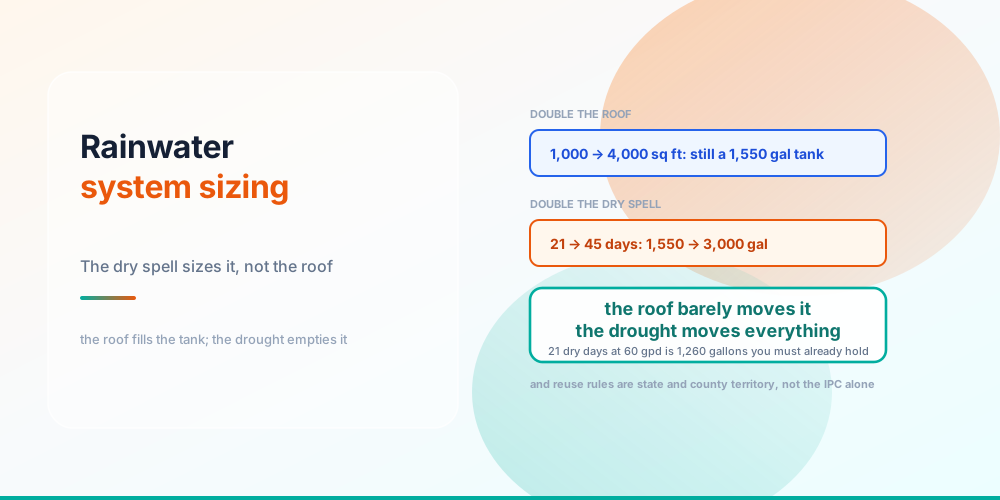
Quadruple the roof and the tank does not move. Extend the dry spell and it more than doubles. Why the drought sizes a cistern, and what it means when yield rather than demand governs.
- 04 Sep, 2026
Roof Runoff: How Much Water a Storm Actually Delivers
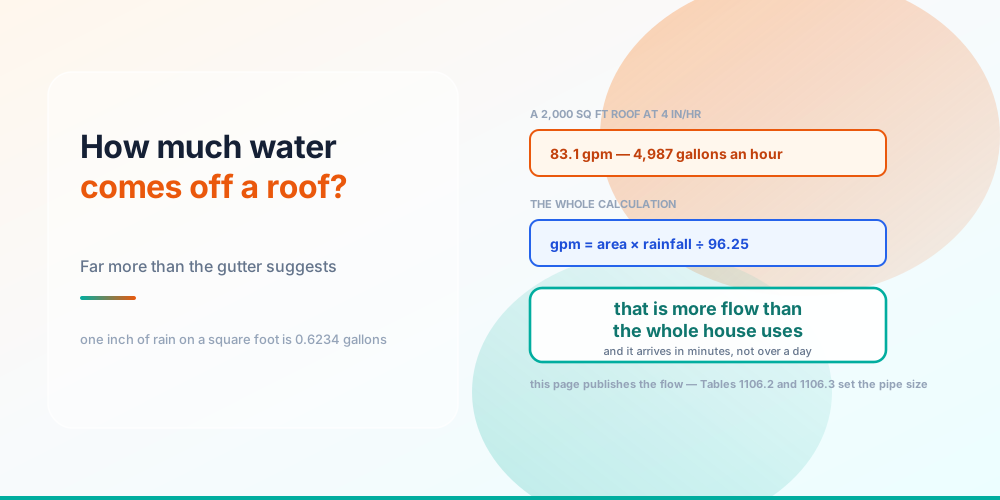
A 2,000 sq ft roof in a 4 in/hr storm sheds 83.1 gpm — about twenty-one times what the house uses at peak. The whole calculation is one divisor, and that divisor is three unit conversions.
- 04 Sep, 2026
Air Admittance Valves: Where They Are Legal and Where They Are Not
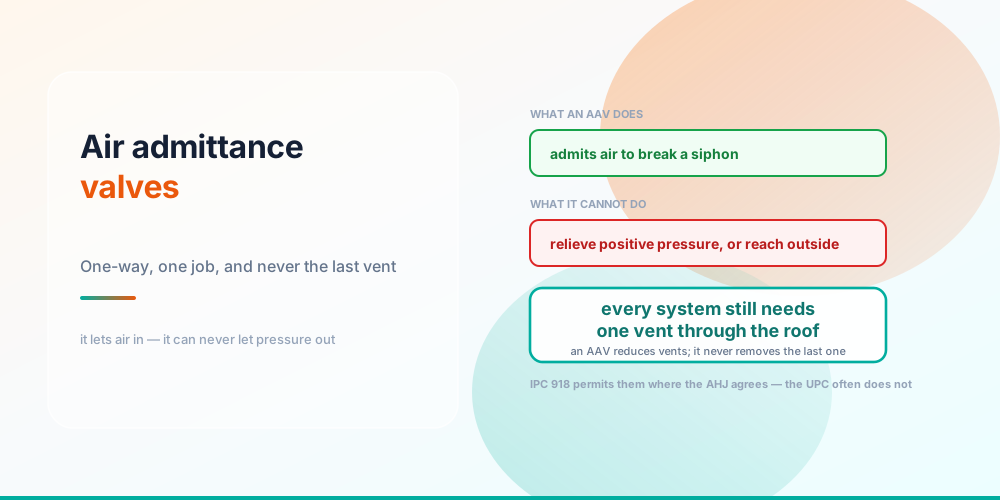
An AAV admits air and nothing else. It seals harder as pressure rises, which is why it can reduce the number of vents in a system and can never replace the one that reaches open air.
- 04 Sep, 2026
Why Is My Drain Gurgling? It Is Almost Always the Vent
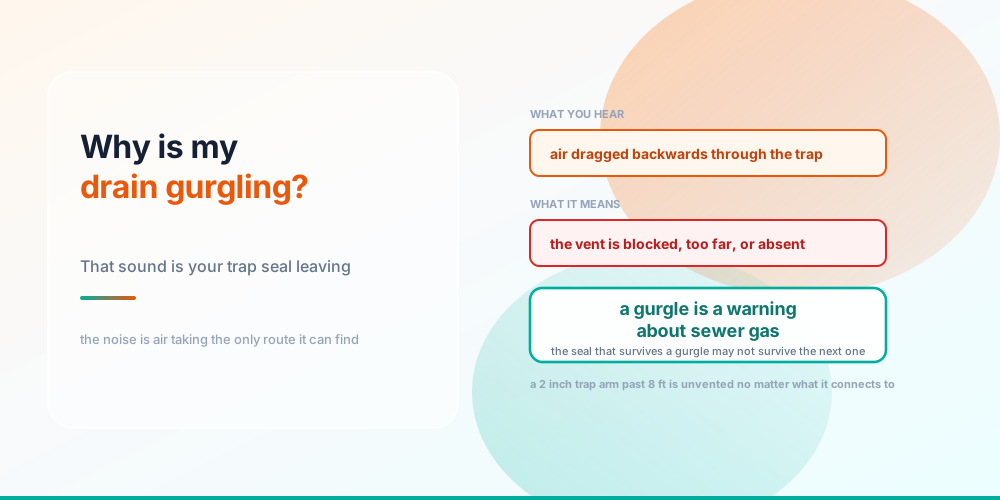
That sound is air being dragged through your trap seal because the vent could not supply it. What gurgles and when narrows the fault — and why a 2 inch trap arm is unvented past 8 feet.
- 04 Sep, 2026
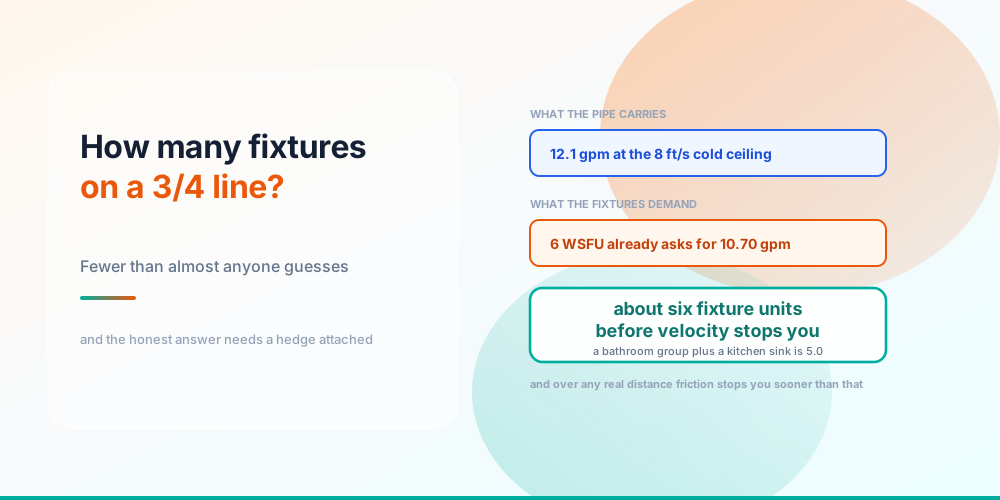
How Many Fixtures Can a 3/4 Inch Line Serve?
Fewer than almost anyone guesses — about six fixture units on velocity alone, and fewer once the run is long enough to matter. Why the question needs a length attached before it has an answer.
- 04 Sep, 2026
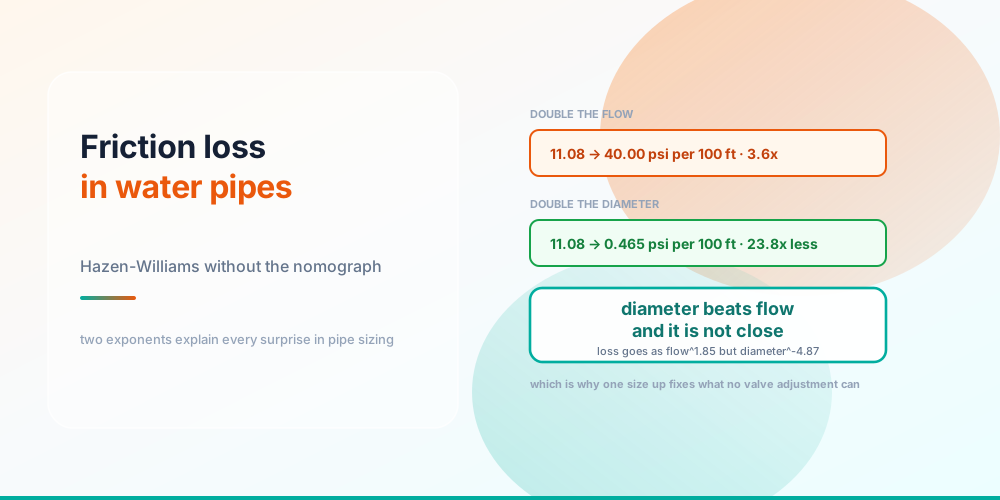
Friction Loss in Water Pipes: Hazen-Williams Without the Nomograph
Two exponents explain every surprise in pipe sizing. Double the flow and friction goes up 3.6x; double the diameter and it falls 23.8x. Plus the fittings a tape measure never sees.
- 04 Sep, 2026
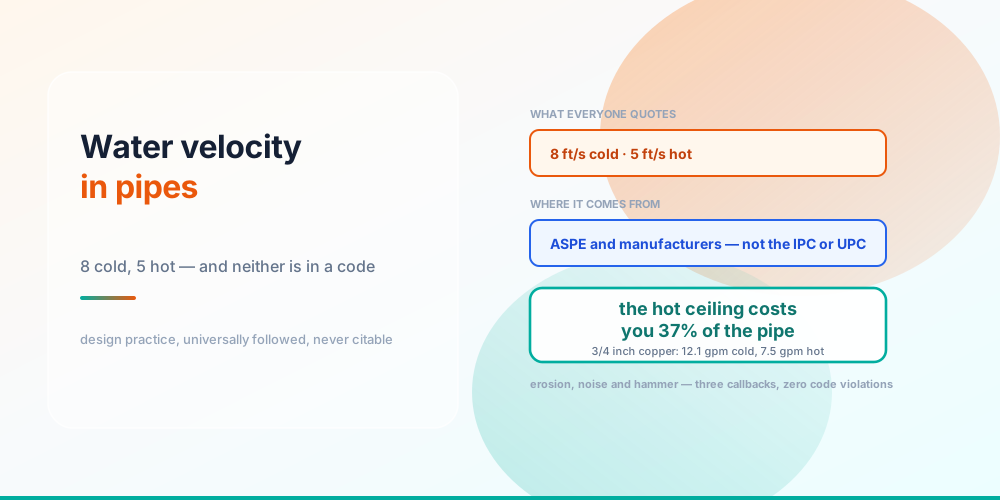
Water Velocity in Pipes: The 8 and 5 ft/s Limits Nobody Can Cite
Everyone quotes 8 ft/s cold and 5 ft/s hot as though it were code. It is not in the IPC or the UPC — it is design practice, and knowing that changes how you argue about it.
- 03 Sep, 2026
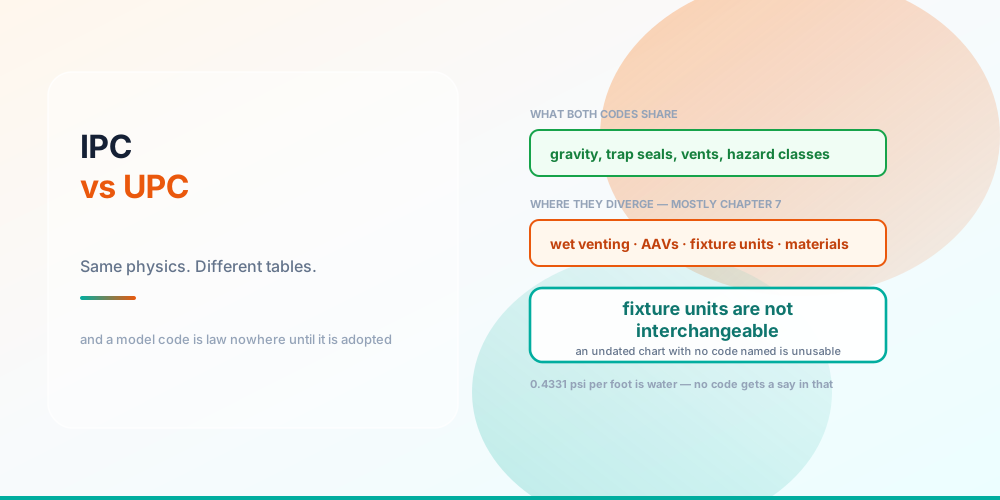
IPC vs UPC: Which Code Applies, and Where They Actually Diverge
Two model plumbing codes, and the state you are in decides which one you answer to. Where they agree, where they genuinely diverge, and exactly which published numbers you need to re-check.
- 03 Sep, 2026
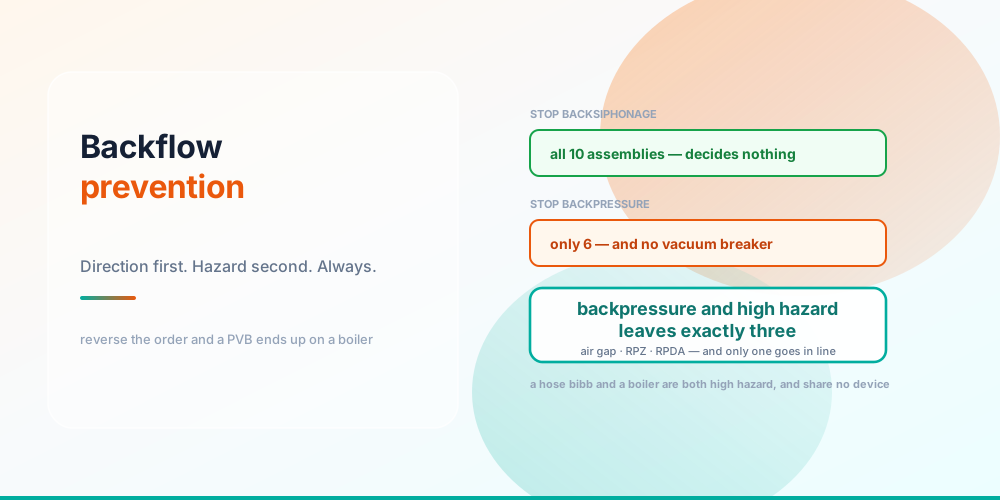
Backflow Prevention: No Vacuum Breaker Stops Backpressure
All ten assemblies stop backsiphonage, so that column decides nothing. Only six stop backpressure and only three of those are rated for high hazard — which is the whole selection problem in one sentence.

- 03 Sep, 2026
Plumber Hourly Rate: Utilisation Moves It More Than Wage Does
A $32 an hour plumber bills $117.44 — 3.67x the wage. Not greed: it is burden, overhead, and the 680 paid hours a year that nobody buys. And utilisation moves the rate further than a pay rise does.
- 03 Sep, 2026
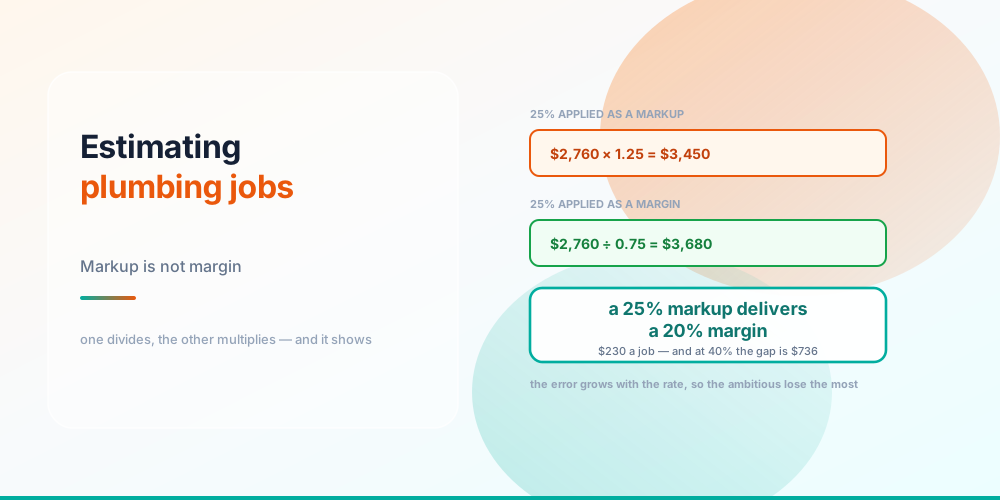
How to Estimate Plumbing Jobs: Markup Is Not Margin
A 25% markup delivers a 20% margin, and on a $2,760 job that is $230 left on the table. The build-up in order, why overhead is a separate line, and the division that turns break-even into a price.
- 03 Sep, 2026
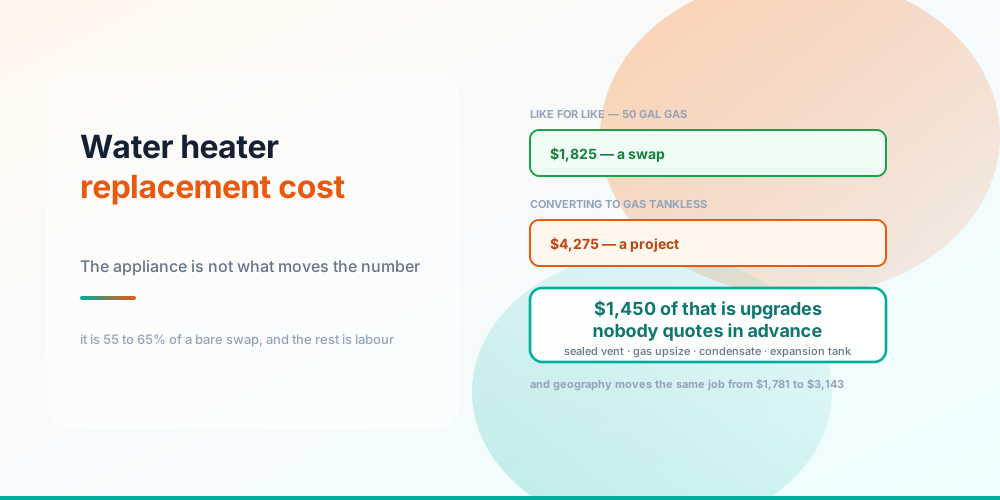
Water Heater Replacement Cost: The Upgrades Turn a Swap Into a Project
A like-for-like 50 gallon gas swap runs about $1,825. The same house converting to gas tankless runs $4,275 — and $1,450 of that is upgrades nobody quotes until the old unit is out.
- 03 Sep, 2026
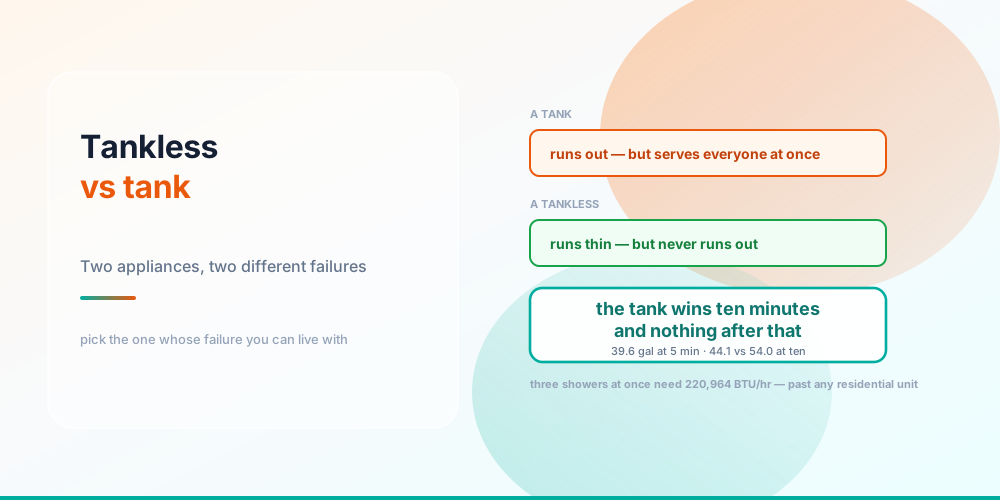
Tankless vs Tank: Simultaneity, Not Capacity, Is the Real Difference
A tankless never runs out — it runs thin. A tank never runs thin — it runs out. Which failure you can live with is the actual decision, with the crossover computed at ten minutes.
- 03 Sep, 2026
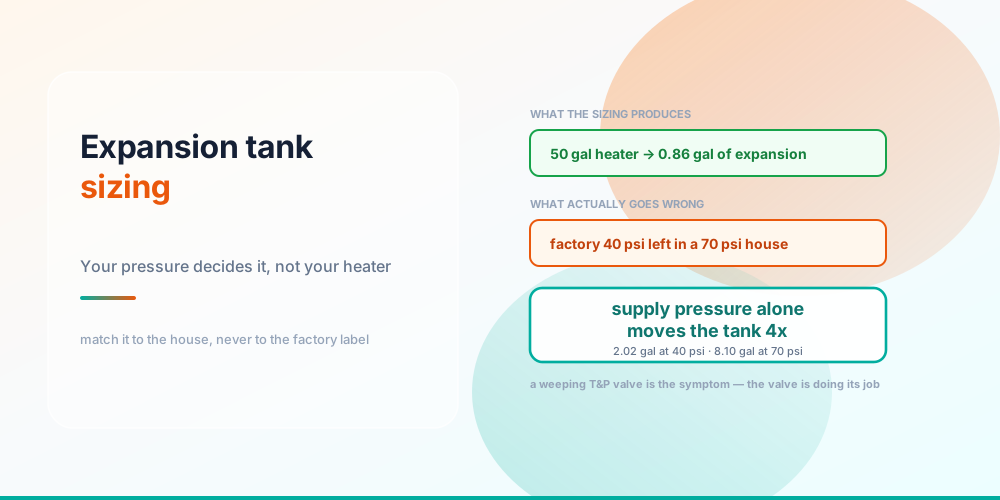
Thermal Expansion Tank Sizing: The Pre-Charge Matters More Than the Tank
A 50 gallon heater makes 0.86 gallons of expansion. Whether that needs a 2 gallon tank or an 8 gallon one is decided by your supply pressure, not your heater — a 4x swing from one number nobody checks.
- 03 Sep, 2026
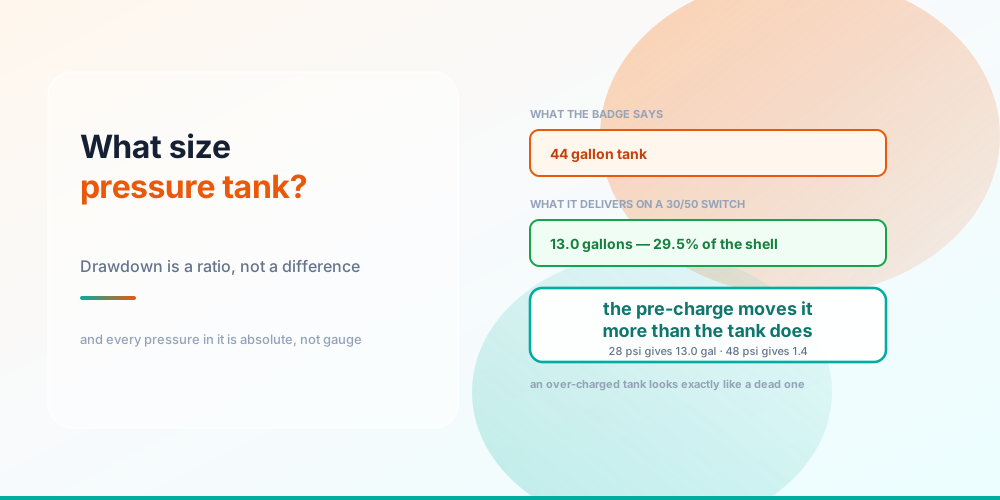
What Size Well Pressure Tank? Drawdown Is a Ratio, Not a Difference
A 44 gallon pressure tank delivers 13 gallons. Drawdown is a fraction of the shell set by absolute pressures, and the pre-charge moves it more than the tank size does — worked through with the numbers.
- 03 Sep, 2026
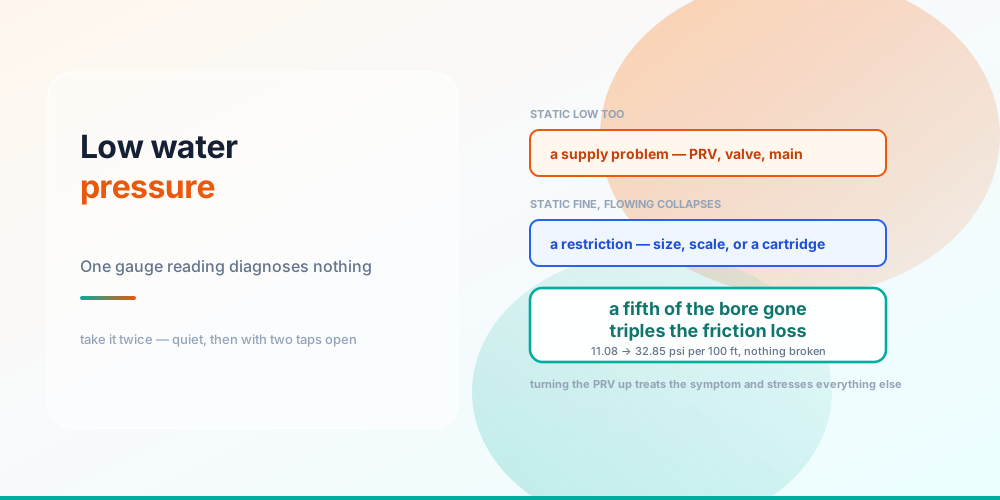
Low Water Pressure in a House: Static vs Flowing, and What Each Tells You
One gauge reading diagnoses nothing. Static pressure tells you what the street gives you; flowing pressure tells you what the house destroys. The two readings together name the fault — with the friction numbers worked through.
- 03 Sep, 2026
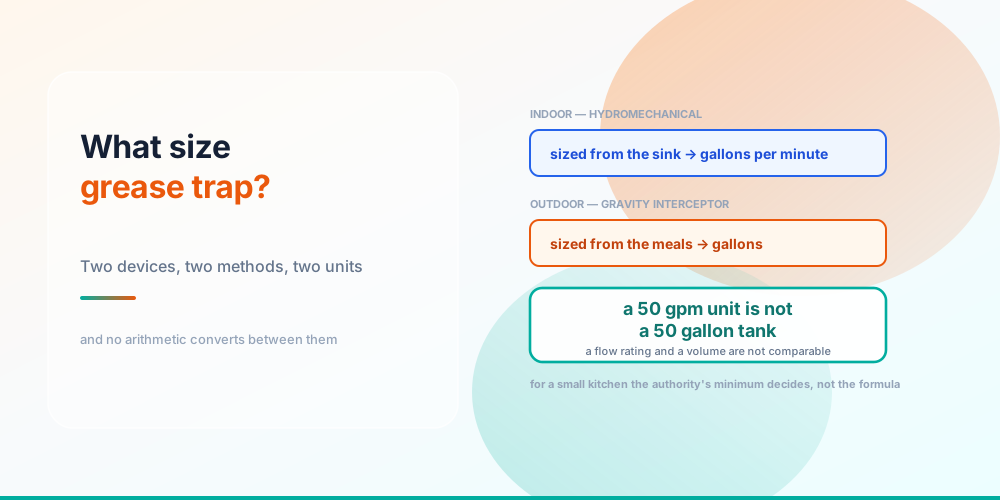
What Size Grease Trap Do I Need? Two Devices, Two Methods
A grease trap is rated in gallons per minute and a grease interceptor in gallons — and the two are sized by methods that share no inputs. How each one works, with the sink volumes and meal counts worked through.
- 03 Sep, 2026
What Size Septic Tank Do I Need? Bedrooms, Soil, and Why Both Matter
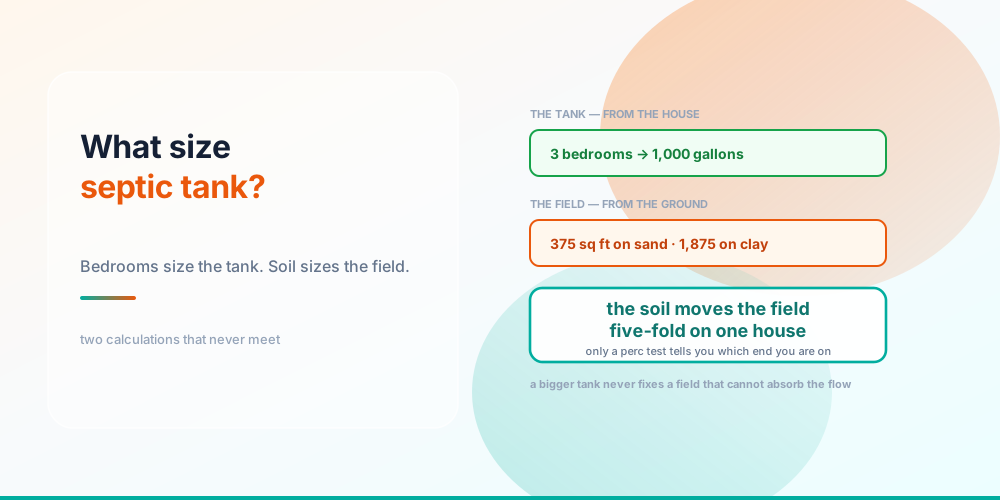
Bedroom count picks the tank. The ground picks the leach field — and the ground swings it five-fold on an identical house. How the two independent calculations work, and why a perc test is not optional.
- 02 Sep, 2026
Why Hot Water Takes So Long — and Why a Bigger Pipe Makes It Worse
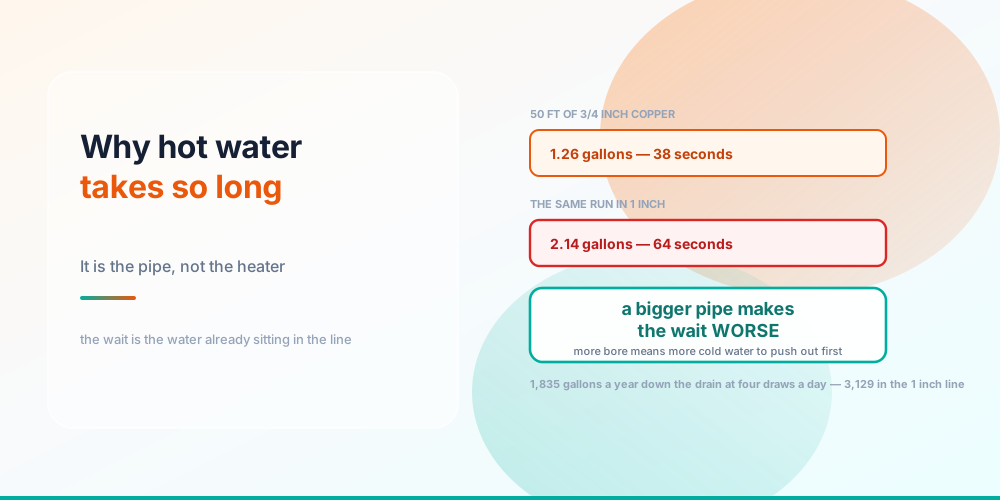
The wait is the water already in the pipe, not the heater. 50 ft of 3/4 inch copper is 38 seconds; the same run in 1 inch is 64. Upsizing the hot line is the one fix that backfires.
- 02 Sep, 2026
PEX vs Copper vs CPVC: Bore, Cost, and Why PEX Needs a Size Up
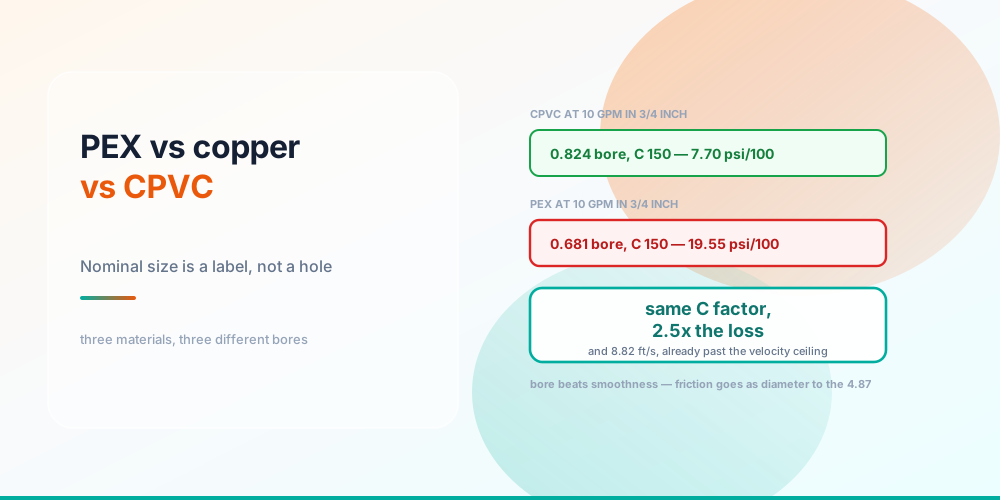
PEX and CPVC share a Hazen-Williams C of 150. At 10 gpm in nominal 3/4 inch, CPVC loses 7.70 psi per 100 ft and PEX loses 19.55 — because nominal size is a label, not a hole.
- 02 Sep, 2026
Wet Venting Explained: When One Drain Legally Vents Another
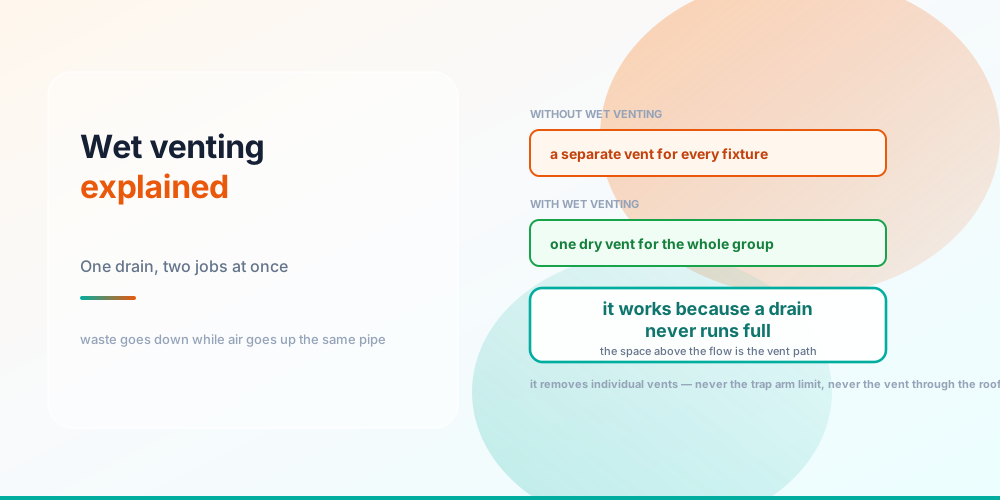
A drain never runs full, so the space above the flow is a vent path. How IPC 912 lets one dry vent serve a whole bathroom group — and the four things wet venting never excuses you from.
- 02 Sep, 2026
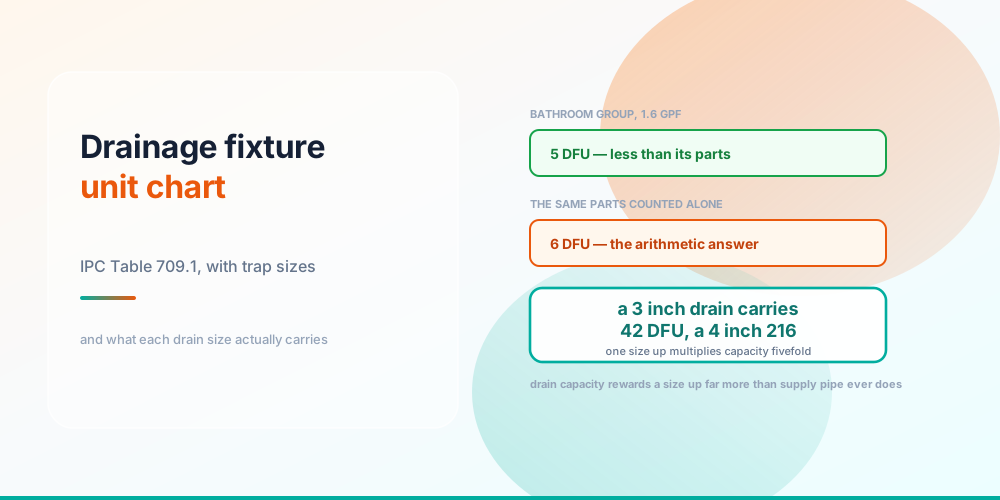
Drainage Fixture Unit Chart: Table 709.1 With the Trap Sizes
The full IPC Table 709.1 values, residential and commercial, with the minimum trap each fixture takes. Plus what your DFU total actually buys: a 3 inch drain carries 42, a 4 inch carries 216.
- 02 Sep, 2026
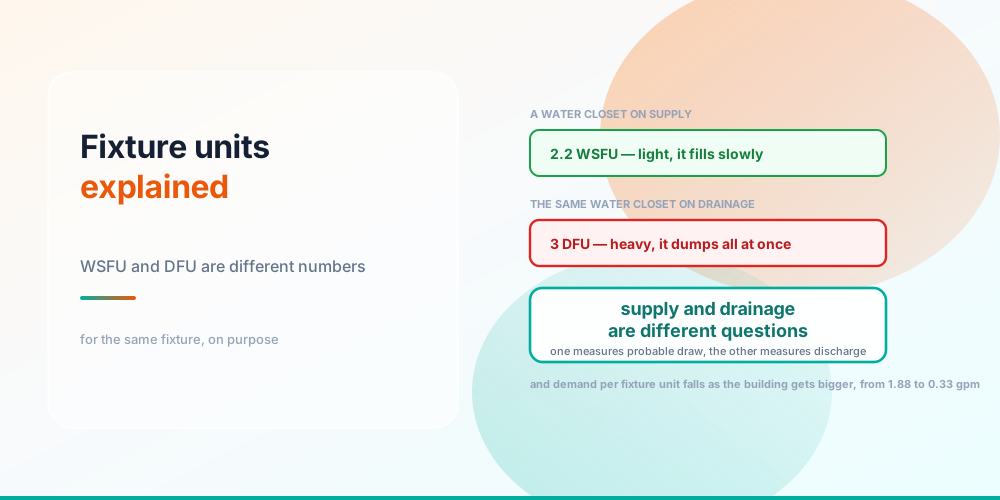
Fixture Units Explained: WSFU, DFU, and Why They Are Different Numbers
A water closet is 2.2 supply fixture units and 3 drainage fixture units. Not a typo — they measure different physical loads, and confusing them is how a system gets sized wrong.
- 02 Sep, 2026
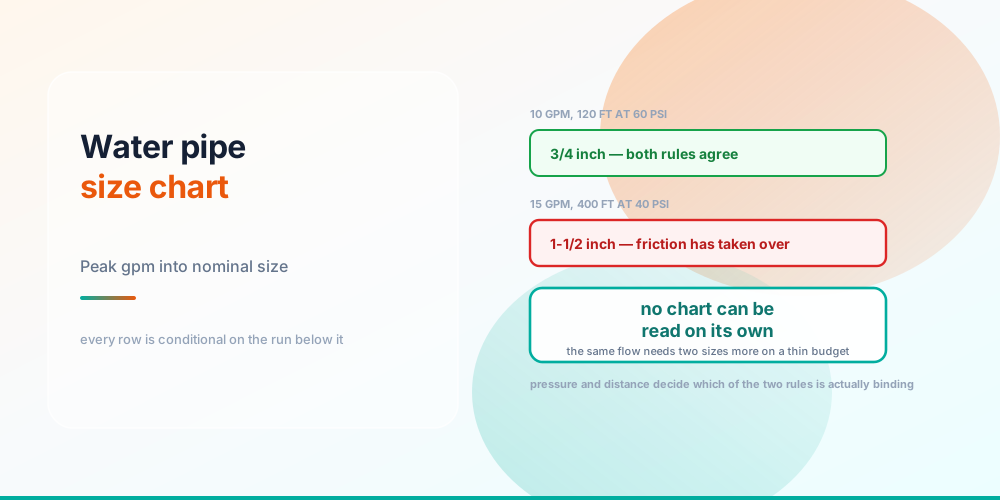
Water Pipe Size Chart: GPM and Fixture Units to Nominal Size
A pipe size chart that shows its working. 10 gpm is 3/4 inch at 60 psi over 120 ft — and 15 gpm needs 1-1/2 inch at 40 psi over 400 ft. Why every row is conditional.
- 01 Sep, 2026
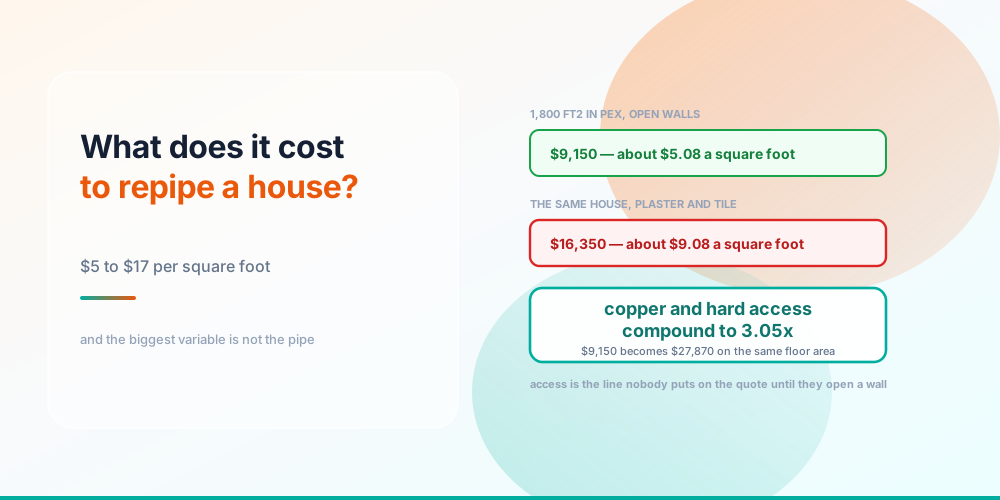
How Much Does It Cost to Repipe a House? The Variable Nobody Quotes
$9,150 in PEX with open walls. $27,870 in copper behind plaster and tile. Same 1,800 ft2 house — because material and access compound rather than add, and access is the line nobody puts on the quote.
- 01 Sep, 2026
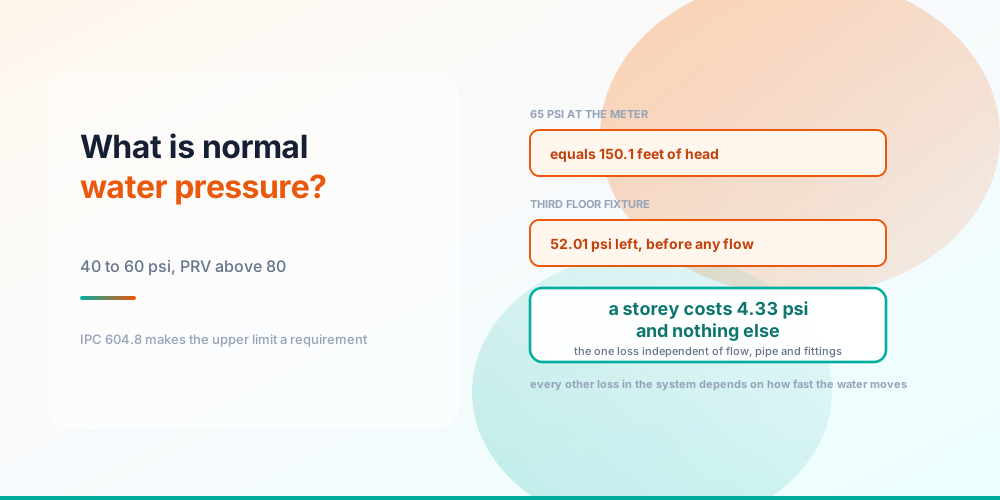
Normal Water Pressure for a House: 40 to 60 psi, and Why Height Costs 4.33
65 psi is 150 feet of head. Each storey costs exactly 4.33 psi whether water is moving or not — the one loss in the system independent of flow. And above 80 psi a PRV is code, not an upgrade.
- 01 Sep, 2026
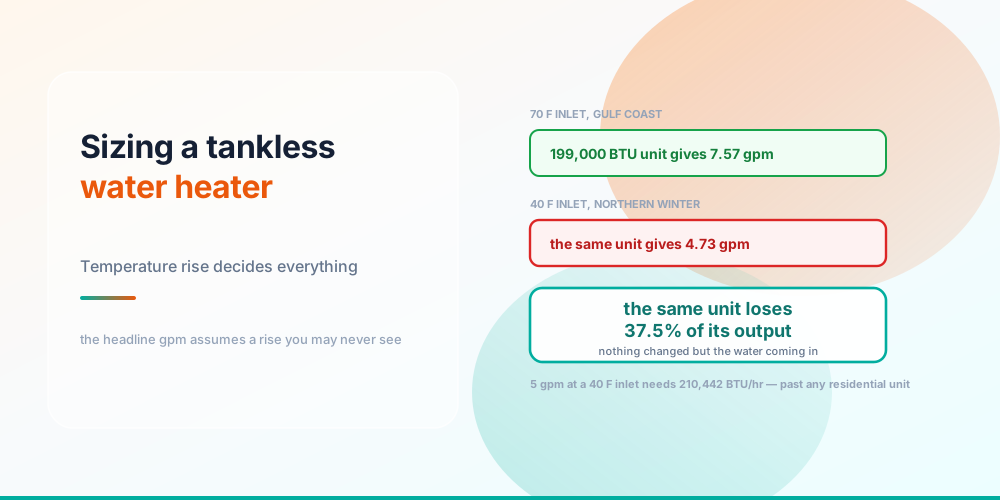
Tankless Water Heater Sizing: Temperature Rise Decides Everything
The same 199,000 BTU unit gives 7.57 gpm on a Gulf-coast inlet and 4.73 gpm in a northern winter — a 37.5% loss with nothing changed but the incoming water. How to size one honestly.
- 01 Sep, 2026
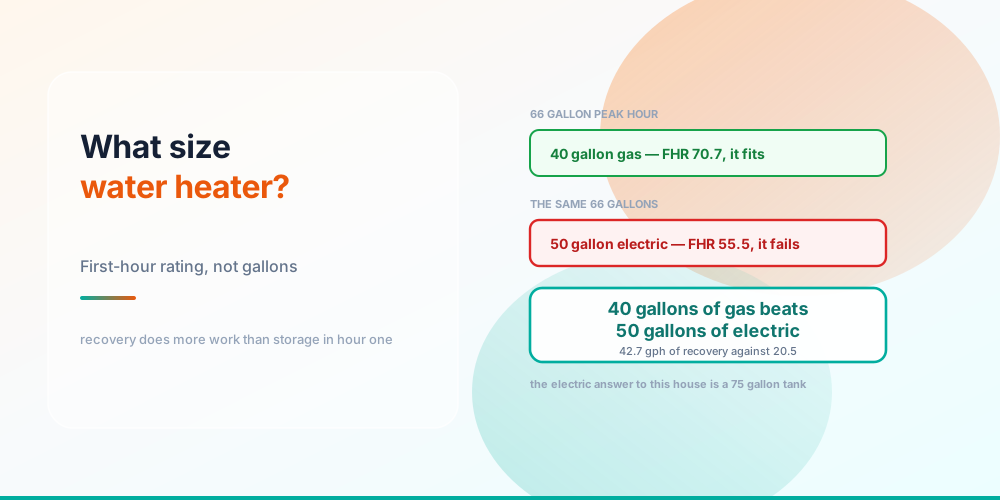
What Size Water Heater Do I Need? First-Hour Rating, Not Gallons
A 66-gallon peak hour is met by a 40-gallon gas heater — and needs a 75-gallon electric one. Why first-hour rating decides the answer and the number on the label barely matters.
- 01 Sep, 2026
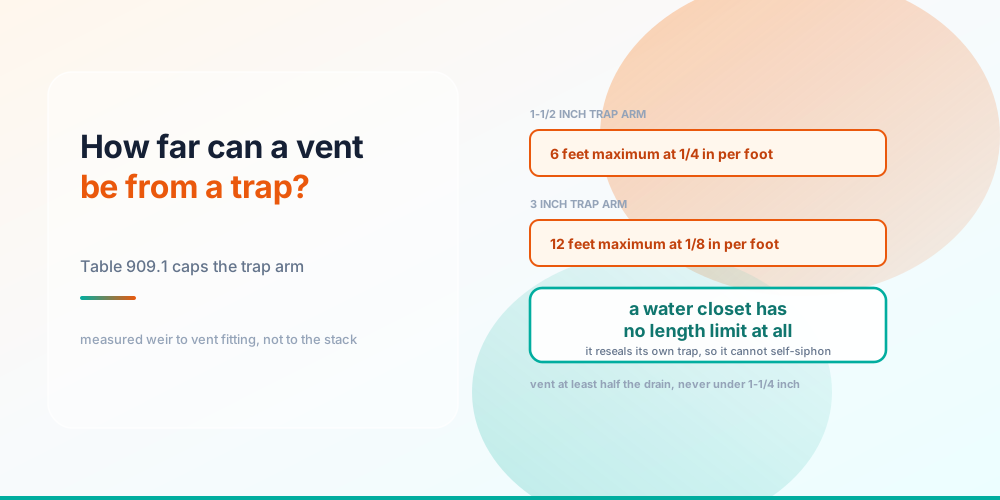
How Far Can a Vent Be From a Trap? Trap Arm Limits Explained
A 2 inch trap arm reaches 8 feet, a 3 inch reaches 12. Measured weir to vent fitting, not to the stack — and water closets have no length limit at all, because they reseal their own trap.
- 01 Sep, 2026
Drain Pipe Slope: How Much Fall Does a Drain Actually Need?
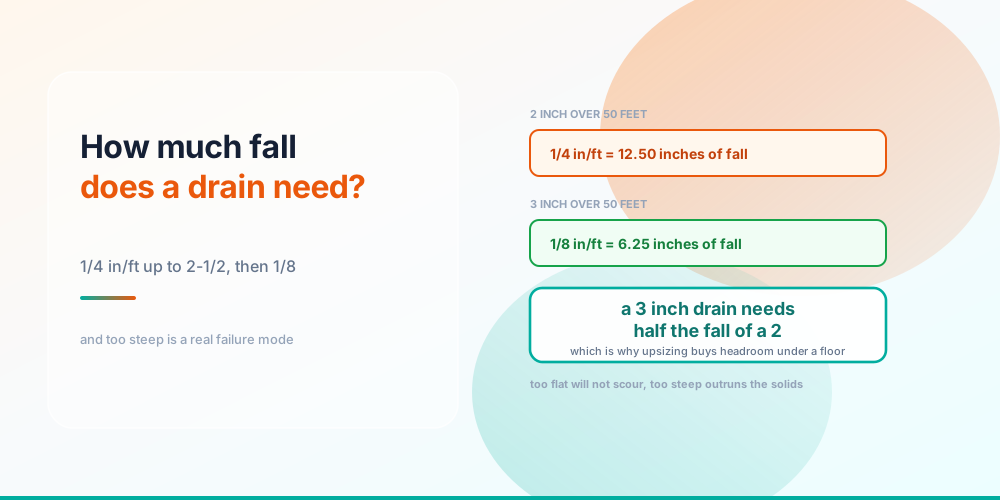
1/4 inch per foot up to 2-1/2 inch, 1/8 inch from 3 to 6 inch. A 3 inch drain needs exactly half the fall of a 2 inch — and too steep is a real failure mode, not a safety margin.
- 01 Sep, 2026
What Size Drain Pipe Do I Need? DFU, Tables 710.1, and the Rule That Overrides Them
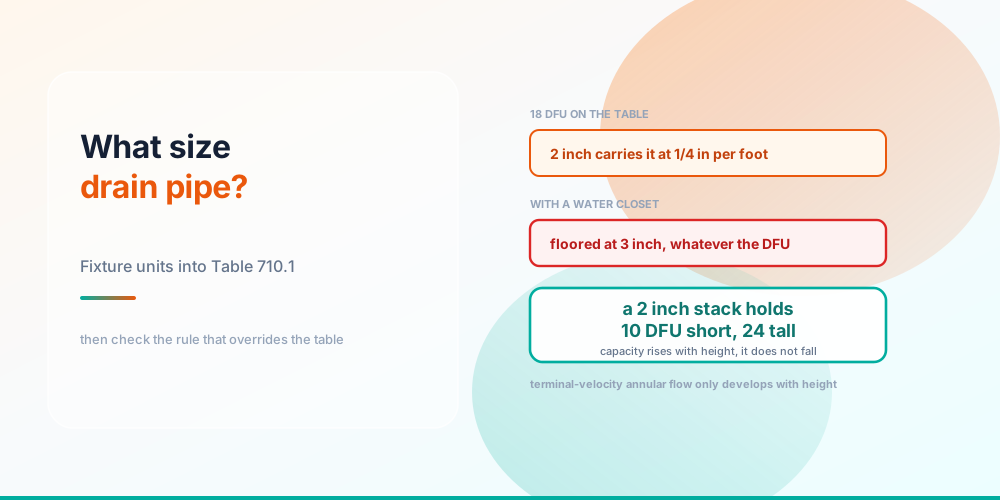
18 DFU rides a 2 inch building drain on the table — until a toilet floors it at 3 inch. Plus the rule almost every site gets backwards: a taller stack carries more per size, not less.
- 01 Sep, 2026
What Size Water Line Do I Need? Velocity and Pressure, Both
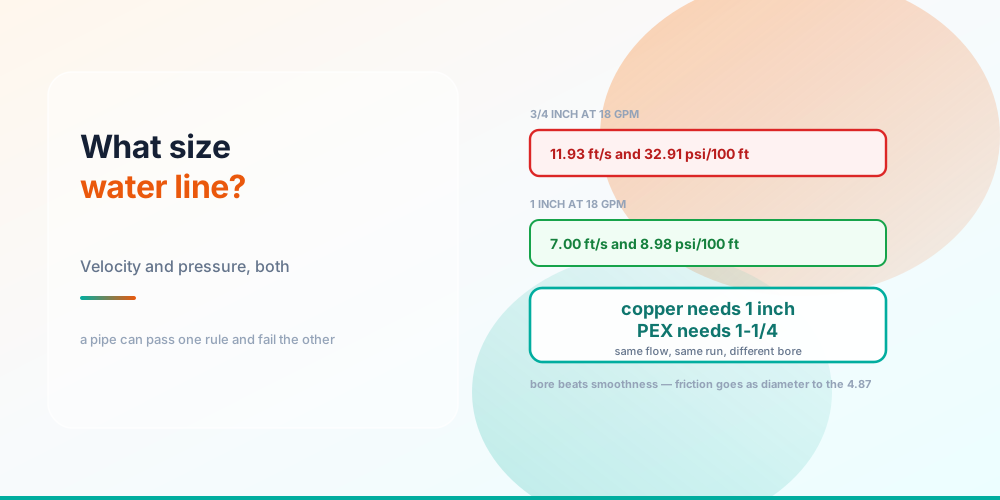
At 18 gpm, 3/4 inch copper runs 11.93 ft/s and loses 32.91 psi per 100 ft — it fails both rules at once. Why a water line has to clear velocity and pressure, and why PEX needs a size up on copper.
Frequently asked questions
Common questions about Plumbing guides on the TradesQuote blog.
Who are these plumbing articles for?+
Licensed plumbers, apprentices, and trade estimators who need clear explanations of IPC sizing rules, plus homeowners trying to understand a quote. Each guide starts from the question someone actually asks and works to a defensible number.
Which plumbing code do these follow?+
The 2021 International Plumbing Code, with the table or section named on every claim. The IPC is a model code, so confirm the edition and amendments your jurisdiction enforces before you pull a permit — and note that UPC states use different fixture-unit values and sizing tables entirely.
Do these posts replace a licensed plumber or a stamped design?+
No. They explain the reasoning so you can size faster, sanity-check someone else's numbers, and quote with more confidence. Final design and code compliance still rest with a licensed plumber and your authority having jurisdiction.