
TradesQuote Blog
- 04 Aug, 2026
Copper vs Aluminum Wire: Sizing, Cost, and Where Each Belongs
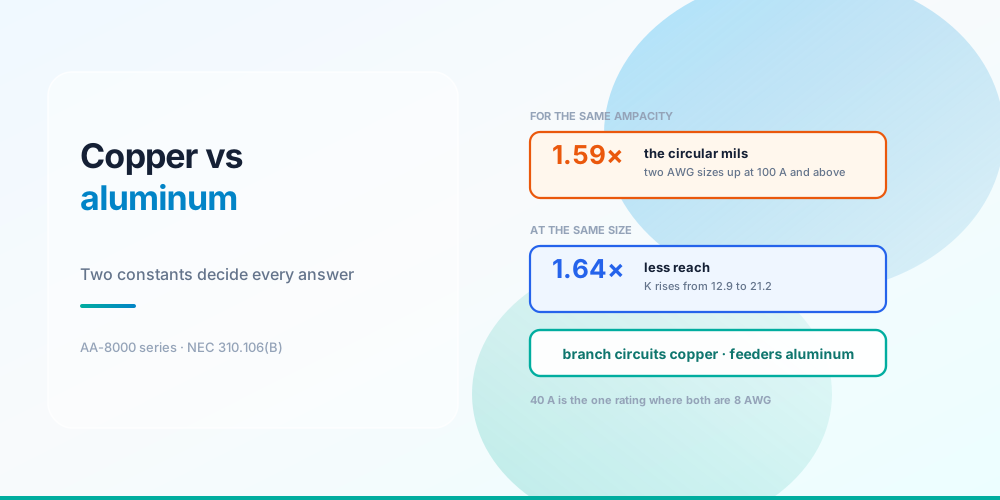
Aluminum needs 1.59× the circular mils for the same ampacity and reaches 1.64× less far at the same size. Both ratios are constants - which makes the choice a question of scale, not preference.
- 04 Aug, 2026
10 Gauge Wire Amps: Ratings, Breaker Match, and Max Run Length
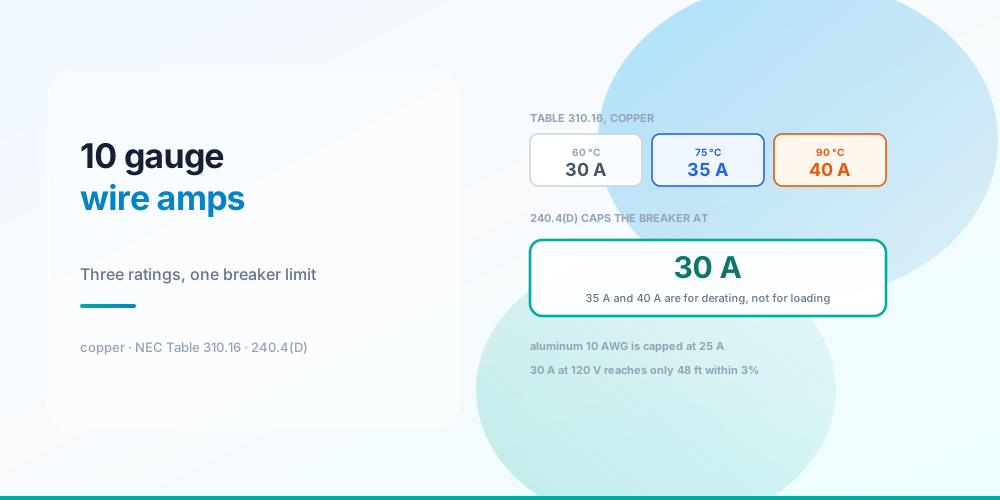
10 AWG copper is rated 30, 35 and 40 A in the three columns of Table 310.16. You may load it to 30 A - and at 30 A on 120 V it only reaches 48 feet before voltage drop stops you.
- 04 Aug, 2026
Wire Derating Explained: Ambient Temperature and Conductor Bundling
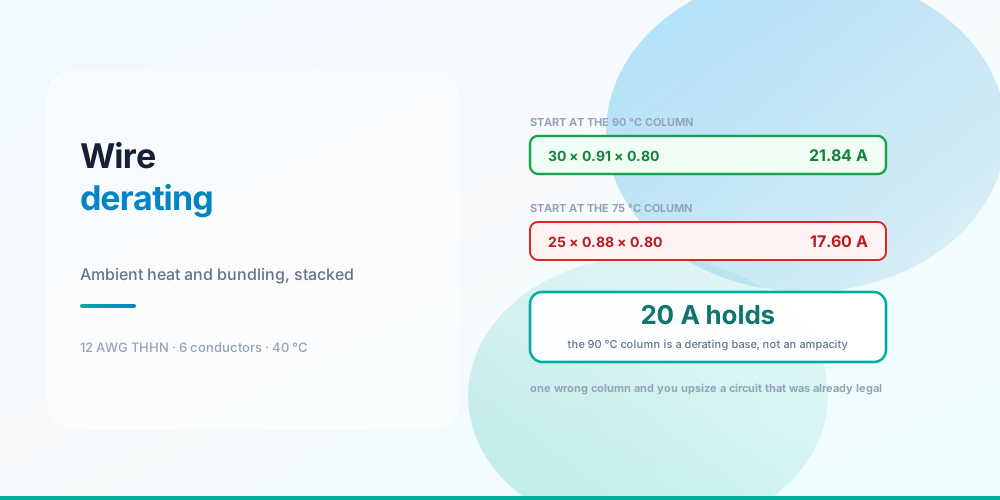
Six 12 AWG conductors at 40 °C derate to 21.84 A and hold a 20 A breaker. Start from the wrong temperature column and you get 17.60 A - and upsize a circuit that was already legal.
- 04 Aug, 2026
How Many Recessed Lights Do I Need? Count and Spacing by Room
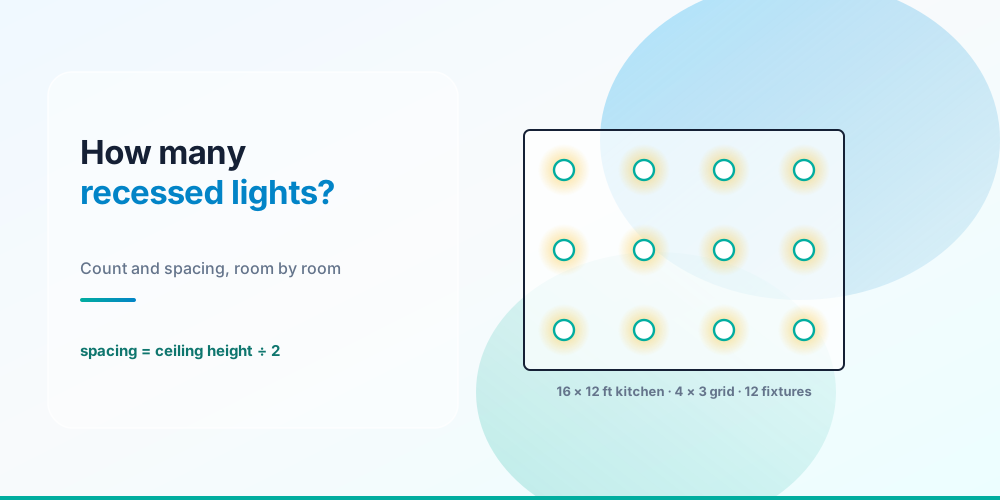
Spacing equals ceiling height ÷ 2, and the wall offset is half of that - which is why a 16 × 12 kitchen lands on a 4 × 3 grid of 12. Plus the light-level cross-check, room-by-room counts, and the code that applies.
- 04 Aug, 2026
What Size Generator Do I Need? Whole-House kW by Load
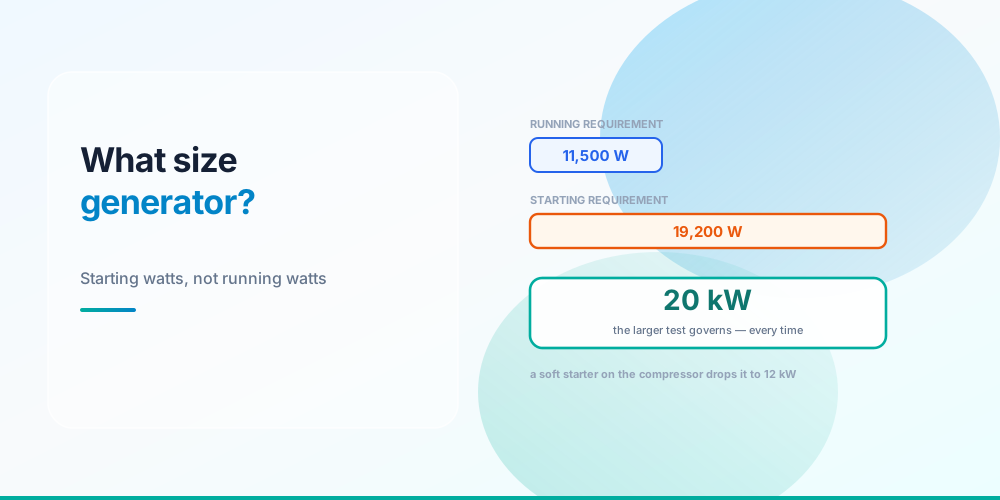
Adding up running watts gets you the wrong answer. A house needing 11.5 kW to run needs 19.2 kW to start its air conditioner - so the set is 20 kW, and a soft starter takes it back to 12 kW.
- 04 Aug, 2026
Electrical Panel Upgrade Cost: 100 A to 200 A
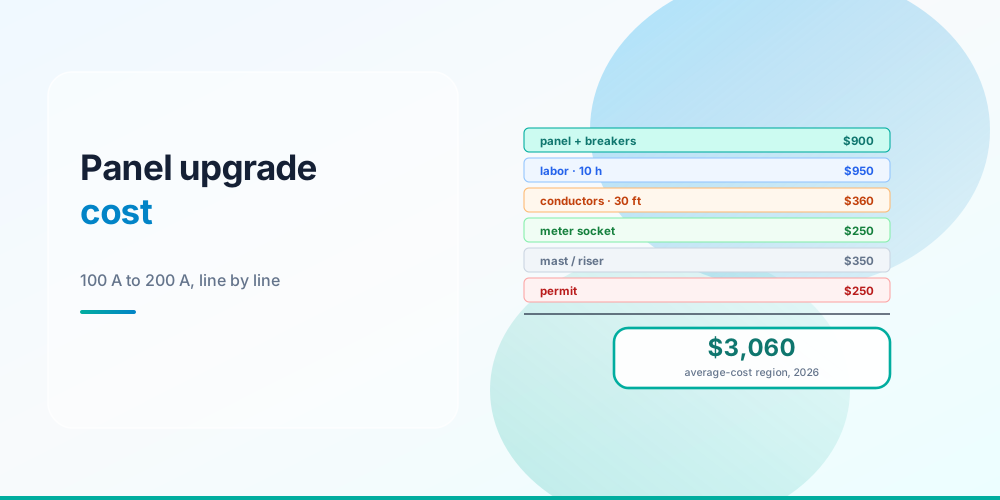
What a 100-to-200-amp panel upgrade actually costs, broken down line by line: panel, labor, service conductors, meter, mast, and permit. Plus the five variables that move the number and how much region changes it.
- 04 Aug, 2026
EV Charger Installation Cost: What Drives the $500–$2,500 Range
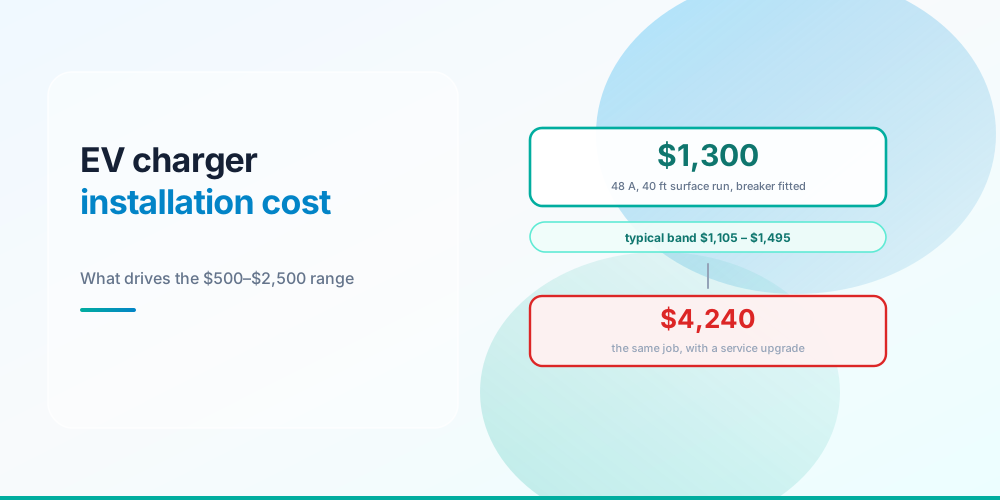
A typical Level 2 install runs about $1,300 - $280 of wire, $180 of hardware, $120 of breaker, $150 of permit and $570 of labor. Panel work is the only input that moves it by thousands, and NEC 220.87 is how you avoid it.
- 04 Aug, 2026
What Size Wire and Breaker for an EV Charger?
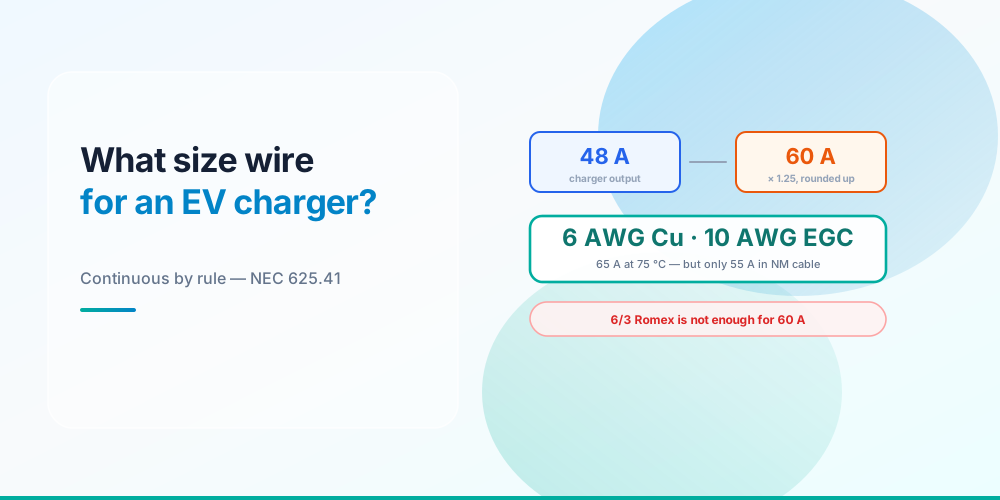
A 48 A charger needs a 60 A breaker on 6 AWG copper - because 625.41 makes EV charging continuous by rule. Plus the two traps: 6/3 Romex is not enough for 60 A, and a 50 A charger costs more than a 48 A one.
- 04 Aug, 2026
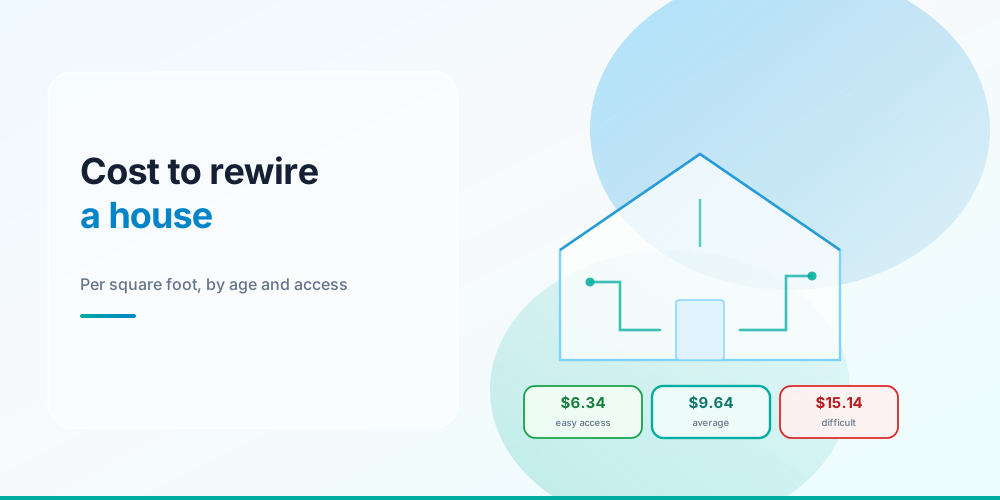
Cost to Rewire a House: Per Square Foot by Age and Access
Whole-house rewiring runs $5–$17 per square foot, and wall access is what decides where you land. A worked 1,800 ft² example, what knob-and-tube and cloth wiring add, and when partial rewiring is the better spend.
- 04 Aug, 2026
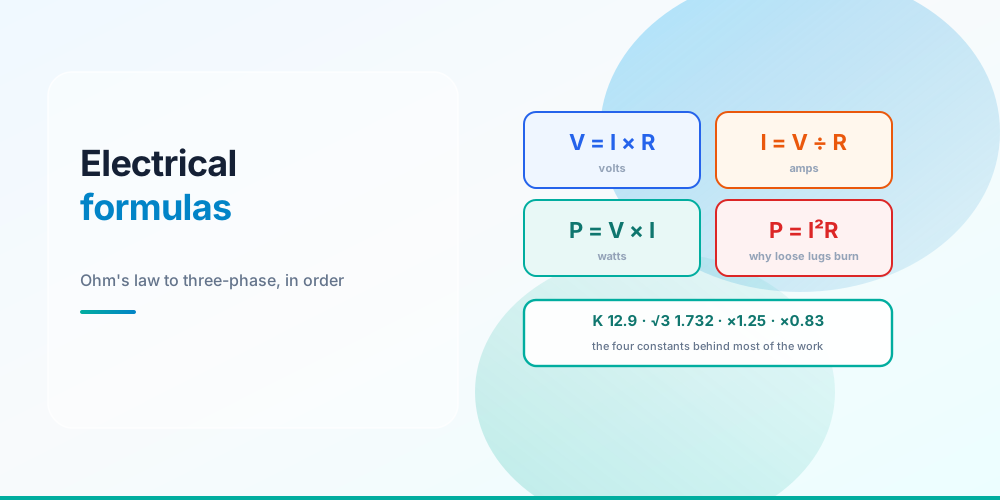
Electrical Formulas Cheat Sheet: Ohm's Law to Three-Phase
Every formula an electrician actually uses, in the order they get applied - Ohm's law, conversions, ampacity and derating, voltage drop, load calculation, fill, grounding and pricing. With the scope limits most cheat sheets leave out.
- 04 Aug, 2026
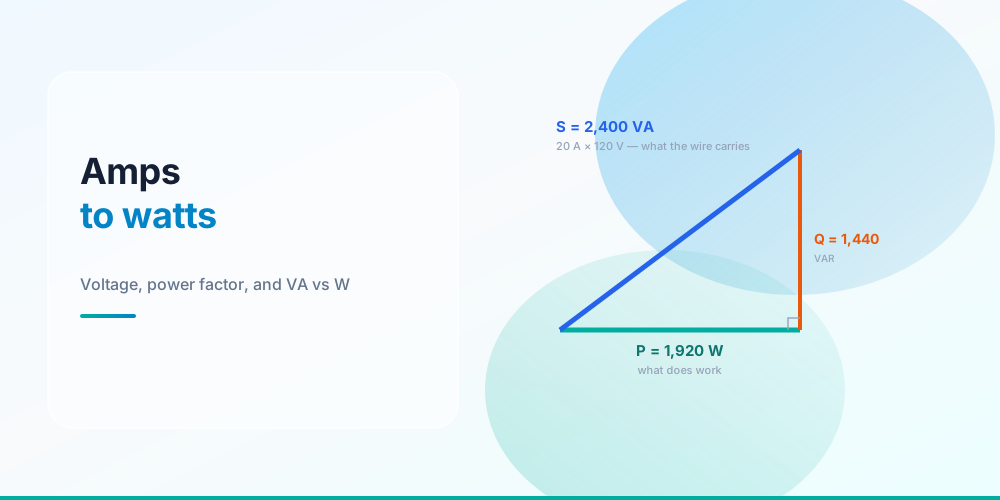
Amps to Watts: Conversion With Voltage and Power Factor
Watts = volts × amps × power factor. But amps × volts always gives volt-amperes, and only unity power factor makes them equal - plus why a 20 A breaker is 2,400 W on paper and 1,920 W in practice.

- 04 Aug, 2026
How to Estimate Electrical Jobs: Takeoff, Assemblies, and Labor Units
The five stages of an electrical estimate - takeoff, assemblies, labor units, overhead, margin - worked on a real job. Plus the markup-versus-margin error that quietly costs contractors 20% of their profit.
- 04 Aug, 2026
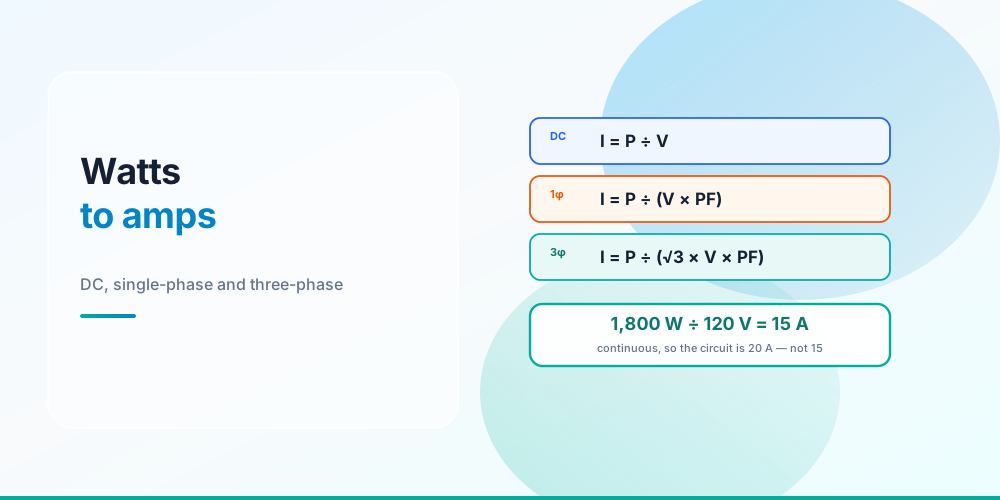
Watts to Amps: The Formula for DC, Single-Phase, and Three-Phase
Amps = watts ÷ volts on DC, ÷ (volts × power factor) on single-phase, ÷ (1.732 × volts × PF) on three-phase. Plus the part that actually matters: why the amps you get are not the breaker size.

- 04 Aug, 2026
Electrician Hourly Rate: Apprentice, Journeyman, Master
Why a $32/hr electrician has to be billed at $105/hr, worked through step by step. The licence tiers, the payroll burden and overhead behind the rate, and why billable utilisation moves it more than anything else.
- 03 Aug, 2026
Ground Wire Size Chart: EGC vs GEC (250.122 and 250.66)
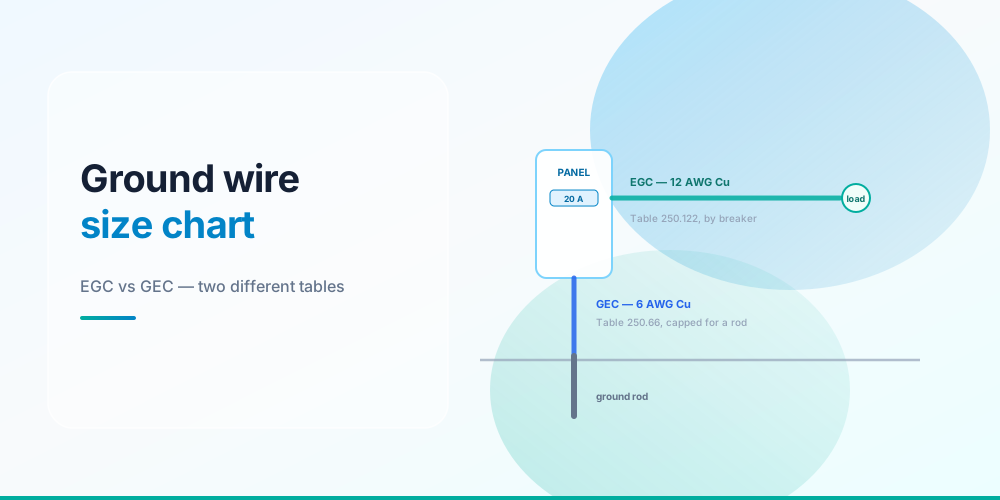
Two different conductors get called the ground wire. The EGC comes from Table 250.122 by breaker rating; the GEC comes from Table 250.66 by service conductor size, then gets capped by which electrode it lands on.
- 03 Aug, 2026
GFCI vs AFCI: What Each Protects and Where the NEC Requires It
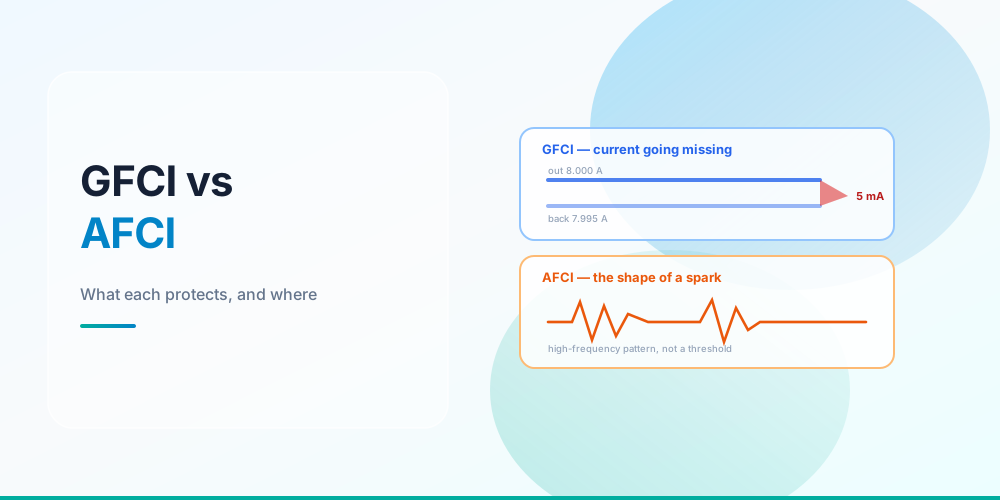
GFCI detects current leaking out of a circuit and protects people; AFCI detects arcing and protects property. Which the NEC requires in each area of a dwelling, why kitchens need both, and how to diagnose nuisance trips.
- 03 Aug, 2026
Conduit Fill Chart: How Many Wires Fit in EMT, PVC, and RMC
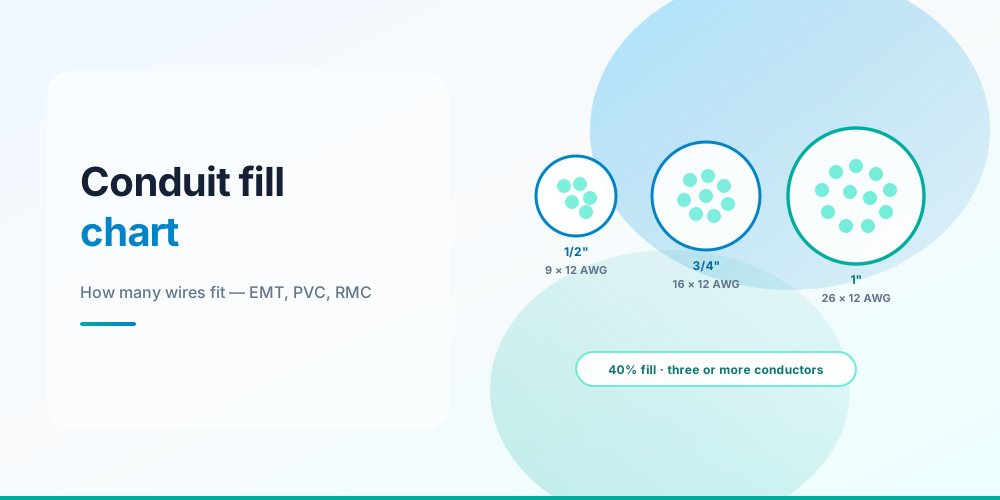
Maximum THHN conductors for every common trade size of EMT, PVC, and RMC, plus the Chapter 9 Table 1 fill limits, the 60% nipple allowance, and why bundling derating usually limits you before fill does.
- 03 Aug, 2026
How to Calculate Conduit Fill (NEC Chapter 9, Tables 1, 4, and 5)
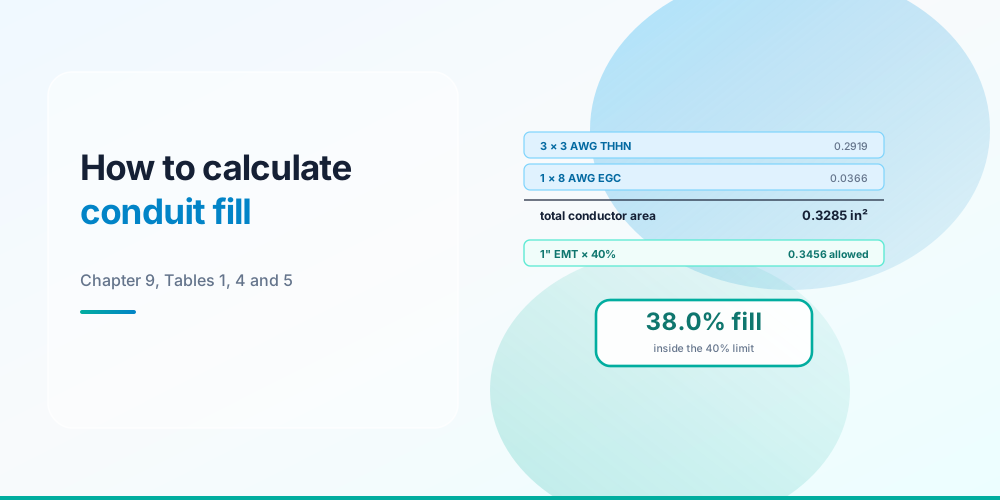
The Chapter 9 area method in four steps, worked on mixed conductor sizes where Annex C can't help. Includes the 60% nipple allowance and the Note 7 rounding rule that explains why Annex C sometimes reads one conductor higher.
- 03 Aug, 2026
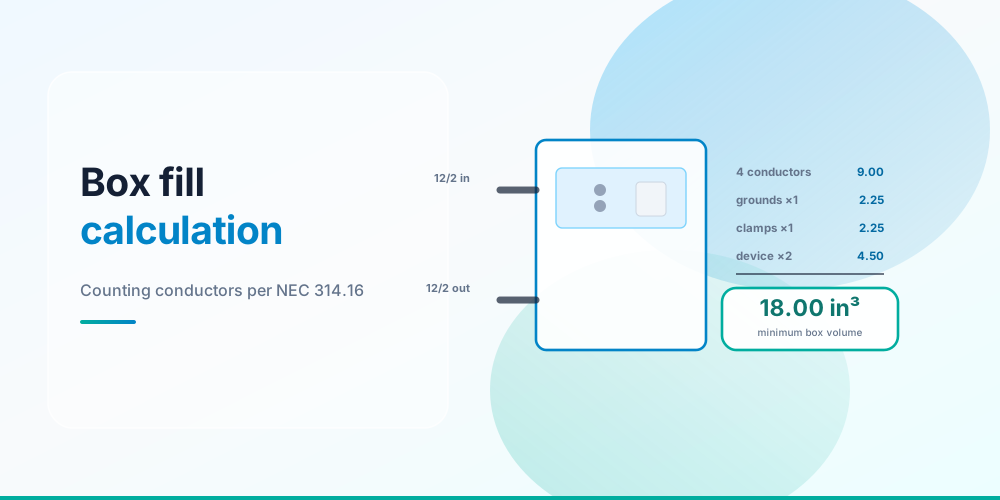
Box Fill Calculation: Counting Conductors per NEC 314.16
How to calculate box fill: the Table 314.16(B) volume allowances, what counts as one, what counts as two, what counts as nothing, and a worked single-gang example that lands on 18.00 cubic inches.
- 03 Aug, 2026
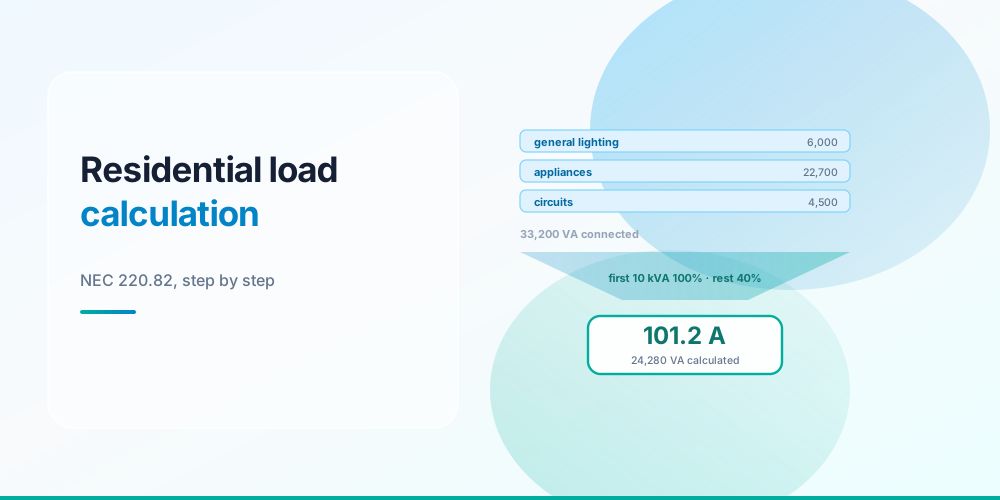
Residential Load Calculation: NEC 220.82 Step by Step
Both legal methods worked on the same house: the 220.82 optional calculation and the standard Part III method with its per-category demand factors. Why a 12 kW range counts as 8 kW, and why the two methods land 21 amps apart.