
TradesQuote Blog
- 04 Aug, 2026
LED Retrofit Payback: Watts Saved vs Fixture Cost
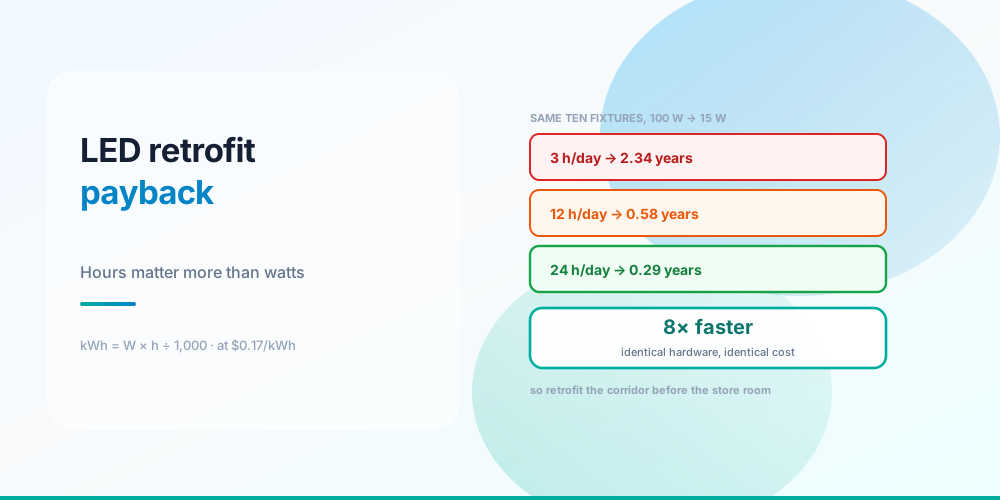
Identical hardware pays back 8× faster at 24 h/day than at 3 h/day. Operating hours dominate the arithmetic - which means you retrofit by duty cycle, not by wattage or room size.
- 04 Aug, 2026
Do You Need a Panel Upgrade for an EV Charger? (And the Load-Management Alternative)
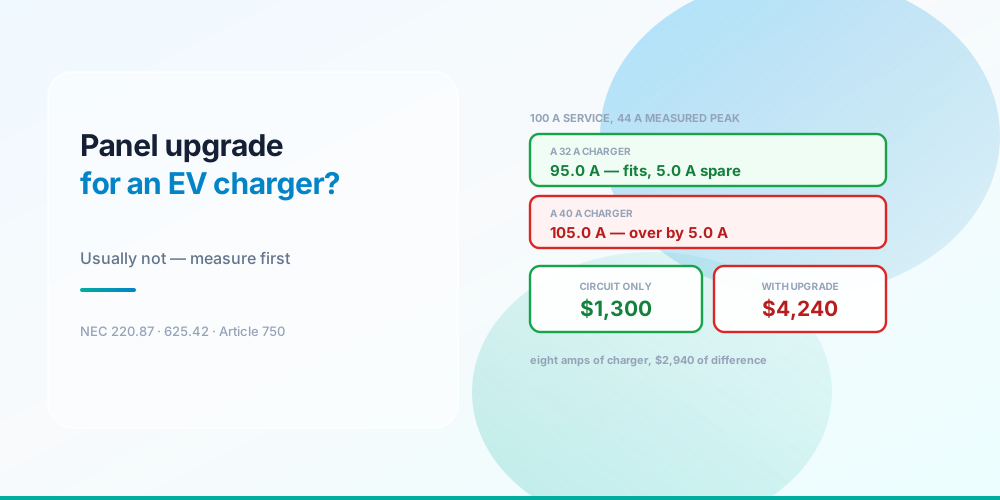
A 32 A charger fits a 100 A service with a 44 A measured peak, with 5.0 A spare. A 40 A charger misses by 5.0 A. Eight amps of charger, $2,940 of difference - and load management is the option nobody quotes.
- 04 Aug, 2026
Power Factor Correction: Sizing Capacitor kVAR and Cutting Demand Charges
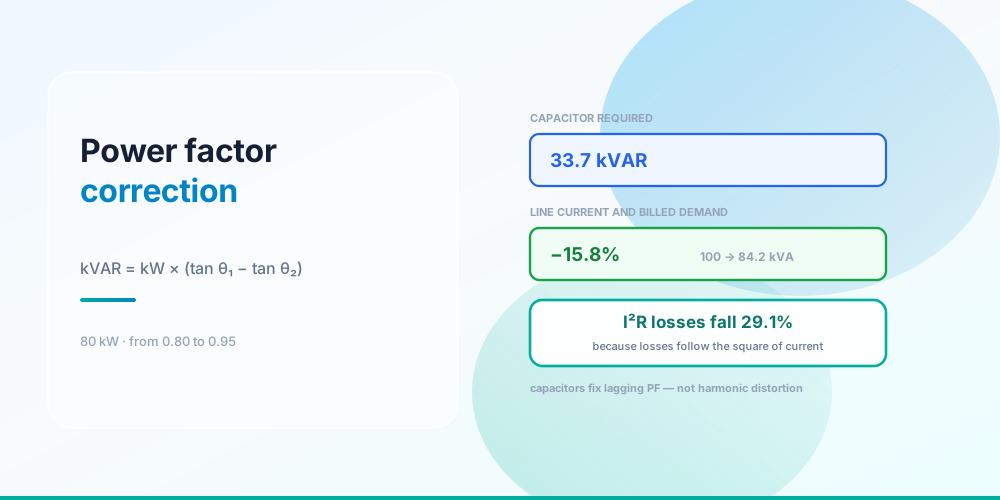
kVAR = kW × (tan θ₁ − tan θ₂). Correcting 80 kW from 0.80 to 0.95 needs 33.7 kVAR, cuts current 15.8% and cuts I²R losses 29.1% - and getting to unity costs as much again.
- 04 Aug, 2026
Available Fault Current: The Point-to-Point Method and AIC Ratings
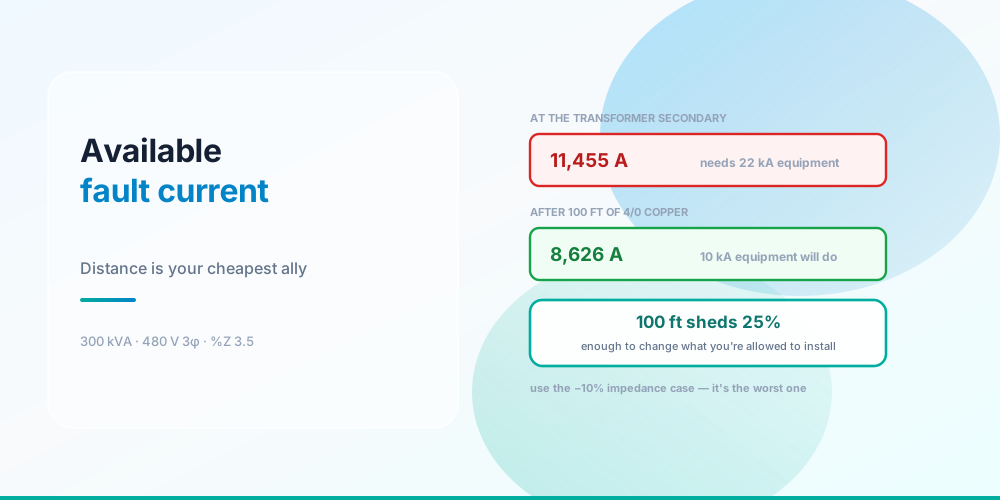
A 300 kVA 480 V transformer delivers 11,455 A at its secondary. After 100 ft of 4/0 it's 8,626 A - and at 50 ft the requirement already drops from 22 kA equipment to 10 kA.
- 04 Aug, 2026
Transformer Sizing: kVA, Primary and Secondary OCPD (NEC 450.3)
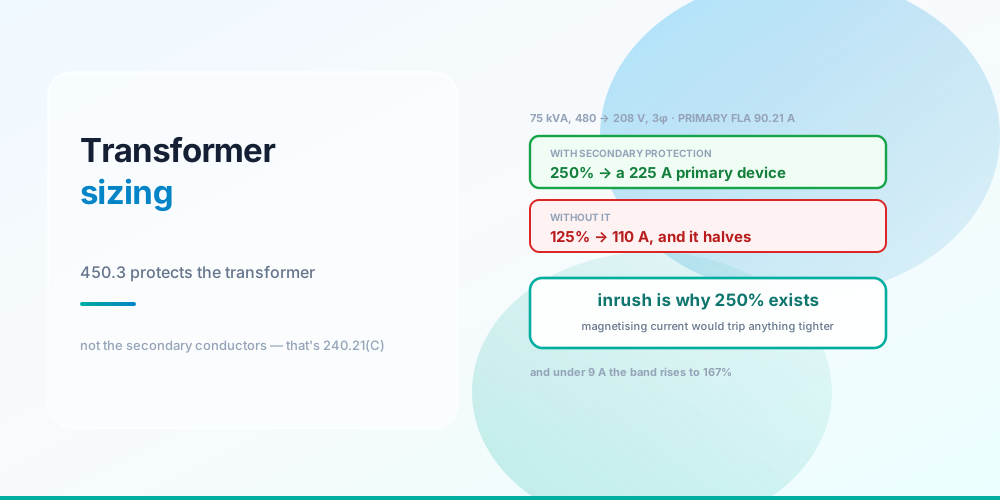
The primary device may go to 250% of FLA - but only where the secondary is separately protected. Without it you're capped at 125%. And 450.3 protects the transformer, not the secondary conductors.
- 04 Aug, 2026
Motor Circuit Sizing: Conductors, OCPD, and Overload Protection
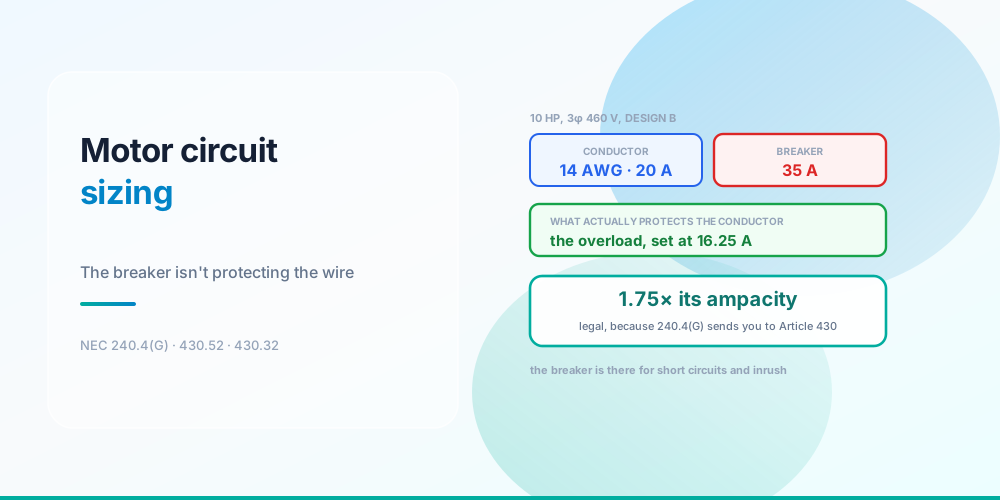
A 35 A breaker legally protects a 14 AWG conductor rated 20 A - 1.75× its ampacity - because 240.4(G) sends motor circuits to Article 430, where the overload protects the wire.
- 04 Aug, 2026
Motor Full Load Amps: Why You Use Table 430.250, Not the Nameplate
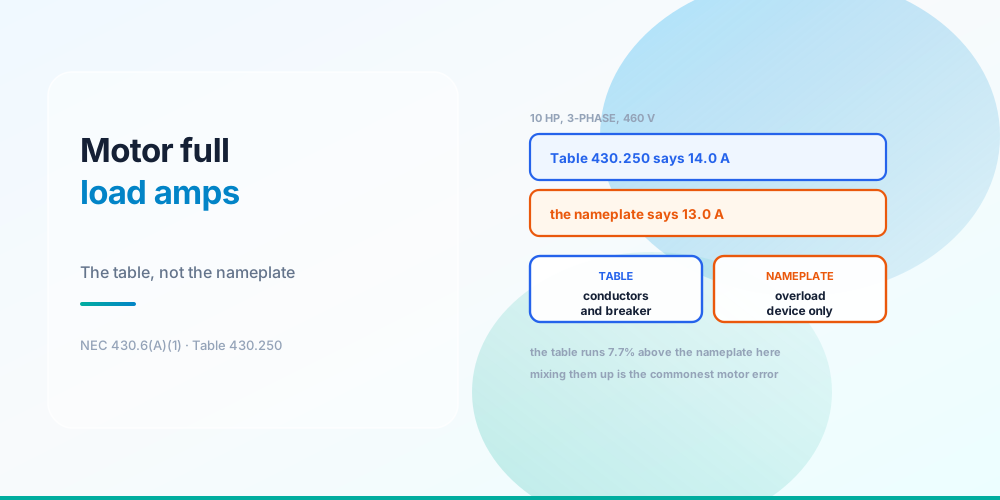
A 10 HP 460 V motor has a table FLC of 14.0 A and a 13.0 A nameplate. Conductors and the breaker use the table; the overload uses the nameplate. Mixing them up is the commonest motor error.
- 04 Aug, 2026
Three-Phase Power: Why √3, and How to Get Line Amps
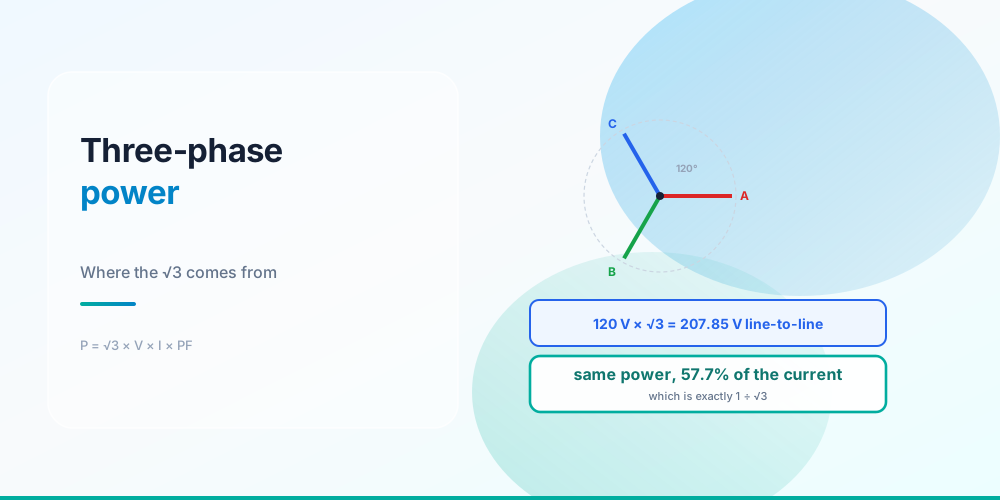
√3 is a vector sum, not a fudge factor. 120 V × √3 = 207.85 V - which is why 208 V exists. And three-phase delivers the same power at 57.7% of the single-phase current.
- 04 Aug, 2026
kVA vs kW: Power Factor, Apparent Power, and Why It Matters
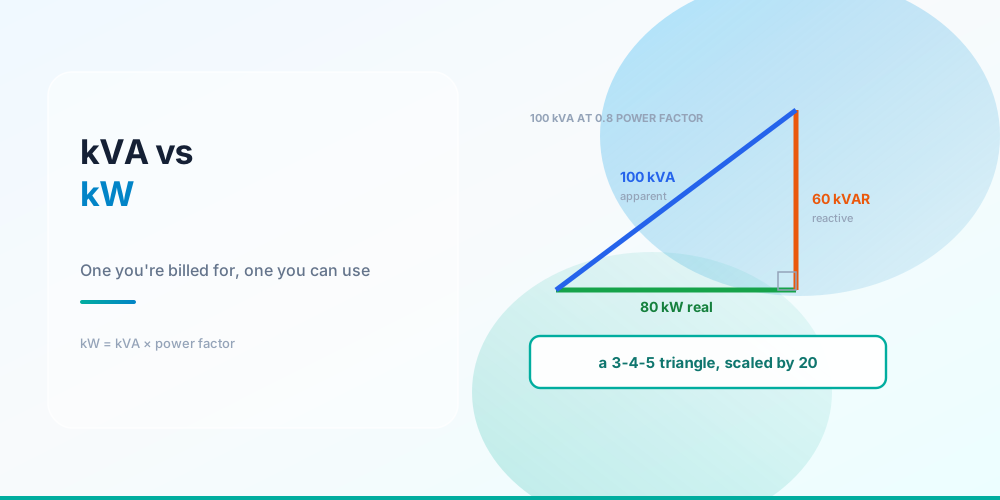
kW = kVA × power factor. At PF 0.8 the power triangle is a 3-4-5: 100 kVA is 80 kW and 60 kVAR - and the conductor is sized for the hypotenuse, not the base.
- 04 Aug, 2026
Ohm's Law Explained: V, I, R, and the Power Wheel
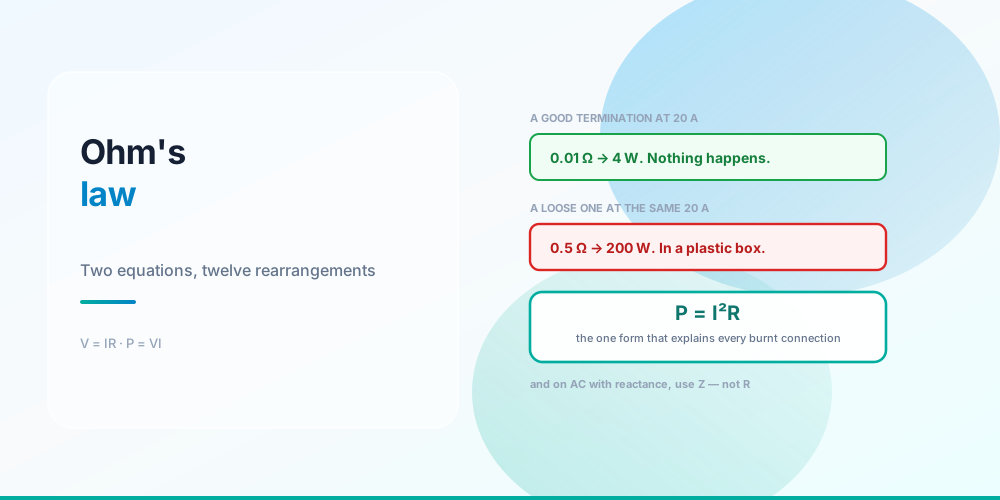
Two equations generate all twelve forms. The one that matters in the field is P = I²R - a loose 0.5 Ω termination at 20 A dissipates 200 W inside a plastic box.
- 04 Aug, 2026
AFCI and GFCI Nuisance Tripping: How to Actually Diagnose It
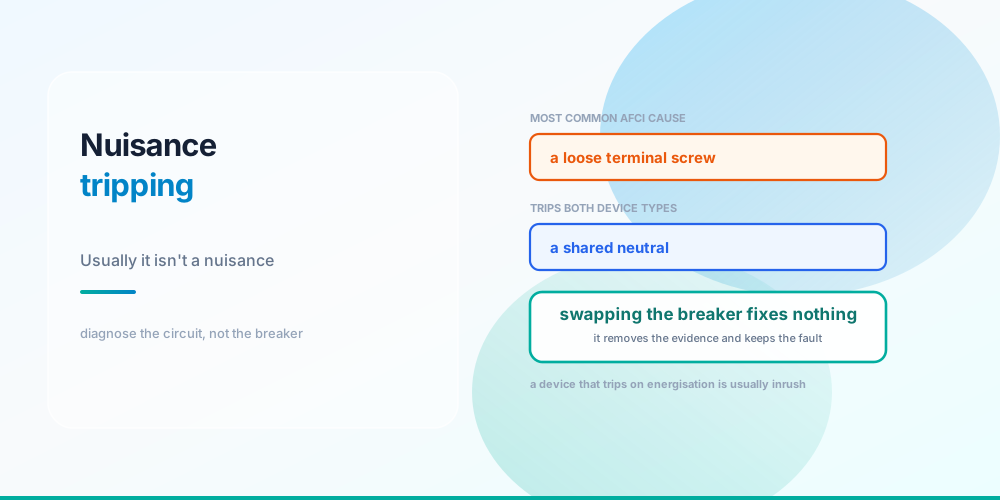
Most AFCI trips aren't nuisance trips - the commonest cause is a loose terminal screw. A shared neutral trips both device types, and swapping the breaker removes the evidence, not the fault.
- 04 Aug, 2026
Where GFCI Protection Is Required (NEC 210.8, With the 2023 Changes)
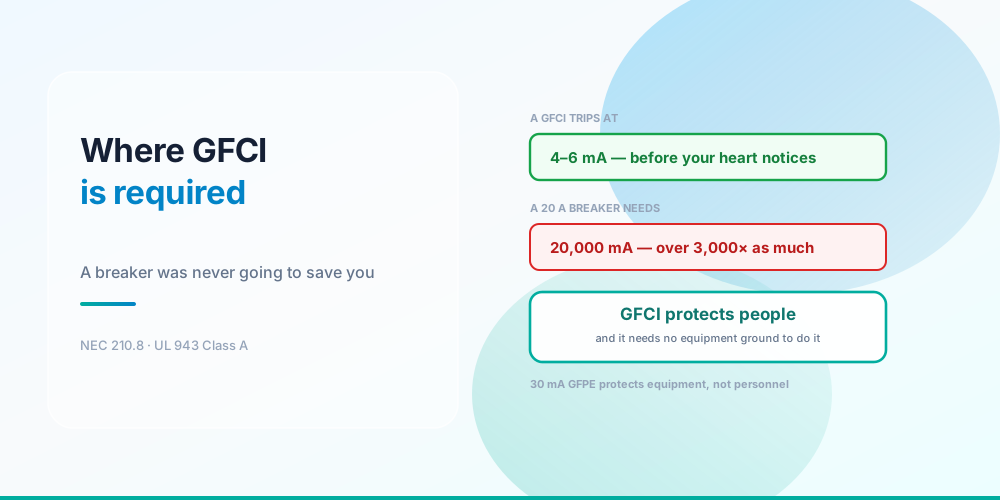
A GFCI trips at 4–6 mA; a 20 A breaker needs 20,000 mA. Here's every location 210.8 covers - and an honest account of which recent expansions your jurisdiction may have amended out.
- 04 Aug, 2026
Grounding vs Bonding: What Each One Actually Does
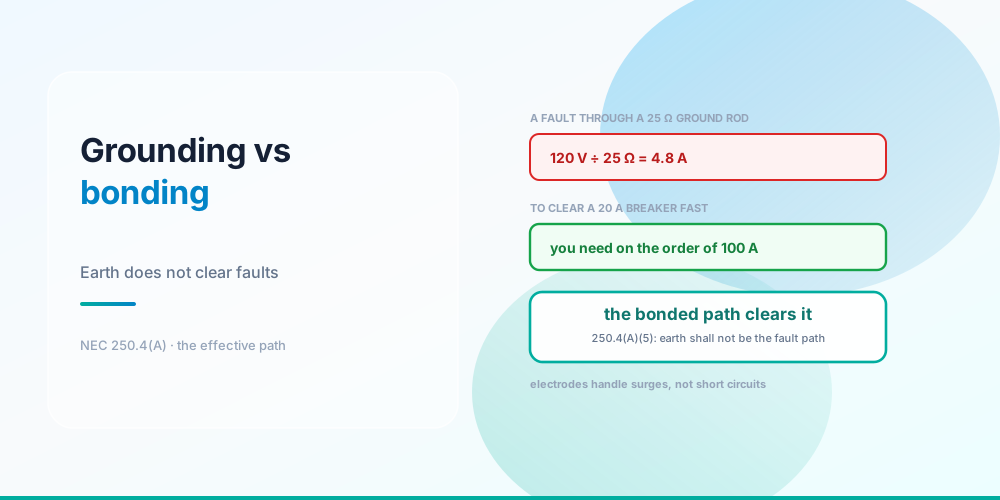
A fault through a 25 Ω ground rod passes 4.8 A at 120 V - it will never trip a 20 A breaker. Bonding clears faults; grounding handles surges. The NEC says so outright in 250.4(A)(5).
- 04 Aug, 2026
Conduit Bending: Offset, Saddle, and Stub-Up Multipliers
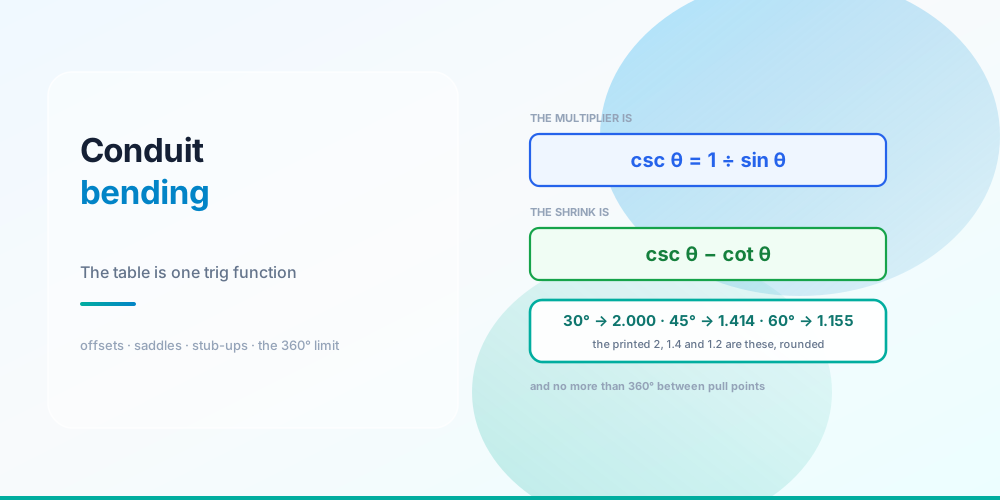
The offset multiplier is the cosecant of the bend angle - 30° is exactly 2.000, 45° is 1.414. The printed table is five rounded trig values, and shrink is csc θ − cot θ.
- 04 Aug, 2026
Receptacle Spacing Rules: The 6-Foot Rule and Kitchen Countertops
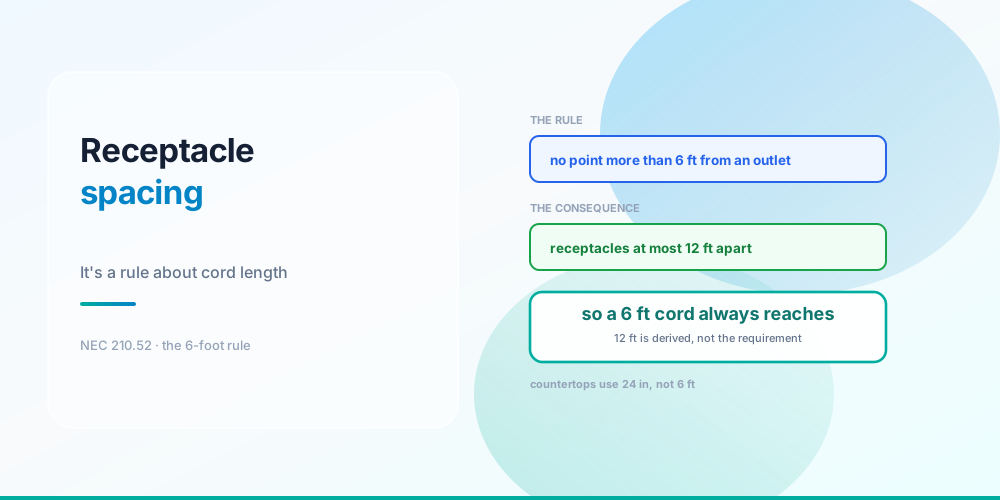
The 6-foot rule is about cord reach, not spacing - 12 ft apart is the consequence. Countertops use 24 inches instead, and the island requirement changed in the 2023 cycle.
- 04 Aug, 2026
NEC 220.87: Using Utility Data to Prove You Don't Need a Panel Upgrade
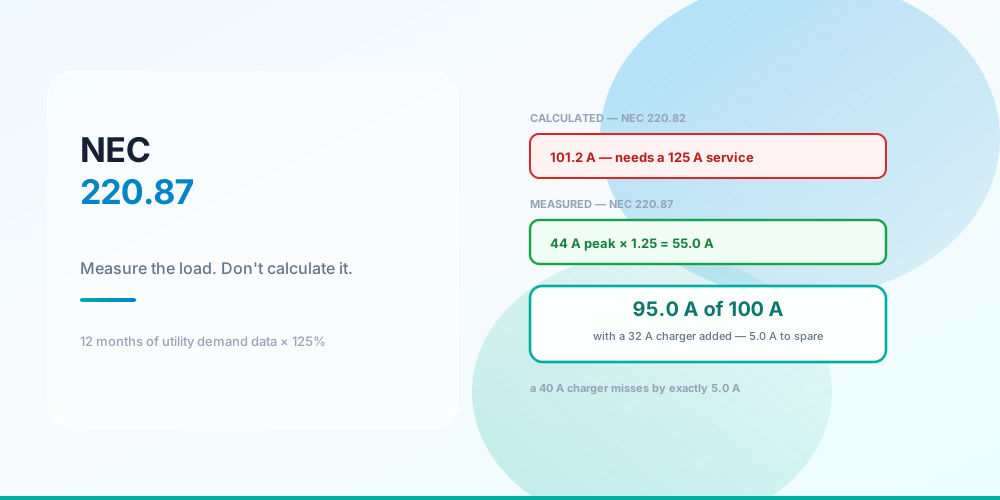
The calculated methods say this house needs a 125 A service. Its utility peak was 44 A, so 220.87 establishes 55.0 A of existing load - and a 32 A EV charger fits the 100 A service with 5.0 A spare.
- 04 Aug, 2026
Main Breaker vs Main Lug Panels: The 6-Handle Rule
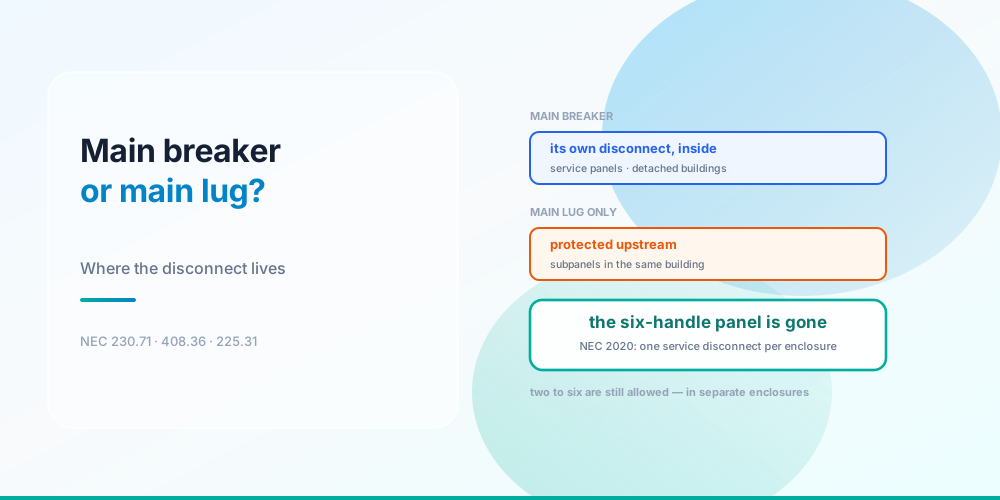
An MLO panel isn't unprotected - its busbar is protected upstream. And the six-handle panelboard is gone: NEC 2020 permits only one service disconnect per enclosure.
- 04 Aug, 2026
How Many Lights Can You Put on One Circuit?
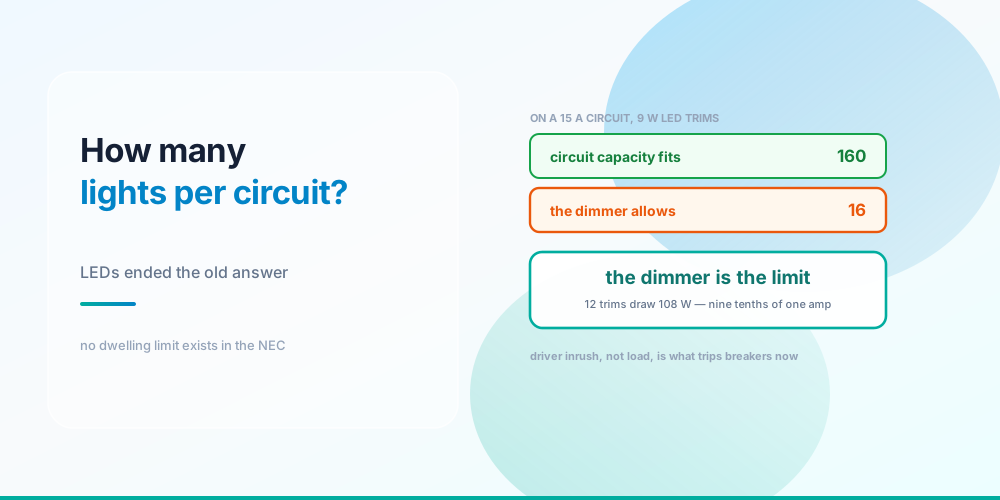
A 15 A circuit holds about 160 nine-watt LED trims. The dimmer allows 16. LEDs moved the binding constraint off the breaker entirely - and in a dwelling the NEC sets no limit at all.
- 04 Aug, 2026
The 80% Rule for Circuits: Continuous Load, Explained
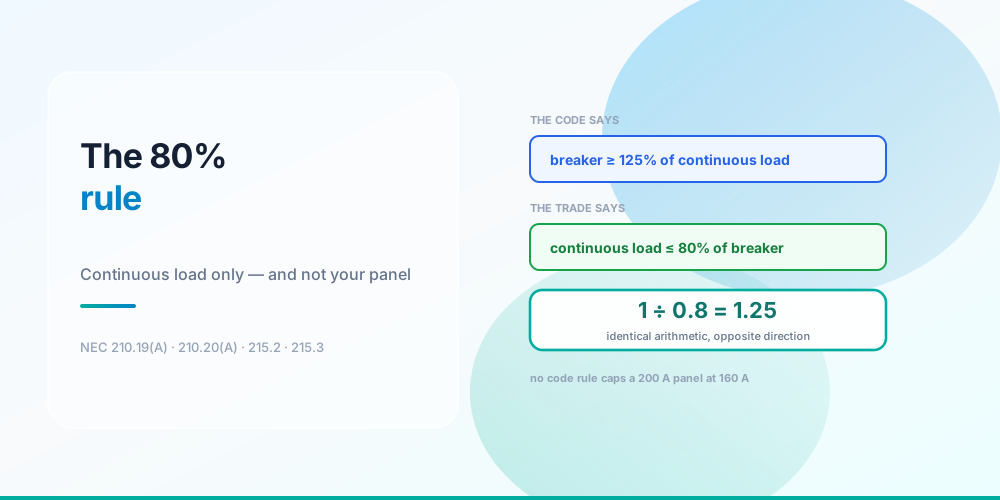
The 80% rule is just the code's 125% continuous-load factor inverted - 1 ÷ 0.8 = 1.25. It applies to continuous loads only, and it does not cap how much you may load a panel.
- 04 Aug, 2026
THHN vs NM-B vs MC Cable: Which Wiring Method Goes Where
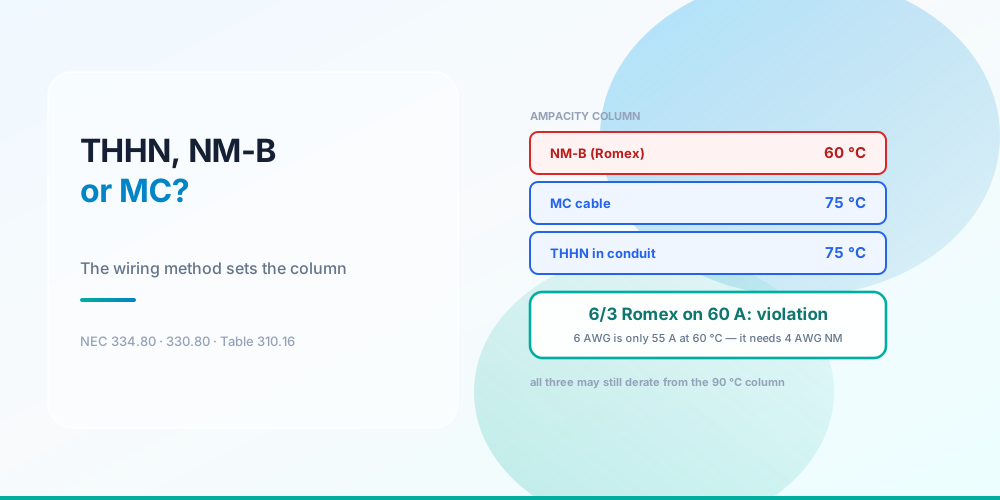
NM cable is held to the 60 °C column, MC and THHN in conduit to 75 °C. That gap costs a conductor size at five common ratings - and makes 6/3 Romex on a 60 A circuit a violation.