
What Size Grease Trap Do I Need? Two Devices, Two Methods
- 03 Sep, 2026
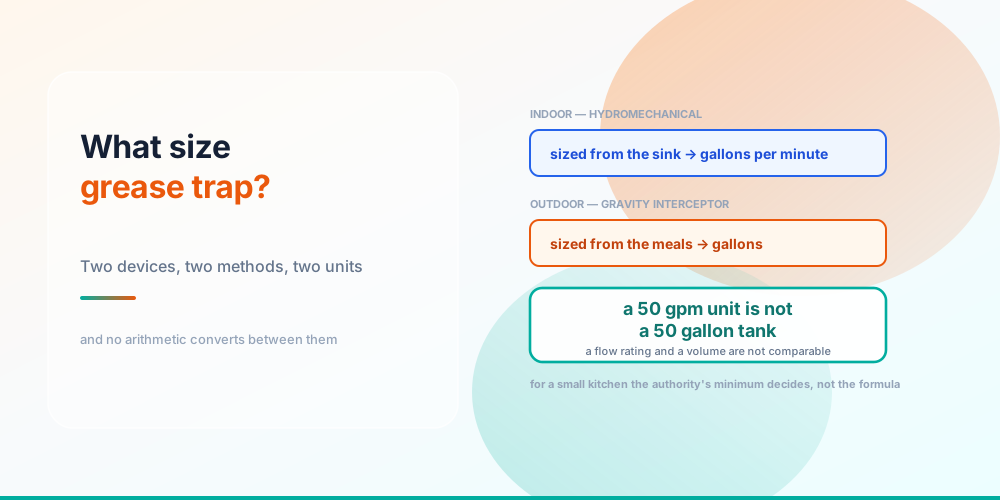
The question “what size grease trap do I need” has two answers, in two different units, and picking the wrong one is the most common mistake on the subject.
A hydromechanical grease trap is rated in gallons per minute. A gravity grease interceptor is rated in gallons. One is a flow rating and one is a volume. They are not two sizes of the same product, they are sized by methods that share no inputs at all, and no arithmetic converts between them.
The two devices
Two devices, two methods, two different units
The hydromechanical trap sits under or beside the sink, indoors, and works by baffling flow so that grease has time to float before the water leaves. Because it depends on flow being slow enough for separation, its rating is a flow — the most gallons per minute it can handle and still separate.
The gravity interceptor is a buried concrete or polyethylene vault outside the building, usually 1,000 gallons or more. It works by sheer residence time: the effluent sits long enough that grease rises to the top and solids fall to the bottom. Because it depends on time, its rating is a volume.
Most jurisdictions do not let you choose. A full-service kitchen is normally required to have an outdoor interceptor, and the indoor unit is permitted only for small operations or as supplementary protection on one fixture.
Sizing the indoor trap: the sink decides
The fixture-volume method asks a simple question — if the sink were full and someone pulled every plug at once, how much water arrives in one minute?
gallons = length × width × depth × compartments ÷ 231 gpm = gallons × 75% ÷ 1 minute
The 231 is cubic inches per gallon. The 75% is the allowance for a sink never being filled to the rim, and the one minute is the drainage period the method assumes.
The PDI ladder — capacity is exactly twice the rating
Two things in that figure catch people out.
The compartment count multiplies directly. A three-compartment 20 × 20 × 12 sink holds 62.3 gallons, drains 46.8 of them, and therefore needs 46.8 gpm — a 50 gpm unit. Take the same bowls up to 24 × 24 and the requirement jumps to 67.3 gpm and a 75 gpm unit. A four-inch difference on each side of each bowl moves the device two sizes up the ladder.
Grease capacity is not a separate spec. PDI-G101 defines it as exactly two pounds per gallon per minute, so a 50 gpm unit holds 100 pounds and a 75 gpm unit holds 150. If a datasheet quotes a capacity that is not double the rating, it is not a PDI-rated unit. Work your own sink through the Grease Trap Size Calculator, which runs both methods side by side.
A flow control fitting almost always goes with the trap. It is an orifice plate ahead of the inlet that caps the arriving flow at the unit’s rating, and without it a fast dump overwhelms the baffles and pushes grease straight through. Leaving it out is the most common installation defect on these units.
Sizing the outdoor interceptor: the meals decide
The gravity interceptor is sized on how much greasy water the kitchen generates in its busiest hour, and how long that water needs to sit.
meals per peak hour = seats × turnover per hour gallons = meals/hr × gallons per meal × retention hours × storage factor
Meal count sizes the gravity interceptor — until the floor takes over
The coffee shop row is the one worth sitting with. It calculates to 270 gallons and installs 1,000 — the minimum most sewer authorities impose regardless of the arithmetic. For a small operator the formula decides nothing at all, and arguing the calculation down is wasted effort.
At the other end, the 24-hour diner and the 120-seat restaurant both land on 7,200 gallons, past the largest commonly stocked shell. Above roughly 4,000 gallons you stop selecting a product and start specifying one, often as two vessels in series.
Notice that the diner and the restaurant reach the same number by different routes — 160 meals an hour running around the clock, against 240 meals an hour over sixteen. Hours of operation are as powerful as seat count, because they set the storage factor.
Every factor here is a local decision
This is the part to be honest about. The gallons-per-meal figures, the retention hours and the storage factors are the form published in municipal FOG guidance and in older code appendices. They are widely used and they are not code. Your sewer authority may publish its own table, may impose a minimum well above 1,000 gallons, may require a specific pump-out interval, and may size on kitchen square footage instead of seats.
The IPC covers grease interceptors in Chapter 10 but does not publish the meal-count formula. Get the local FOG programme’s own sizing sheet before you order anything — that document, not this one, is what the inspection is against.
Maintenance is part of the sizing
A grease device only works while it has space for grease. The 25% rule is the usual trigger: pump out when grease and solids together reach a quarter of the operating depth. On an undersized interceptor that arrives every few weeks, which is how an apparent capital saving turns into a permanent operating cost.
Many authorities require a pump-out manifest to be kept on site and produced on inspection. Sizing generously is, in practice, the cheapest way to reduce that burden.
Where sizing goes wrong
Sizing an outdoor interceptor with the sink method, or the reverse. They answer in different units. A 50 gpm requirement does not become a 50 gallon tank.
Counting only the pot sink. Every fixture discharging FOG is in scope — the pre-rinse sink, the wok range, the tilt skillet, the combi oven condensate, the mop sink. Dishwashers are the exception in most jurisdictions and are usually excluded from an indoor unit because the discharge temperature re-melts trapped grease and carries it straight through.
Omitting the flow control fitting. The rating assumes it is there.
Sizing on today’s menu. A trap sized for a sandwich counter does not survive the space becoming a fryer kitchen, and the device is buried in a slab.
Assuming the 1,000 gallon minimum is universal. It is common, not universal. Some authorities start at 1,500 or 2,000.
Frequently asked questions
What size grease trap do I need for a 3 compartment sink?
Work the fixture volume. A three-compartment 20 × 20 × 12 inch sink holds 62.3 gallons, of which 75% — 46.8 gallons — is assumed to drain in one minute, so it needs a 50 gpm PDI unit holding 100 lb of grease. Take the bowls to 24 × 24 × 12 and the requirement rises to 67.3 gpm and a 75 gpm unit.
What is the difference between a grease trap and a grease interceptor?
A hydromechanical grease trap is a small indoor unit rated in gallons per minute and sized from the volume of the sink it serves. A gravity grease interceptor is a large outdoor vault rated in gallons and sized from the meals served. Different devices, different methods, different units — most authorities specify which one a given kitchen must have.
How is grease interceptor size calculated?
Meals in the peak hour, multiplied by gallons of wastewater per meal, by the required retention hours, by a storage factor for the hours of operation. A 60-seat diner turning twice an hour reaches 120 meals an hour and calculates to 1,800 gallons, taking a 2,000 gallon shell.
Why did my small cafe still need a 1,000 gallon interceptor?
Because the calculation lost to the floor. A 40-seat single-service cafe calculates to about 270 gallons, but most sewer authorities impose a 1,000 gallon minimum on any outdoor interceptor regardless of what the formula produces. For small operators the minimum is the answer.
How much grease can a trap hold?
For PDI-rated hydromechanical units, exactly two pounds per gallon per minute of flow rating — a 20 gpm unit holds 40 lb, a 50 gpm unit holds 100 lb. That is a definition in PDI-G101, not a manufacturer’s claim, so any datasheet quoting something else is describing a differently rated product.
Does the dishwasher go through the grease trap?
Usually not, for an indoor unit. Dishwasher discharge is hot enough to re-melt grease already captured and carry it out with the effluent, so most jurisdictions exclude it from a hydromechanical trap. Outdoor gravity interceptors normally do take dishwasher waste, because the residence time lets it cool and separate.
How often does a grease trap need pumping?
The usual trigger is the 25% rule — pump out when accumulated grease and solids reach a quarter of the operating depth. How often that happens depends on how generously the device was sized. An undersized interceptor can need pumping every few weeks, which is how a cheaper tank becomes the more expensive decision.
Is grease trap sizing in the plumbing code?
Partly. The IPC addresses grease interceptors in Chapter 10 and PDI-G101 defines the flow ratings and retention capacities, but the meal-count formula is not IPC text — it is published in municipal FOG programme guidance and older code appendices. Your local sewer authority sets the sizing method, the minimum size and the maintenance regime, and its sheet overrides everything here.
Sources & standards: PDI-G101 for hydromechanical interceptor flow ratings and the two-pounds-per-gpm retention definition, which is a definition and therefore derived rather than transcribed on this page. IPC 2021 Chapter 10 for grease interceptor requirements in general. The fixture-volume method, its 75% fill fraction and one-minute drainage period, and the whole meal-count formula — gallons per meal, retention hours, storage factors and the 1,000 gallon floor — are the forms published in municipal FOG guidance and older code appendices rather than IPC text, and every one of them is an editable input on the calculator for that reason. The IPC is a model code and grease requirements are unusually local even by plumbing standards: your sewer authority’s own FOG sizing sheet governs, and a licensed plumber and the AHJ should sign off the installed device.