
Grey Water Systems: The 24-Hour Rule That Shapes Everything
- 05 Sep, 2026
Most people approach grey water as a storage problem: catch the shower water, keep it, use it on the garden when the garden needs it. Every part of that is wrong, and the reason is a single number.
Untreated grey water may not be stored for more than 24 hours. It goes septic — bacteria multiply on the soap, skin and lint in it, oxygen runs out, and within about a day it stops being grey water and starts being sewage. So the tank cannot be bigger than one day’s supply, and the system has to get rid of what it collects on the day it collects it.
The rule and what it forces
The 24-hour rule is what shapes everything
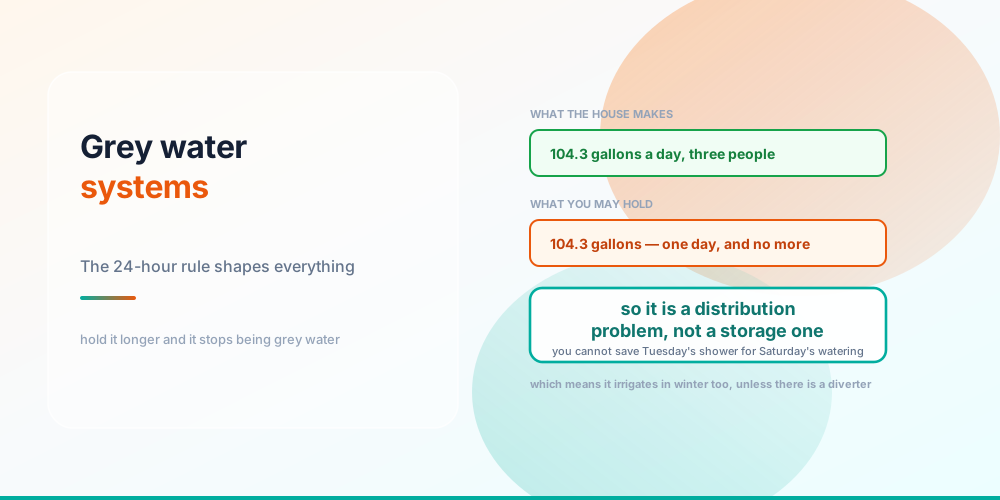
A three-person household producing 104.3 gallons a day may hold 104.3 gallons. Not 300, not 500. One day.
That inverts the whole design. Grey water is a distribution problem, not a storage one. You cannot save Tuesday’s shower for Saturday’s watering — the system must dispose of it on Tuesday, into the ground, subsurface, whether the plants want it or not.
Which produces the consequence nobody plans for: it irrigates in winter, in the rain, and while you are away. A system with nowhere to put its output in February is a system that backs up.
The answer is a three-way diverter valve sending the line either to the landscape or back to the sewer. It is the single most useful component in a grey water system, it is frequently required, and it is what makes the system tolerable to live with.
This is exactly where grey water and rainwater diverge. Rainwater is stored for a dry spell and sized on the drought; grey water cannot be stored at all. The rainwater side is in sizing a rainwater harvesting system, and the Rainwater & Grey Water Calculator runs both.
What counts as grey, and where it comes from
The shower is nearly the whole system
- Shower and bath — 75.0 gpd — 72% of the total
- Bathroom sinks — 15.0 gpd
- Clothes washer — 14.3 gpd at five loads a week
Not grey: toilet waste is black water, always. And kitchen sink and dishwasher waste is treated as black water in most jurisdictions, because grease and food solids foul a subsurface system quickly and carry a much higher pathogen load. That surprises people, and it is worth checking locally because a minority of jurisdictions permit kitchen water into a treated system.
Two practical routes follow from the source split:
Laundry-to-landscape is the easiest system there is. The washing machine already has a pump, so the discharge hose goes to a diverter and out to mulch basins with no new drain plumbing at all. Many jurisdictions permit it with no permit or a simplified one.
Shower-only captures 72% of the household yield from one drain, which is the best ratio of benefit to plumbing available.
What it can water
What you plant moves the answer four-fold
- Native or drought-tolerant planting — 0.3 gal/sq ft/week — 2,433 sq ft
- Shrubs and ornamental beds — 0.6 — 1,217 sq ft
- Mixed landscape — 0.9 — 811 sq ft
- Cool-season lawn — 1.2 — 608 sq ft
Four times the area for drought-tolerant planting over lawn, from the same water. The household’s output is not really adjustable; the planting is, and it is the lever that matters.
Grey water also suits trees and established shrubs far better than lawn. Delivery is subsurface, the roots are deeper, and there is no surface contact — which is both a horticultural point and a health one.
The rules that come with it
Subsurface only. No spraying, no surface ponding, no contact. Distribution is typically through mulch basins or subsurface drip designed for the purpose.
Not on root vegetables or anything eaten raw where the edible part contacts the soil.
Marked and separated. Purple pipe, labelled, physically separated from potable lines, with no hose bibb anyone could drink from. Where a top-up from the potable supply exists, it needs backflow protection — an air gap is the usual answer, and the selection logic is in backflow prevention.
Soap matters. Sodium and boron in ordinary detergents accumulate in soil and damage plants over time. Grey water systems need grey-water-safe products, which is a household habit change rather than a plumbing item.
No pressurised distribution without treatment. Untreated grey water in a pressurised irrigation system is not permitted anywhere the author is aware of.
The regulatory position
This is the least uniform subject in plumbing and it deserves saying plainly.
The IPC covers nonpotable systems in Chapter 13 where that chapter is adopted. The IAPMO green supplement and the IRC cover it elsewhere. In practice state and county rules decide, and they range from laundry-to-landscape being permitted by right with no permit at all, through permitted-with-conditions, to effectively prohibited.
Some jurisdictions actively subsidise grey water; others treat any reuse as a sewage system requiring engineered design. This page deliberately publishes no jurisdiction table, because any such table would be wrong somewhere within a year.
Potable reuse, treatment and disinfection are out of scope entirely.
Is it worth it?
Honestly, it depends more on climate than on plumbing.
It makes sense where irrigation demand is high and year-round, where water is expensive or restricted, and where the landscape is trees and shrubs rather than lawn.
It makes less sense where it rains through the growing season, where the garden is small, or where winters mean the diverter sits on “sewer” for months — because you have installed and permitted a system that runs for part of the year.
Start with laundry-to-landscape. It is the cheapest, most often permitted, least invasive version, and it tells you whether the household will actually live with the soap constraints before anyone opens a wall.
Frequently asked questions
What is grey water?
Waste water from showers, baths, bathroom sinks and clothes washers — everything except toilet waste, which is black water. Kitchen sink and dishwasher water is treated as black water in most jurisdictions because of grease, food solids and pathogen load, though a minority permit it into a treated system.
Why can’t grey water be stored?
Because it goes septic. The soap, skin and lint in it feed bacteria, oxygen is consumed, and within about a day untreated grey water becomes sewage. Storage is capped at 24 hours, which for a three-person household means a tank of about 104 gallons and no more.
How much grey water does a house produce?
About 104 gallons a day for three people using shower, bathroom sinks and five washer loads a week. Showers alone are roughly 72% of that, which is why a shower-only system captures most of the benefit from a single drain.
How much landscape can grey water irrigate?
At about 104 gpd: 2,433 sq ft of drought-tolerant planting, or 608 sq ft of cool-season lawn — a four-fold difference from the planting choice alone. Grey water suits established trees and shrubs far better than lawn, because delivery is subsurface.
Is a grey water system legal?
It depends heavily on where you are, and this is the least uniform subject in plumbing. The IPC addresses nonpotable systems in Chapter 13 where adopted; elsewhere the IRC or the IAPMO green supplement applies; and state and county rules actually decide, ranging from permitted by right to effectively prohibited. Check locally before designing anything.
What is laundry-to-landscape?
The simplest grey water system: the washing machine’s own pump pushes its discharge through a diverter valve to mulch basins outside, with no new drain plumbing. Many jurisdictions permit it with no permit or a simplified one, which makes it the sensible place to start.
Can I spray grey water on my garden?
No. Distribution must be subsurface — mulch basins or purpose-made subsurface drip — with no spraying, no surface ponding and no contact. It also should not go on root vegetables or anything eaten raw where the edible part touches the soil.
Do I need special soap for a grey water system?
Yes, in practice. Sodium and boron in ordinary detergents accumulate in soil and damage plants over time. Grey-water-safe products are readily available, but it is a permanent household habit change rather than a one-off plumbing item — and it is worth testing before committing to a system.
Sources & standards: Nonpotable water reuse is the least code-governed subject in plumbing. The IPC addresses it in Chapter 13 where that chapter is adopted, the IRC and the IAPMO green supplement apply elsewhere, and state and county rules actually decide — ranging from permitted by right to effectively prohibited. This page deliberately publishes no jurisdiction table, because any such table would be wrong somewhere within a year. The 24-hour storage limit is the widely applied rule for untreated grey water and reflects how quickly it turns septic; the per-person yield figures, irrigation demand rates and source classifications are common planning allowances rather than measurements, and every one is an editable input on the calculator. Kitchen and dishwasher waste is excluded as black water in most jurisdictions but not all. Cross-connection protection where a nonpotable system meets a potable supply is IPC Section 608. Potable reuse, treatment and disinfection are out of scope entirely. Confirm everything with your AHJ before designing.