
Showing Posts From
Electrical
This electrical category gathers practical articles for electricians and estimators who need clear explanations of NEC concepts, conductor sizing, panel work, and job pricing — without burying the answer under marketing fluff.
Expect coverage of ampacity, breaker sizing, voltage drop, service and feeder topics, GFCI/AFCI issues, and how those calculations feed into professional estimates customers can understand.
When you need interactive tools, pair these articles with the electrical calculator hub for wire size, voltage drop, load calculations, and related estimators.
Guides in this category
- How to Use a Multimeter: Volts in Parallel, Amps in Series
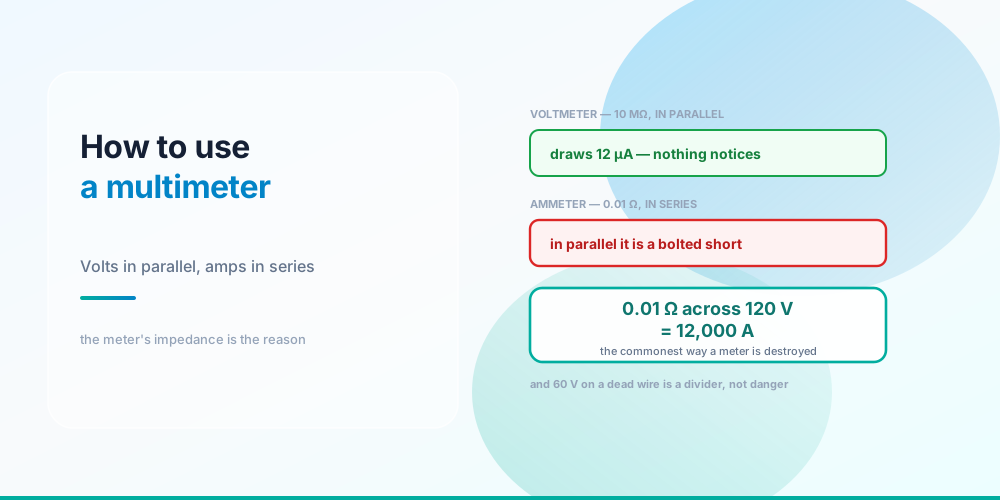
A voltmeter draws 12 µA. An ammeter's shunt across 120 V is a 12,000 A short. Why the meter's own impedance decides where it goes, and why 60 V on a dead wire is a divider, not danger.
- How a Circuit Breaker Works: Two Mechanisms in One Device
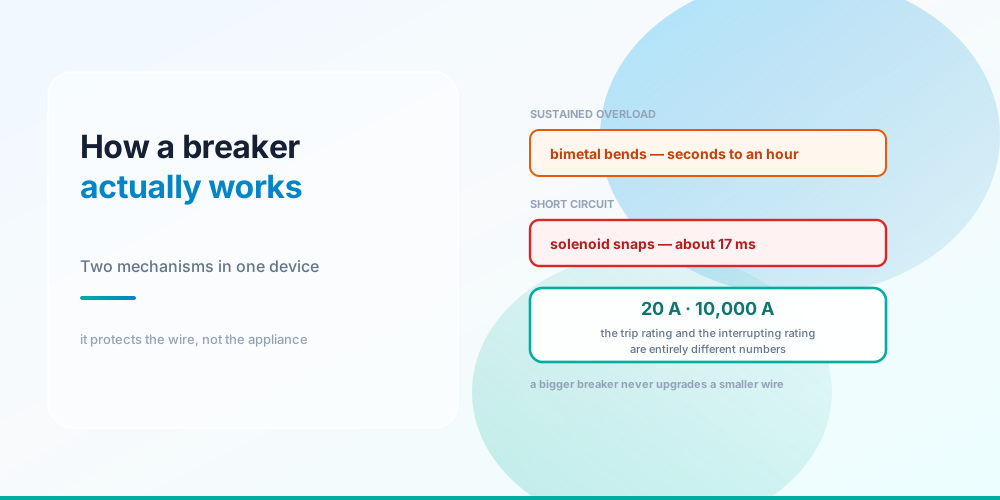
A bimetal strip handles overload over seconds to an hour; a solenoid clears a short in about 17 ms. Why a breaker protects the wire rather than the appliance, and why 20 A isn't its only rating.
- Split-Phase 120/240 V: Where Two Voltages Come From One Winding
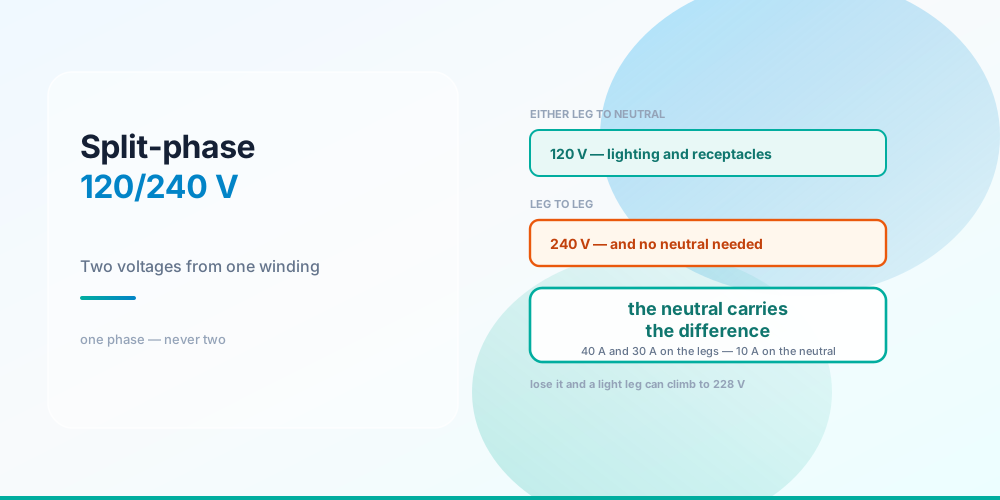
One centre-tapped transformer gives a house both voltages. Why the neutral carries the difference, why 240 V loads need no neutral, and why an open neutral pushes a light leg to 228 V.
- Hot, Neutral and Ground: What Each Wire Actually Does
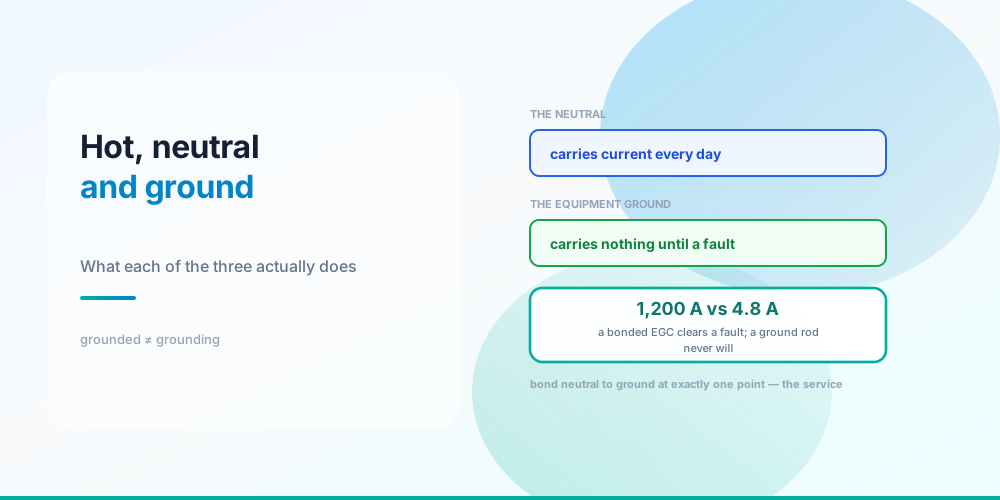
The neutral carries current every second the load runs. The ground carries none until something fails. Both connect to earth - which is exactly why swapping them looks fine and isn't.
- AC vs DC: What Alternating Current Actually Means
Your 120 V outlet peaks at 169.7 V and reverses 120 times a second. What RMS really measures, why the grid is AC, and why DC arcs are the dangerous ones.
- Series vs Parallel Circuits: Why Every Building Is Wired in Parallel
Three 40 Ω elements draw 120 W in series and 1,080 W in parallel - nine times the power from identical parts. The rule that separates them, and the one series circuit you never wanted.
Related resources
- 06 Aug, 2026
How to Use a Multimeter: Volts in Parallel, Amps in Series
A voltmeter draws 12 µA. An ammeter's shunt across 120 V is a 12,000 A short. Why the meter's own impedance decides where it goes, and why 60 V on a dead wire is a divider, not danger.
- 06 Aug, 2026
How a Circuit Breaker Works: Two Mechanisms in One Device
A bimetal strip handles overload over seconds to an hour; a solenoid clears a short in about 17 ms. Why a breaker protects the wire rather than the appliance, and why 20 A isn't its only rating.
- 06 Aug, 2026
Split-Phase 120/240 V: Where Two Voltages Come From One Winding
One centre-tapped transformer gives a house both voltages. Why the neutral carries the difference, why 240 V loads need no neutral, and why an open neutral pushes a light leg to 228 V.
- 06 Aug, 2026
Hot, Neutral and Ground: What Each Wire Actually Does
The neutral carries current every second the load runs. The ground carries none until something fails. Both connect to earth - which is exactly why swapping them looks fine and isn't.
- 06 Aug, 2026
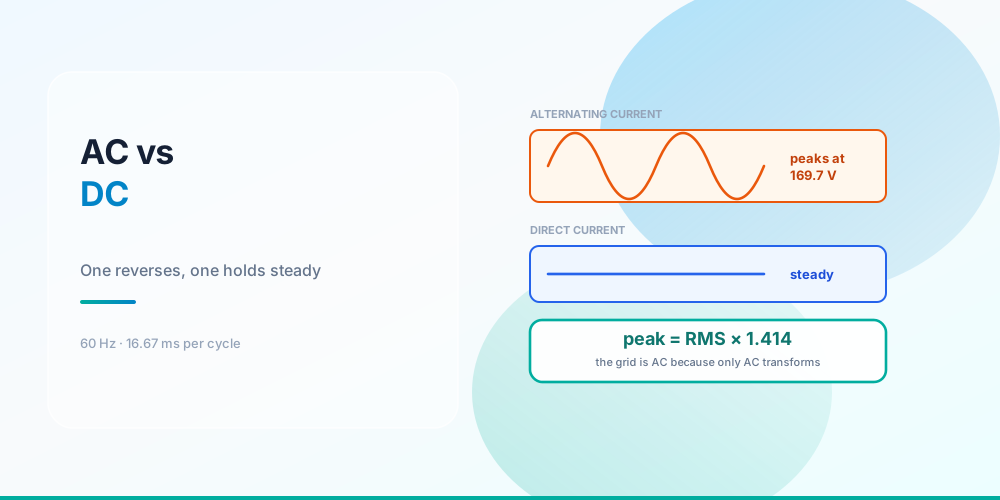
AC vs DC: What Alternating Current Actually Means
Your 120 V outlet peaks at 169.7 V and reverses 120 times a second. What RMS really measures, why the grid is AC, and why DC arcs are the dangerous ones.
- 06 Aug, 2026
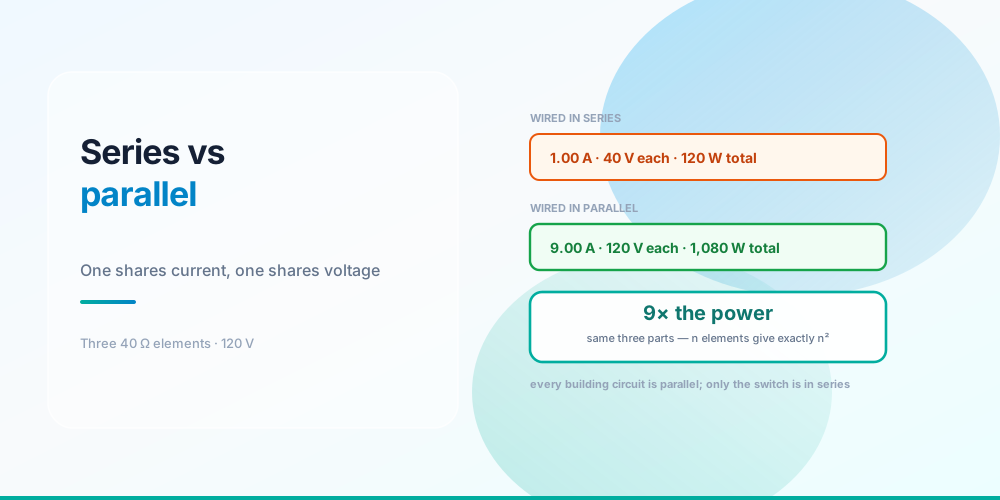
Series vs Parallel Circuits: Why Every Building Is Wired in Parallel
Three 40 Ω elements draw 120 W in series and 1,080 W in parallel - nine times the power from identical parts. The rule that separates them, and the one series circuit you never wanted.
- 05 Aug, 2026
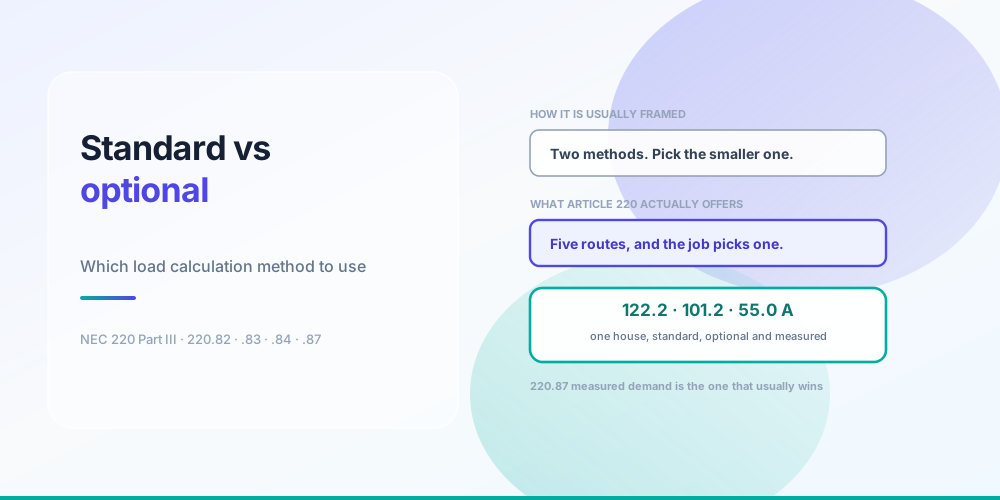
Standard vs Optional Load Calculation: Which Method to Use
It isn't a choice between two methods - Article 220 has five, and the situation usually picks one. When 220.83 beats 220.82, why 220.87 wins on any existing service, and when the method changes the answer.
- 05 Aug, 2026
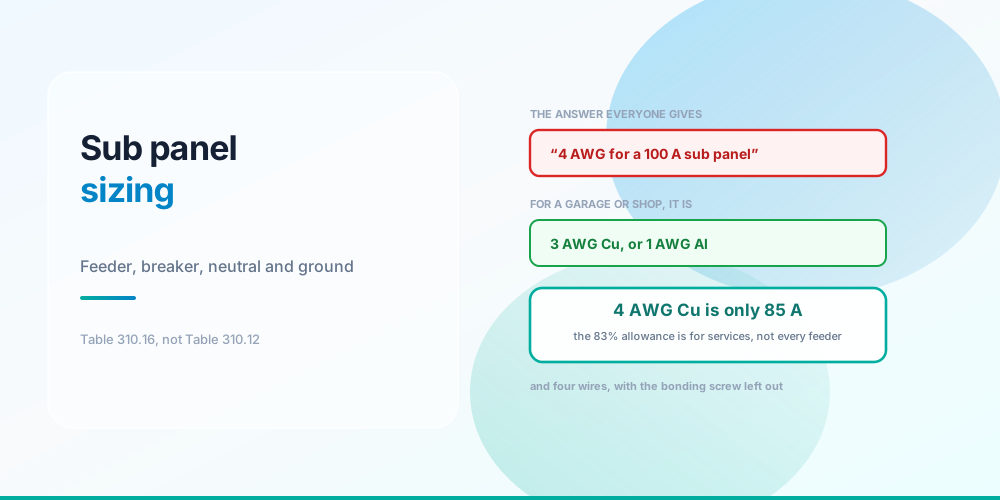
Sub Panel Sizing: Feeder Wire, Breaker, Neutral, and Ground
"4 AWG for a 100 A sub panel" is wrong for a garage - that needs 3 AWG copper. Why the Table 310.12 83% allowance doesn't reach an ordinary subpanel, plus the four-wire feeder and the bonding screw.

- 05 Aug, 2026
Lumens per Square Foot: Footcandle Targets Room by Room
A footcandle IS one lumen per square foot - there is nothing to convert. Targets from 10 fc in a hallway to 50 in a workshop, and why the spacing grid usually decides the fixture count anyway.

- 05 Aug, 2026
Markup vs Margin: How Electrical Contractors Price Jobs
A 25% markup is a 20% margin - always, exactly, and $248 less profit on the same job. The conversion in both directions, why overhead has to be inside break-even, and the multipliers worth memorising.
- 05 Aug, 2026
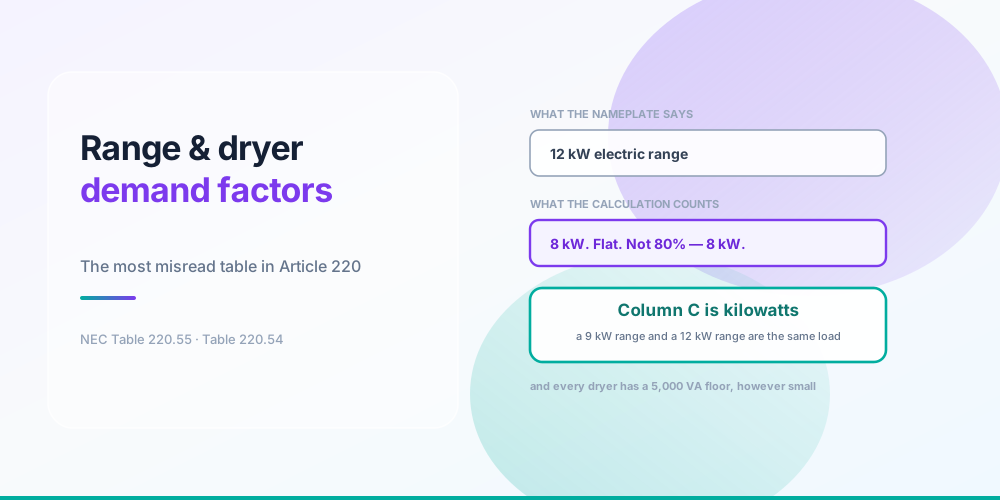
Range and Dryer Demand Factors: NEC 220.54 and 220.55
A 12 kW range counts as 8 kW - Column C is a demand in kilowatts, not a percentage. Why every dryer has a 5,000 VA floor, and how both tables strip 71% off a ten-unit building.
- 05 Aug, 2026
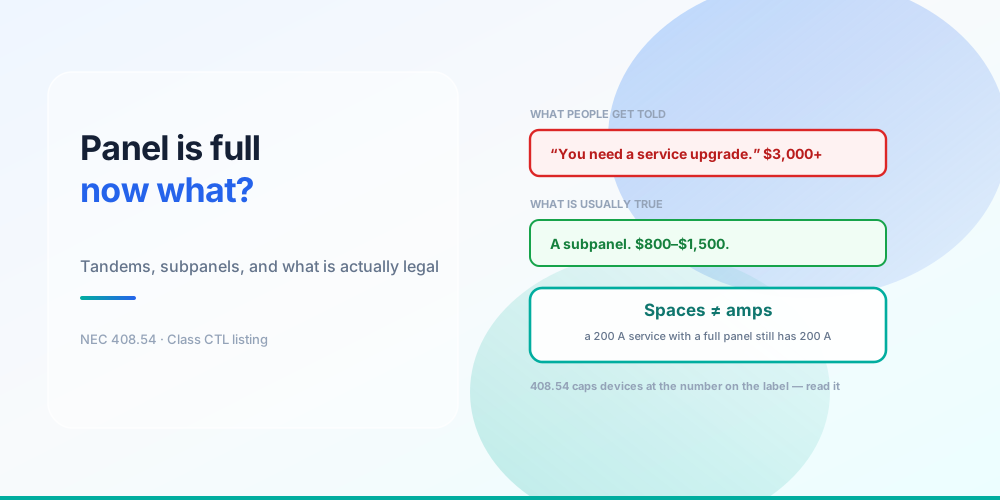
Panel Is Full: Tandem Breakers, Subpanels, and What's Actually Legal
A full panel is a wire-landing problem, not a capacity problem - a 200 A service with a full panel still has 200 A. What NEC 408.54 caps, why Class CTL slots reject tandems, and why a subpanel usually beats an upgrade.
- 05 Aug, 2026
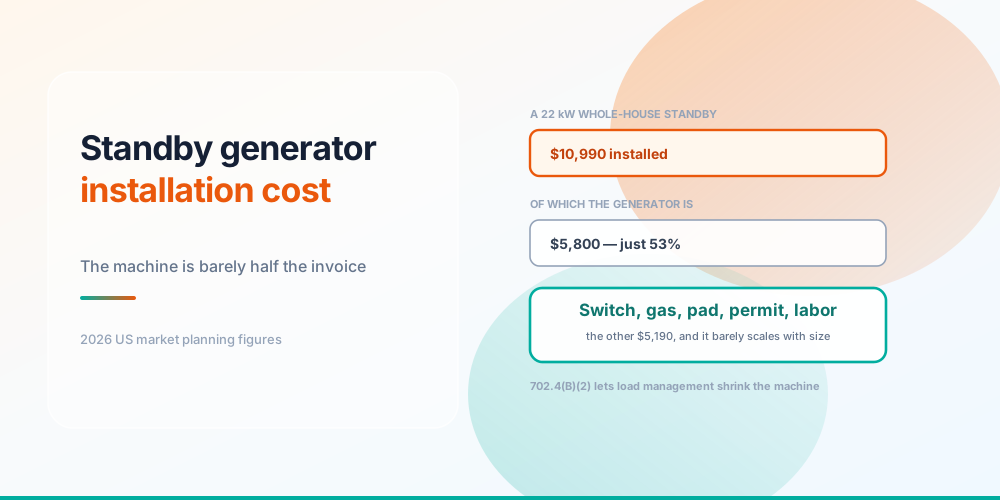
Standby Generator Installation Cost: Unit, ATS, Gas, Pad, Permit
A 22 kW whole-house standby runs about $10,990 installed - and the generator is only 53% of it. What the transfer switch, gas run, pad, permit and labour actually add, line by line.

- 05 Aug, 2026
Solar String Sizing: Cold-Weather Voc and Hot-Weather Vmp Limits
Cold sets the maximum modules per string and heat sets the minimum. Why NEC 690.7 makes you design to the record low, and why Table 690.7(A) costs you a module when the datasheet is right there.

- 05 Aug, 2026
The Solar 120% Rule: NEC 705.12 Busbar Math, Done Right
A 200 A panel with a 200 A main allows exactly 40 A of PV breaker - a 7.6 kW inverter, and not one amp more. Why opposite-end placement is the entire justification, and the three fixes when it fails.
- 05 Aug, 2026
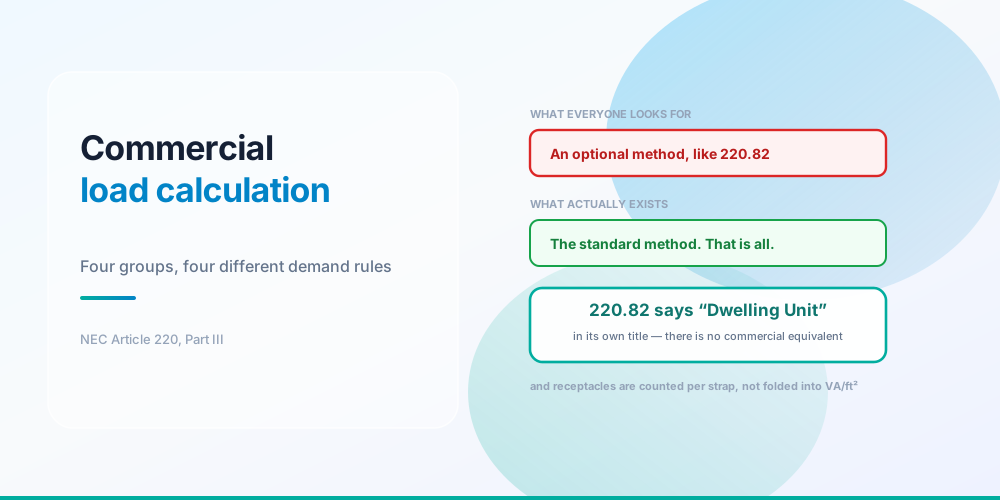
Commercial Load Calculation: VA per Square Foot by Occupancy
There is no optional method for a commercial building - 220.82 is a dwelling shortcut. The standard method in four groups, each with its own demand factor, worked on a real 5,000 ft² store.
- 04 Aug, 2026
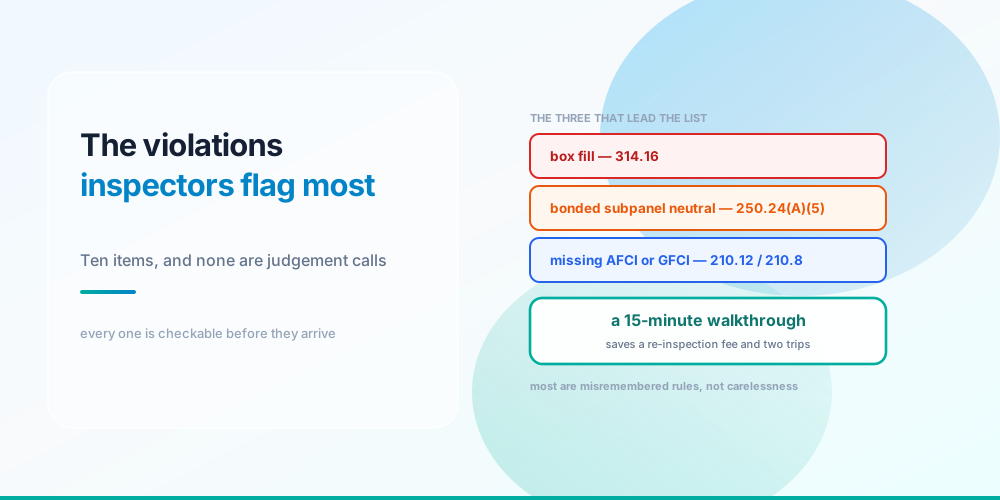
The 10 NEC Violations Inspectors Flag Most
Box fill leads the list, and the worked case lands on exactly 18.00 in³ - the limit of an 18.0 in³ box. All ten are misremembered rules rather than carelessness, and all ten are checkable in advance.
- 04 Aug, 2026
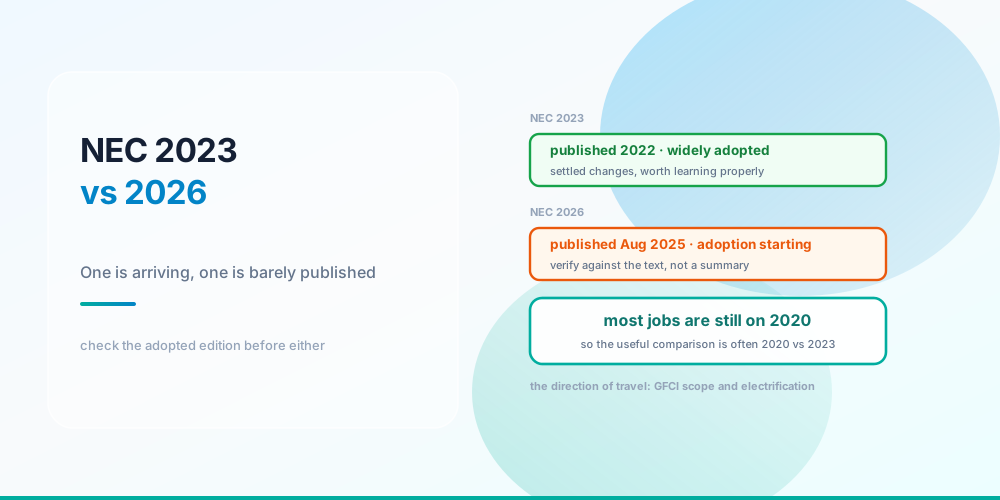
NEC 2023 vs 2026: The Changes That Affect Everyday Work
NEC 2026 was published in August 2025 and adoption has barely begun. For most jobs the live comparison is 2020 vs 2023 - and one 2023 change actually requires less than 2020 did.
- 04 Aug, 2026
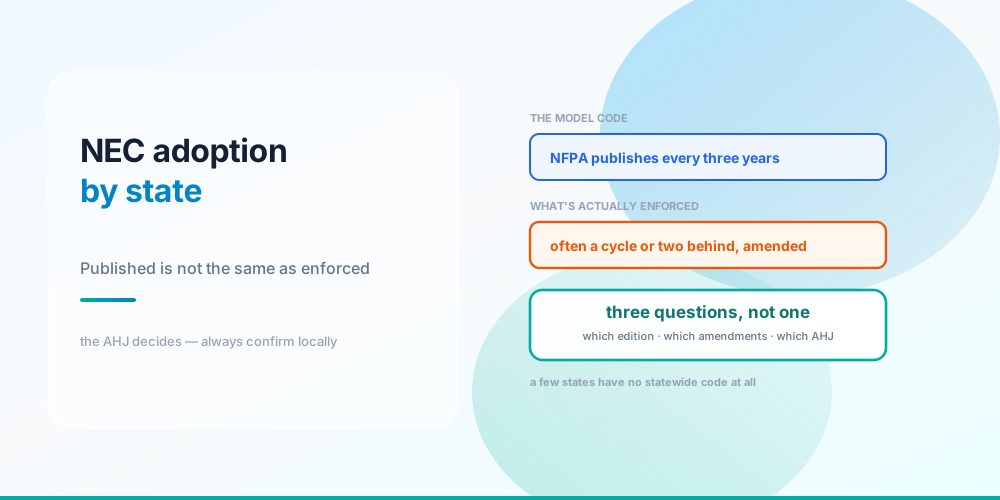
NEC Adoption by State: Which Code Cycle Applies to You
The NEC is a model standard, not law. Adoption lags publication by years, states amend it, and locals amend again - so several editions are always in force at once. Here's how to find yours.
- 04 Aug, 2026
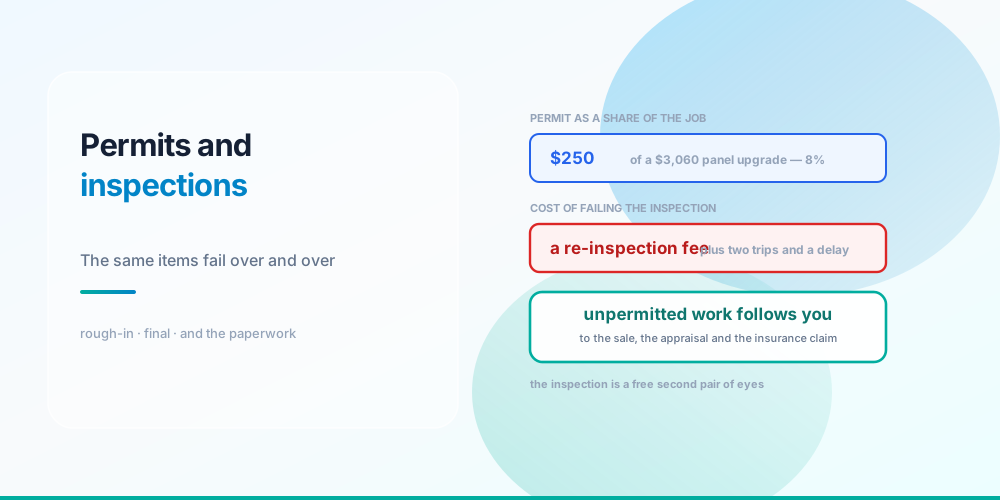
Electrical Permits and Inspections: What Gets Failed and Why
The same nine items fail over and over, and none of them are judgement calls. Walk the job against the list before calling the inspector - the fee is rarely the real cost, the schedule is.

- 04 Aug, 2026
Flat Rate vs Time and Materials for Electrical Service Work
Ten instances of the same job averaged 2.2 h but the commonest was 1.5 h. Price a flat rate on the mode and you lose money across the ten - flat rate is a bet on your average.
- 04 Aug, 2026
Electrical Labor Units: NECA MLU vs Your Own Job History
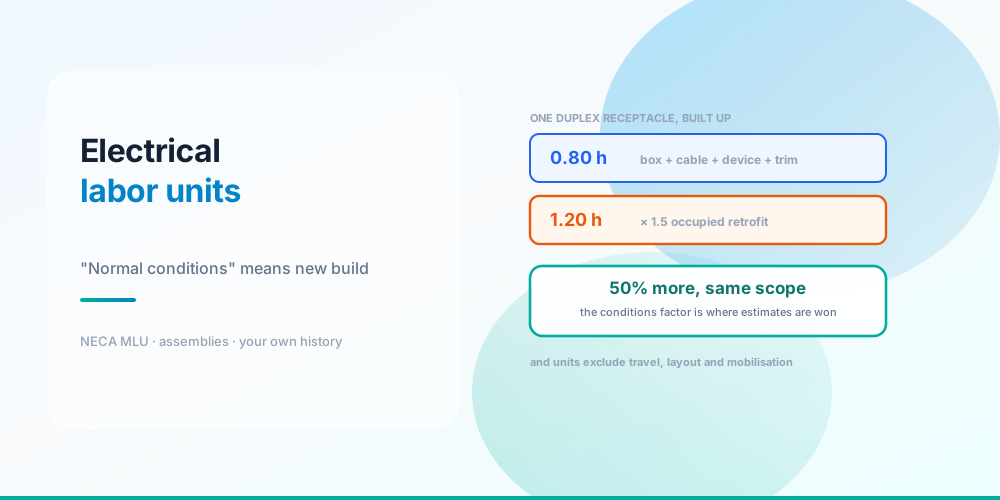
A 0.80 h receptacle assembly becomes 1.56 h in an occupied retrofit with high ceilings, because conditions factors multiply. Published units assume new construction - which describes almost no service job.
- 04 Aug, 2026
Cost to Install an Outlet or Add a Dedicated Circuit
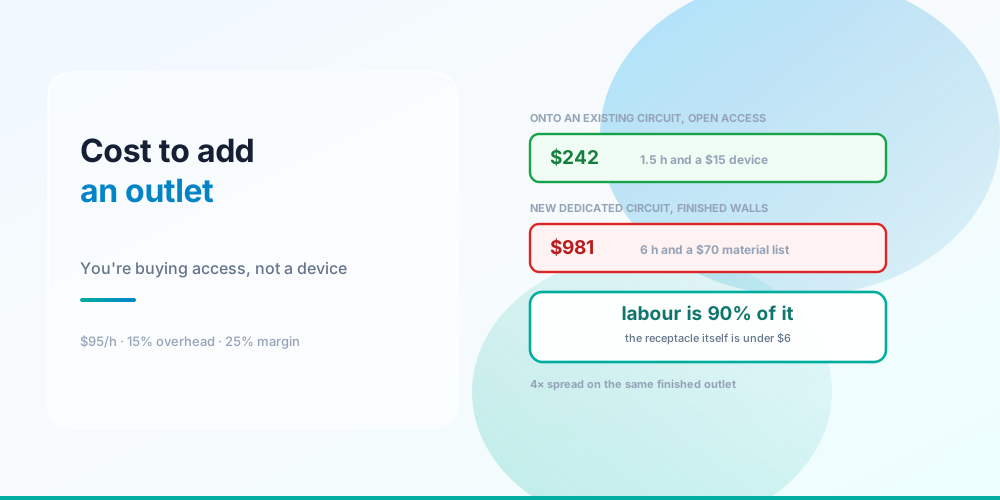
$242 to tap an existing circuit, $981 for a new dedicated circuit through finished walls. The receptacle costs $6 - labour is 90% of the price, and access is what you're really buying.
- 04 Aug, 2026
LED Retrofit Payback: Watts Saved vs Fixture Cost
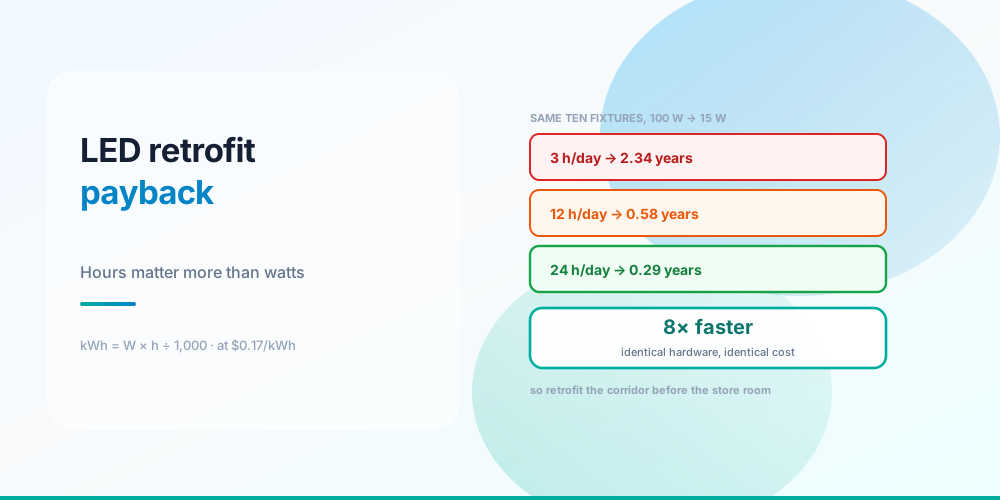
Identical hardware pays back 8× faster at 24 h/day than at 3 h/day. Operating hours dominate the arithmetic - which means you retrofit by duty cycle, not by wattage or room size.
- 04 Aug, 2026
Do You Need a Panel Upgrade for an EV Charger? (And the Load-Management Alternative)
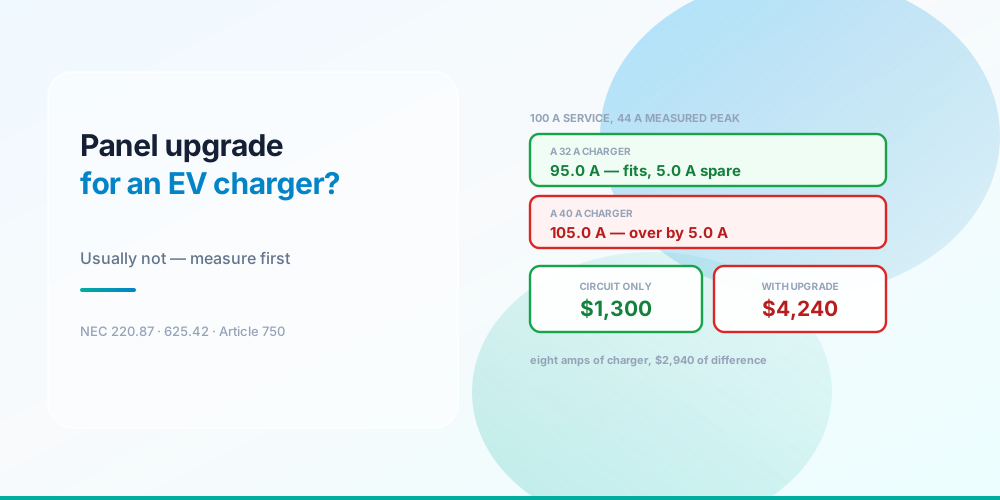
A 32 A charger fits a 100 A service with a 44 A measured peak, with 5.0 A spare. A 40 A charger misses by 5.0 A. Eight amps of charger, $2,940 of difference - and load management is the option nobody quotes.
- 04 Aug, 2026
Power Factor Correction: Sizing Capacitor kVAR and Cutting Demand Charges
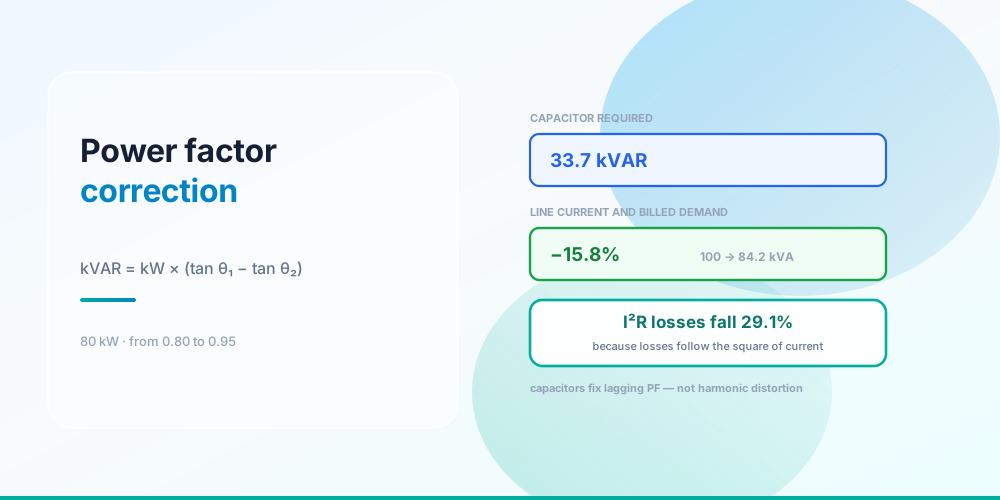
kVAR = kW × (tan θ₁ − tan θ₂). Correcting 80 kW from 0.80 to 0.95 needs 33.7 kVAR, cuts current 15.8% and cuts I²R losses 29.1% - and getting to unity costs as much again.
- 04 Aug, 2026
Available Fault Current: The Point-to-Point Method and AIC Ratings
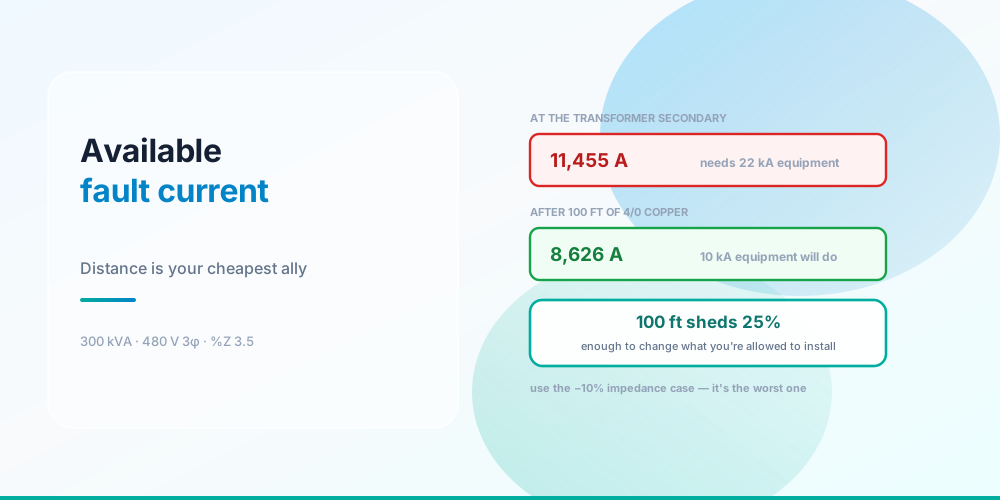
A 300 kVA 480 V transformer delivers 11,455 A at its secondary. After 100 ft of 4/0 it's 8,626 A - and at 50 ft the requirement already drops from 22 kA equipment to 10 kA.
- 04 Aug, 2026
Transformer Sizing: kVA, Primary and Secondary OCPD (NEC 450.3)
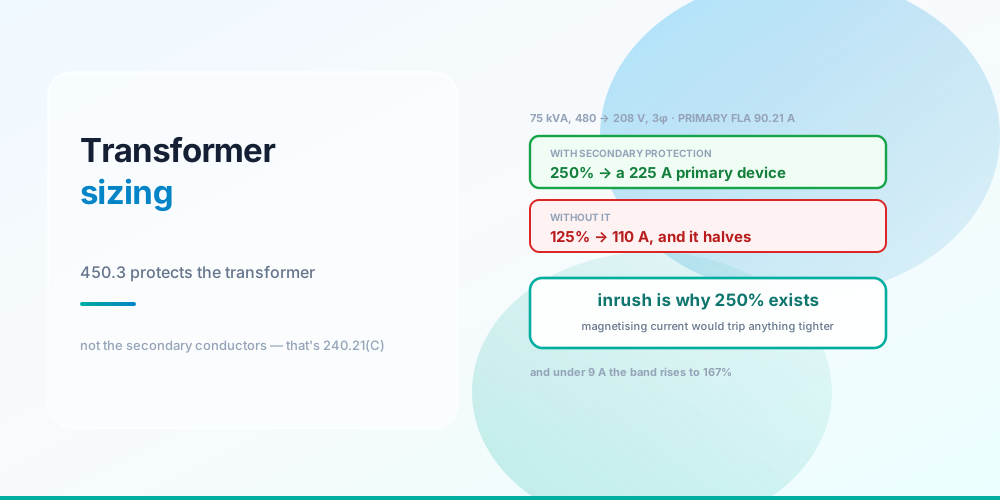
The primary device may go to 250% of FLA - but only where the secondary is separately protected. Without it you're capped at 125%. And 450.3 protects the transformer, not the secondary conductors.
- 04 Aug, 2026
Motor Circuit Sizing: Conductors, OCPD, and Overload Protection
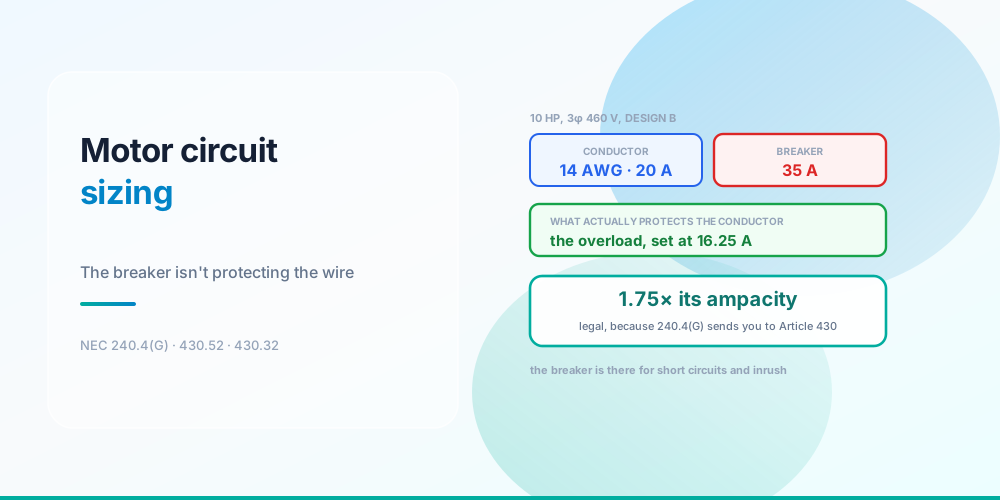
A 35 A breaker legally protects a 14 AWG conductor rated 20 A - 1.75× its ampacity - because 240.4(G) sends motor circuits to Article 430, where the overload protects the wire.
- 04 Aug, 2026
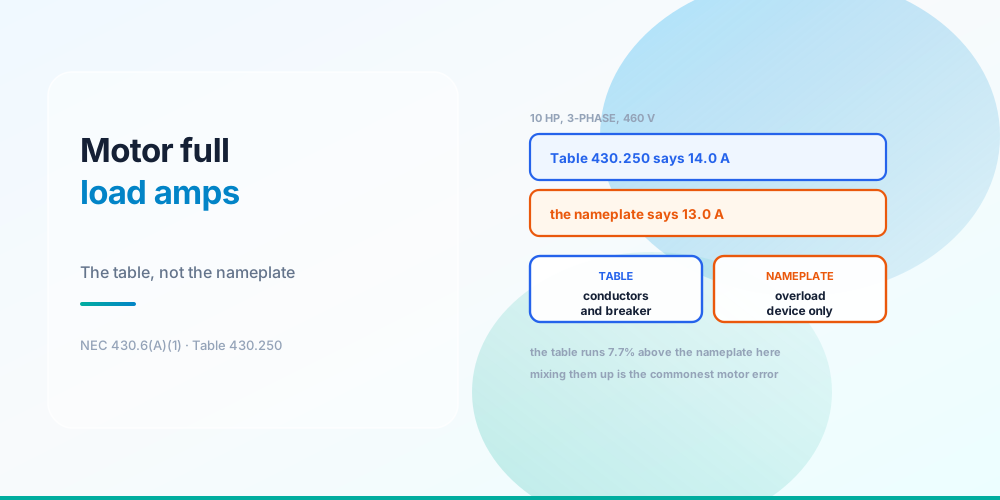
Motor Full Load Amps: Why You Use Table 430.250, Not the Nameplate
A 10 HP 460 V motor has a table FLC of 14.0 A and a 13.0 A nameplate. Conductors and the breaker use the table; the overload uses the nameplate. Mixing them up is the commonest motor error.
- 04 Aug, 2026
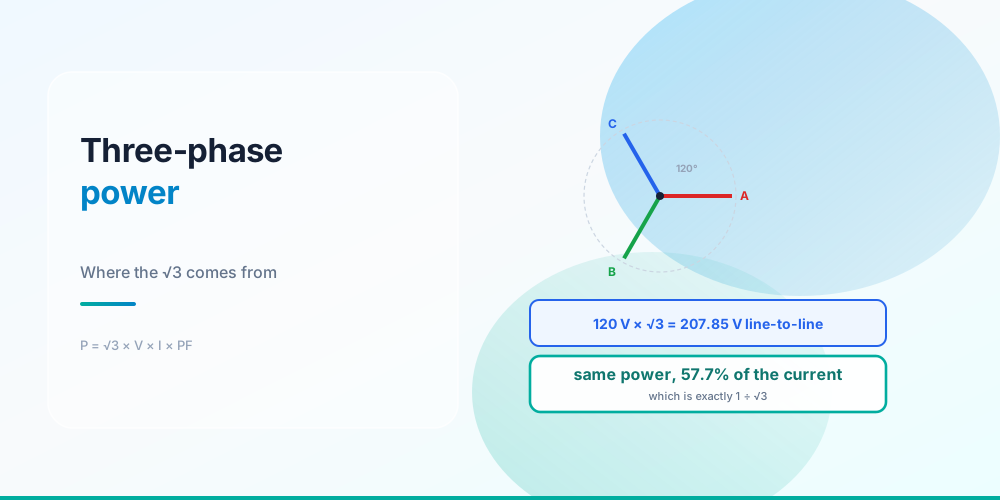
Three-Phase Power: Why √3, and How to Get Line Amps
√3 is a vector sum, not a fudge factor. 120 V × √3 = 207.85 V - which is why 208 V exists. And three-phase delivers the same power at 57.7% of the single-phase current.
- 04 Aug, 2026
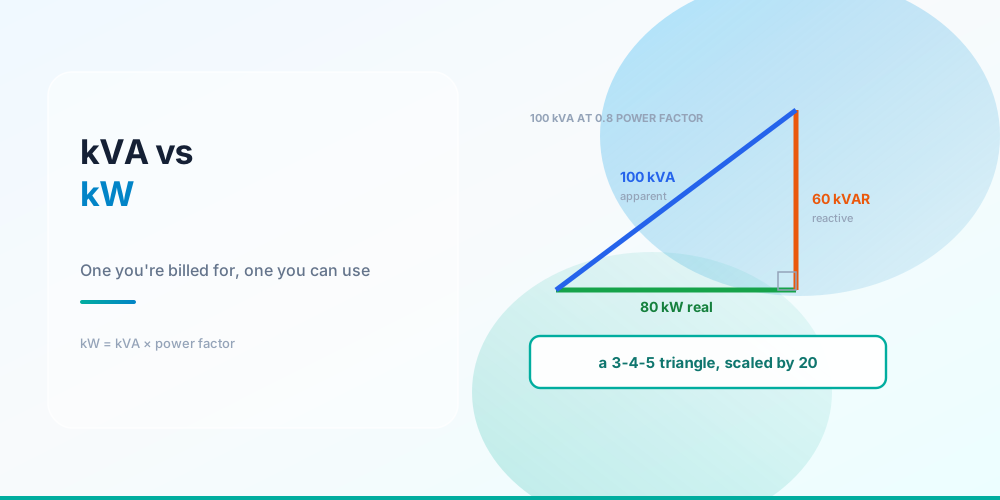
kVA vs kW: Power Factor, Apparent Power, and Why It Matters
kW = kVA × power factor. At PF 0.8 the power triangle is a 3-4-5: 100 kVA is 80 kW and 60 kVAR - and the conductor is sized for the hypotenuse, not the base.
- 04 Aug, 2026
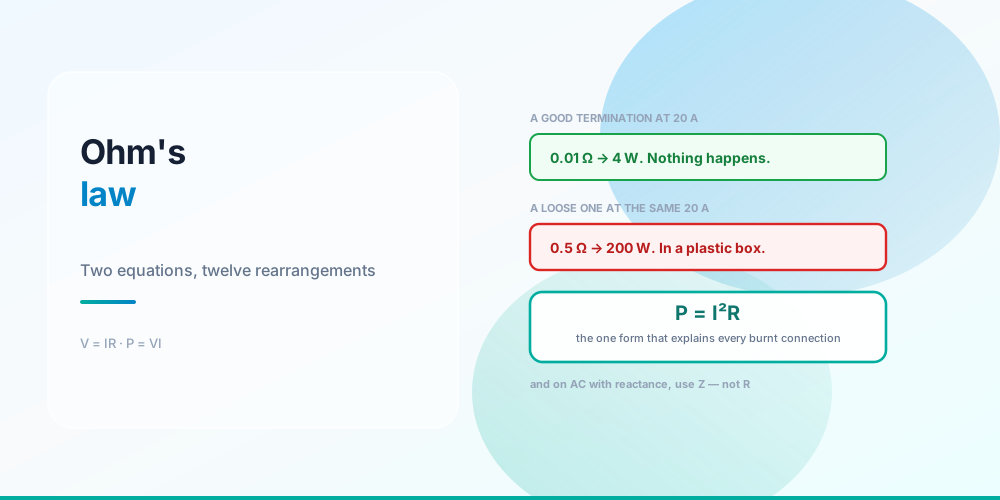
Ohm's Law Explained: V, I, R, and the Power Wheel
Two equations generate all twelve forms. The one that matters in the field is P = I²R - a loose 0.5 Ω termination at 20 A dissipates 200 W inside a plastic box.
- 04 Aug, 2026
AFCI and GFCI Nuisance Tripping: How to Actually Diagnose It
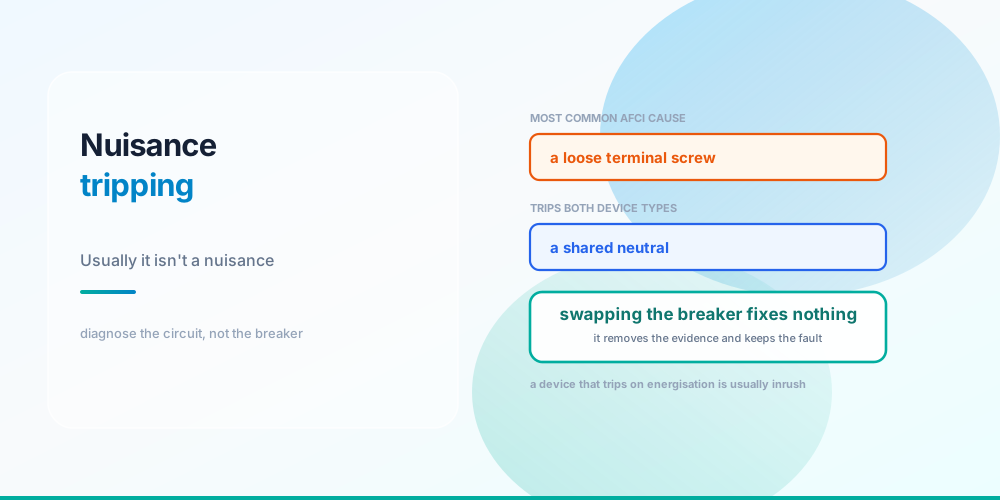
Most AFCI trips aren't nuisance trips - the commonest cause is a loose terminal screw. A shared neutral trips both device types, and swapping the breaker removes the evidence, not the fault.

- 04 Aug, 2026
Where GFCI Protection Is Required (NEC 210.8, With the 2023 Changes)
A GFCI trips at 4–6 mA; a 20 A breaker needs 20,000 mA. Here's every location 210.8 covers - and an honest account of which recent expansions your jurisdiction may have amended out.
- 04 Aug, 2026
Grounding vs Bonding: What Each One Actually Does
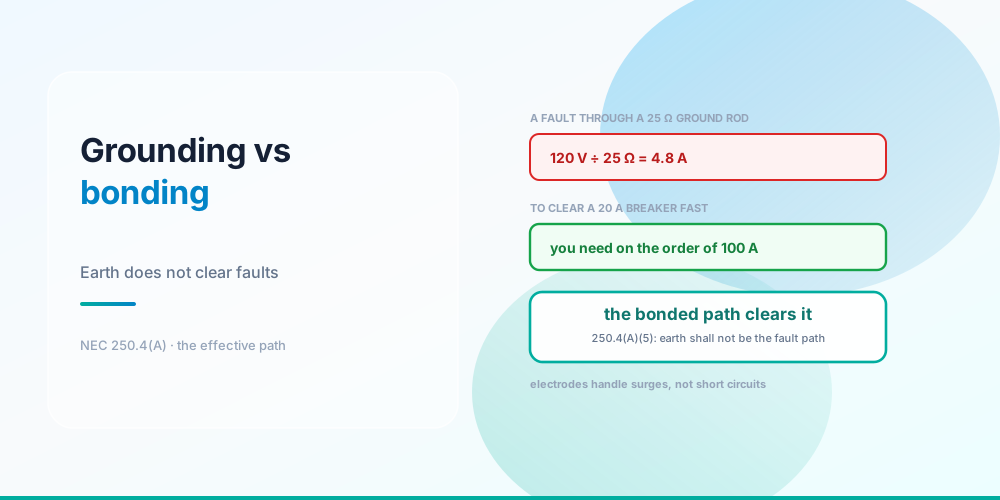
A fault through a 25 Ω ground rod passes 4.8 A at 120 V - it will never trip a 20 A breaker. Bonding clears faults; grounding handles surges. The NEC says so outright in 250.4(A)(5).
- 04 Aug, 2026
Conduit Bending: Offset, Saddle, and Stub-Up Multipliers
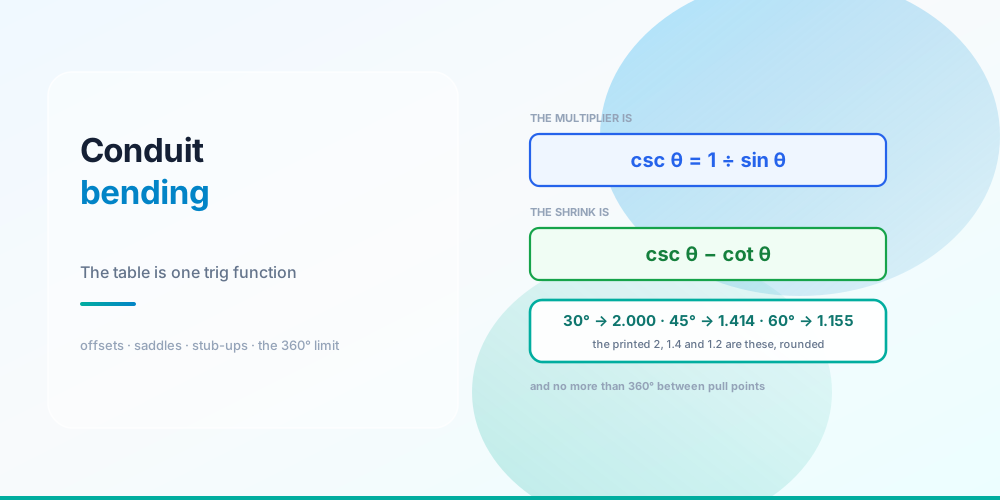
The offset multiplier is the cosecant of the bend angle - 30° is exactly 2.000, 45° is 1.414. The printed table is five rounded trig values, and shrink is csc θ − cot θ.
- 04 Aug, 2026
Receptacle Spacing Rules: The 6-Foot Rule and Kitchen Countertops
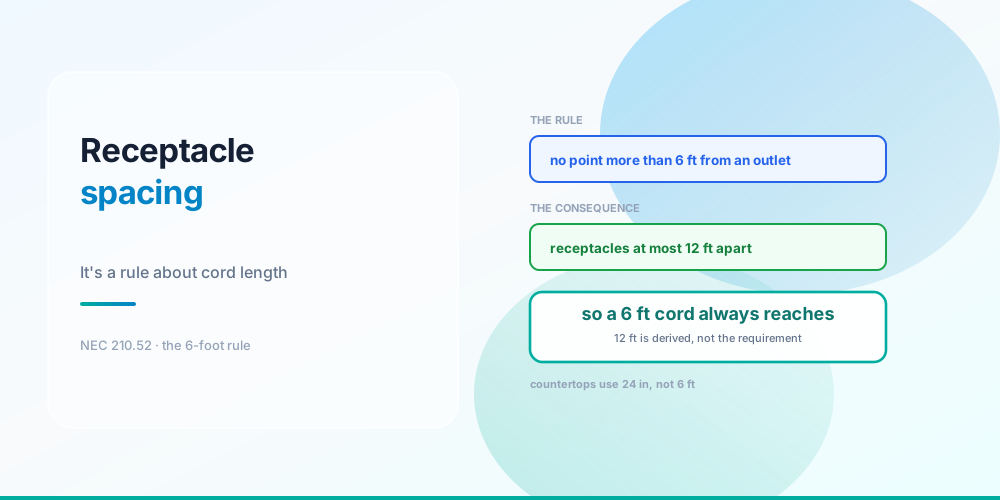
The 6-foot rule is about cord reach, not spacing - 12 ft apart is the consequence. Countertops use 24 inches instead, and the island requirement changed in the 2023 cycle.
- 04 Aug, 2026
NEC 220.87: Using Utility Data to Prove You Don't Need a Panel Upgrade
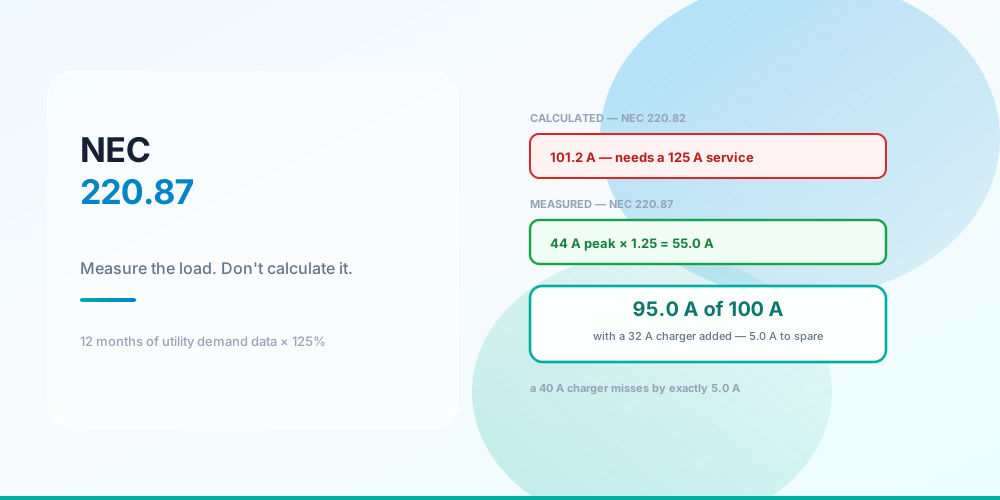
The calculated methods say this house needs a 125 A service. Its utility peak was 44 A, so 220.87 establishes 55.0 A of existing load - and a 32 A EV charger fits the 100 A service with 5.0 A spare.
- 04 Aug, 2026
Main Breaker vs Main Lug Panels: The 6-Handle Rule
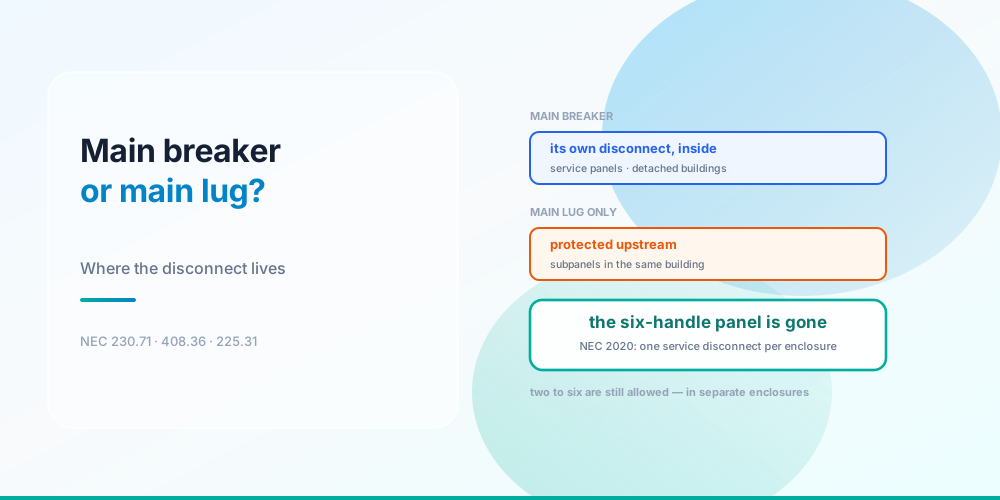
An MLO panel isn't unprotected - its busbar is protected upstream. And the six-handle panelboard is gone: NEC 2020 permits only one service disconnect per enclosure.
- 04 Aug, 2026
How Many Lights Can You Put on One Circuit?
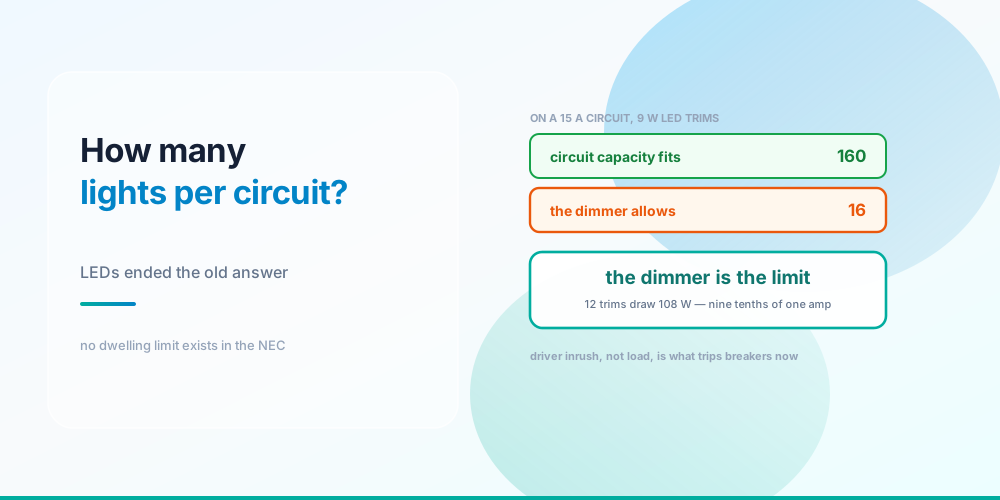
A 15 A circuit holds about 160 nine-watt LED trims. The dimmer allows 16. LEDs moved the binding constraint off the breaker entirely - and in a dwelling the NEC sets no limit at all.
- 04 Aug, 2026
The 80% Rule for Circuits: Continuous Load, Explained
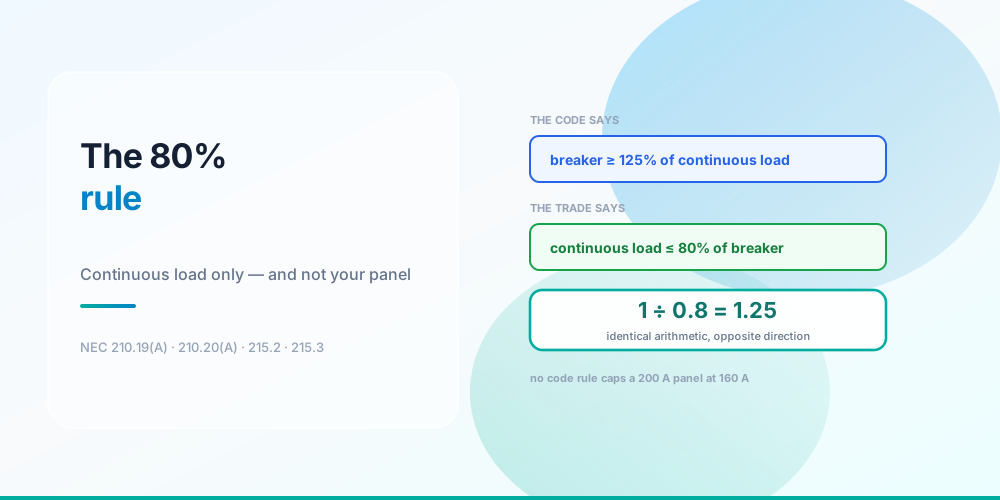
The 80% rule is just the code's 125% continuous-load factor inverted - 1 ÷ 0.8 = 1.25. It applies to continuous loads only, and it does not cap how much you may load a panel.
- 04 Aug, 2026
THHN vs NM-B vs MC Cable: Which Wiring Method Goes Where
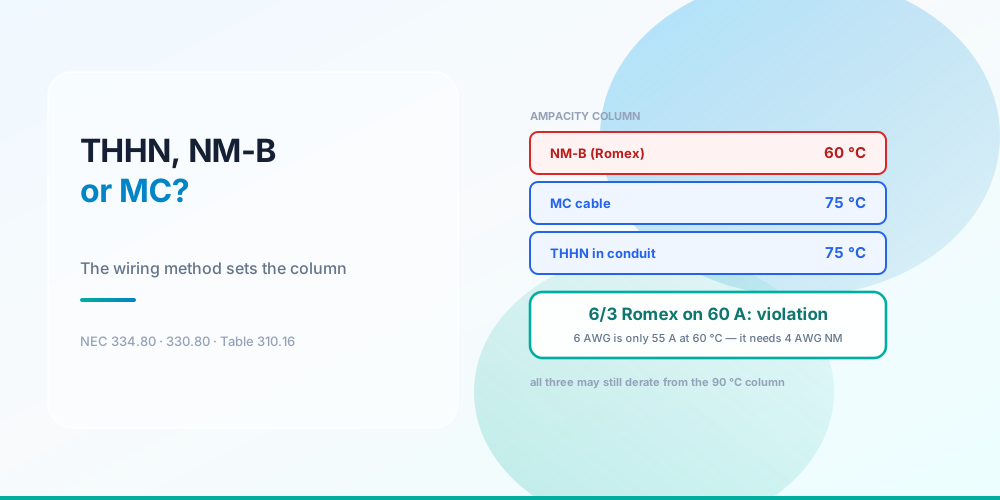
NM cable is held to the 60 °C column, MC and THHN in conduit to 75 °C. That gap costs a conductor size at five common ratings - and makes 6/3 Romex on a 60 A circuit a violation.
- 04 Aug, 2026
Copper vs Aluminum Wire: Sizing, Cost, and Where Each Belongs
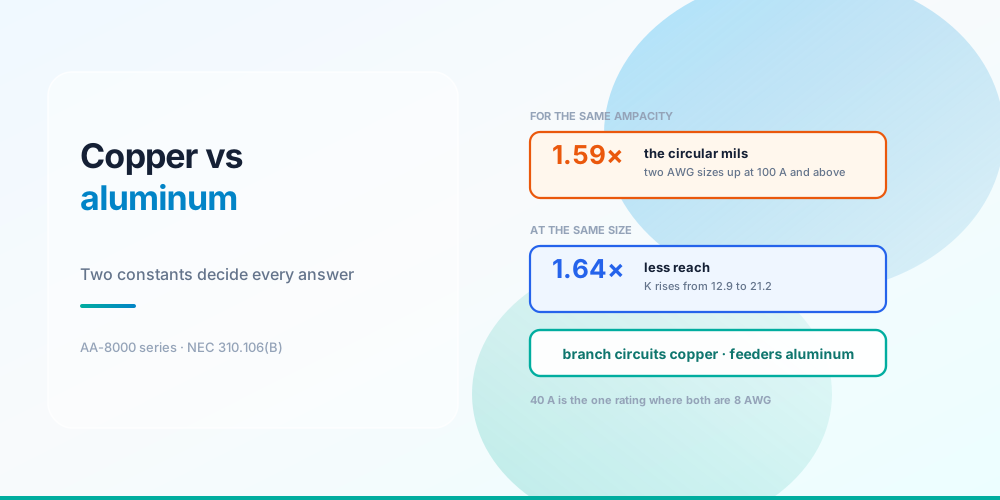
Aluminum needs 1.59× the circular mils for the same ampacity and reaches 1.64× less far at the same size. Both ratios are constants - which makes the choice a question of scale, not preference.
- 04 Aug, 2026
10 Gauge Wire Amps: Ratings, Breaker Match, and Max Run Length
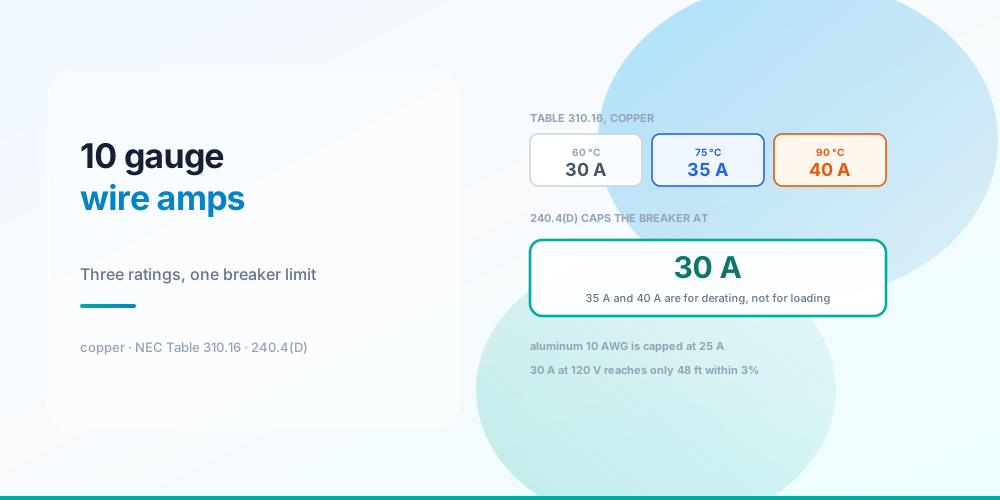
10 AWG copper is rated 30, 35 and 40 A in the three columns of Table 310.16. You may load it to 30 A - and at 30 A on 120 V it only reaches 48 feet before voltage drop stops you.
- 04 Aug, 2026
Wire Derating Explained: Ambient Temperature and Conductor Bundling
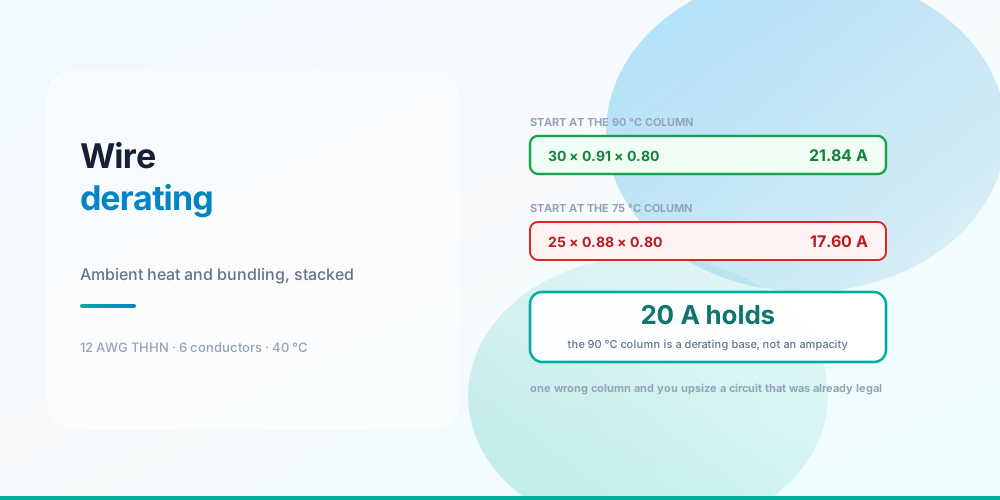
Six 12 AWG conductors at 40 °C derate to 21.84 A and hold a 20 A breaker. Start from the wrong temperature column and you get 17.60 A - and upsize a circuit that was already legal.
- 04 Aug, 2026
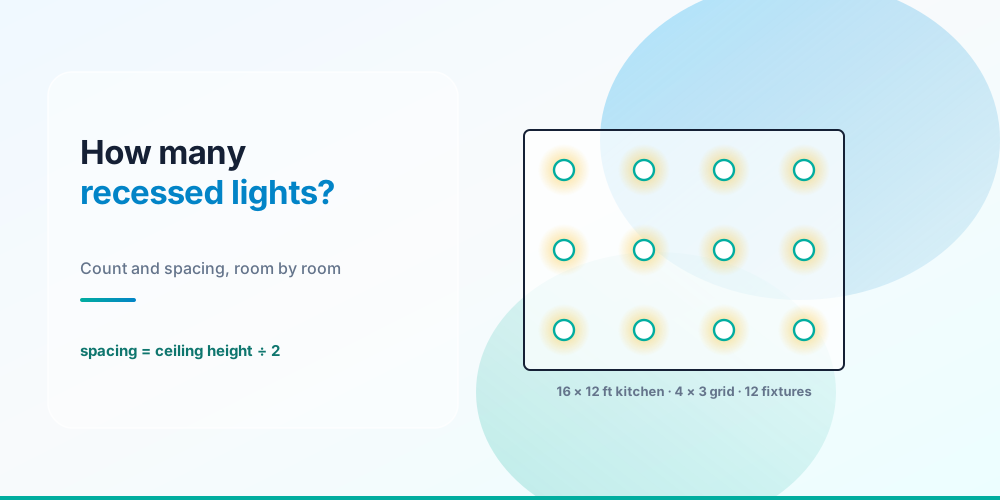
How Many Recessed Lights Do I Need? Count and Spacing by Room
Spacing equals ceiling height ÷ 2, and the wall offset is half of that - which is why a 16 × 12 kitchen lands on a 4 × 3 grid of 12. Plus the light-level cross-check, room-by-room counts, and the code that applies.
- 04 Aug, 2026
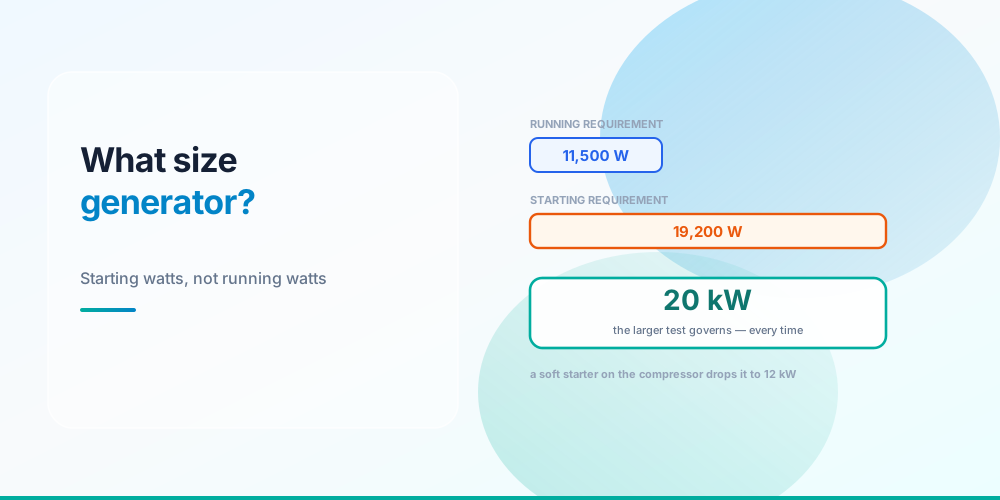
What Size Generator Do I Need? Whole-House kW by Load
Adding up running watts gets you the wrong answer. A house needing 11.5 kW to run needs 19.2 kW to start its air conditioner - so the set is 20 kW, and a soft starter takes it back to 12 kW.
- 04 Aug, 2026
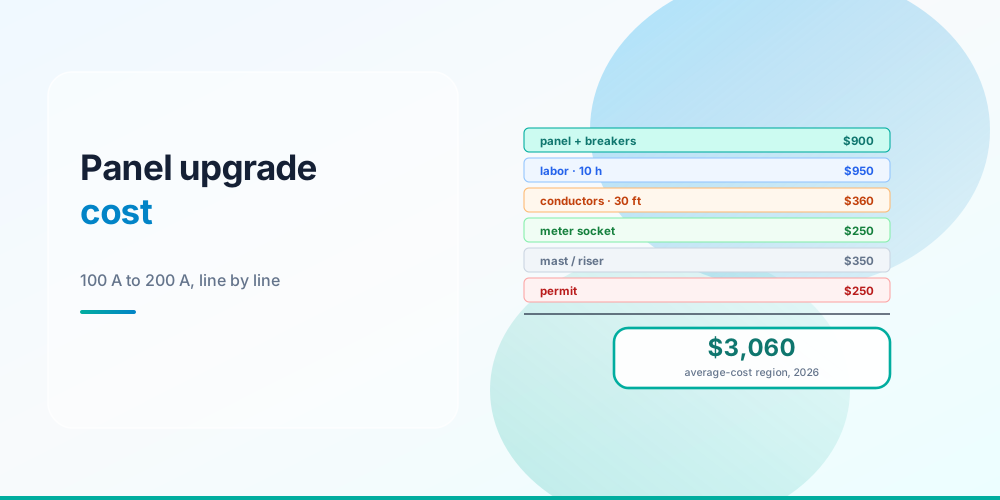
Electrical Panel Upgrade Cost: 100 A to 200 A
What a 100-to-200-amp panel upgrade actually costs, broken down line by line: panel, labor, service conductors, meter, mast, and permit. Plus the five variables that move the number and how much region changes it.
- 04 Aug, 2026
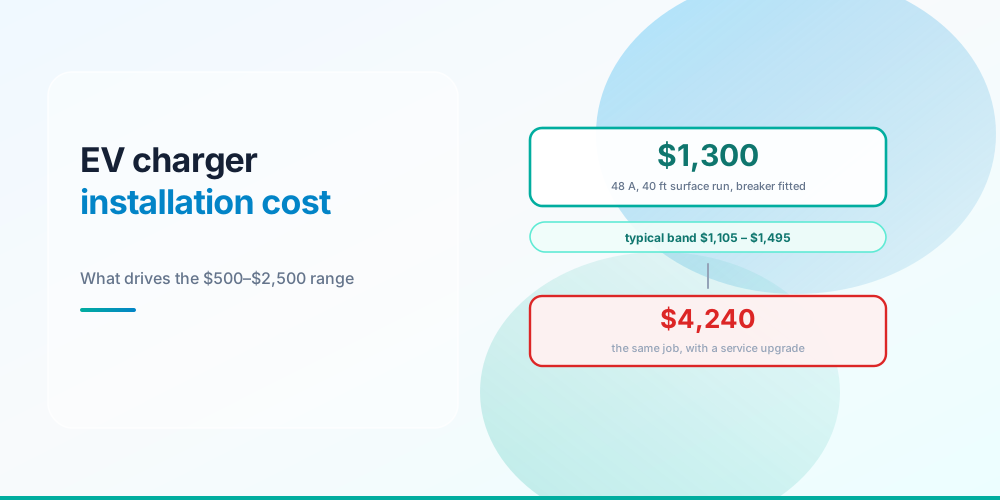
EV Charger Installation Cost: What Drives the $500–$2,500 Range
A typical Level 2 install runs about $1,300 - $280 of wire, $180 of hardware, $120 of breaker, $150 of permit and $570 of labor. Panel work is the only input that moves it by thousands, and NEC 220.87 is how you avoid it.
- 04 Aug, 2026
What Size Wire and Breaker for an EV Charger?
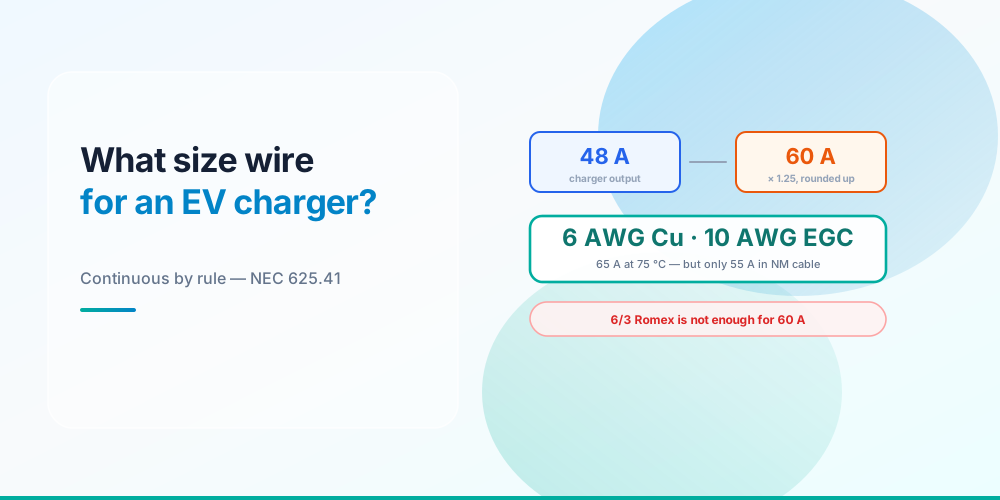
A 48 A charger needs a 60 A breaker on 6 AWG copper - because 625.41 makes EV charging continuous by rule. Plus the two traps: 6/3 Romex is not enough for 60 A, and a 50 A charger costs more than a 48 A one.
- 04 Aug, 2026
Cost to Rewire a House: Per Square Foot by Age and Access
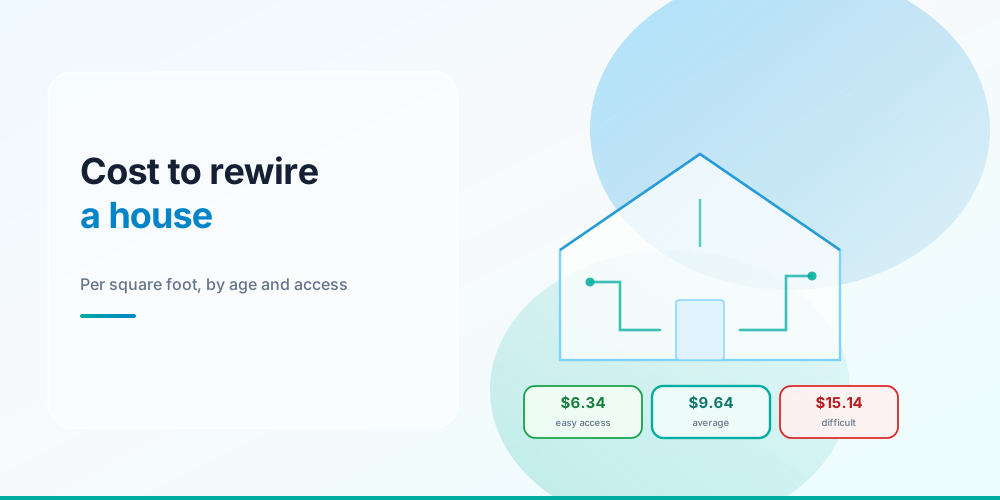
Whole-house rewiring runs $5–$17 per square foot, and wall access is what decides where you land. A worked 1,800 ft² example, what knob-and-tube and cloth wiring add, and when partial rewiring is the better spend.
- 04 Aug, 2026
Electrical Formulas Cheat Sheet: Ohm's Law to Three-Phase
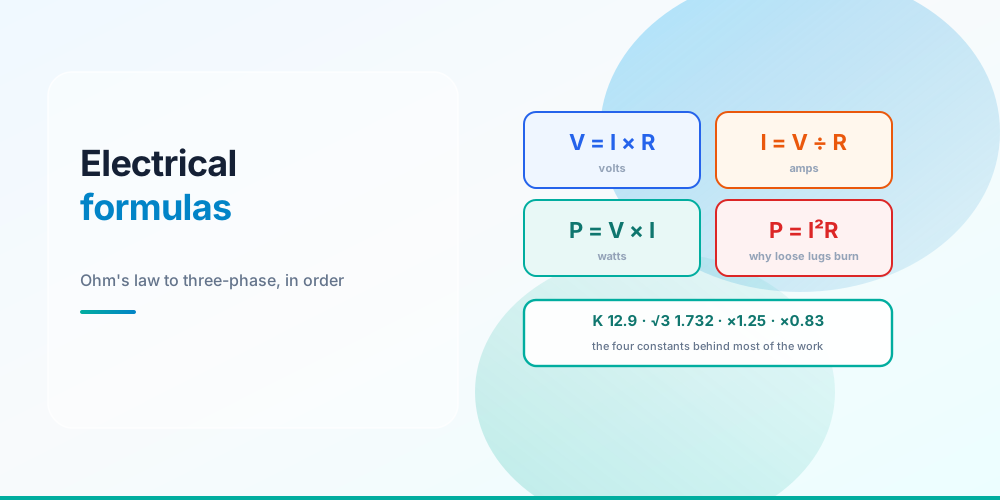
Every formula an electrician actually uses, in the order they get applied - Ohm's law, conversions, ampacity and derating, voltage drop, load calculation, fill, grounding and pricing. With the scope limits most cheat sheets leave out.
- 04 Aug, 2026
Amps to Watts: Conversion With Voltage and Power Factor
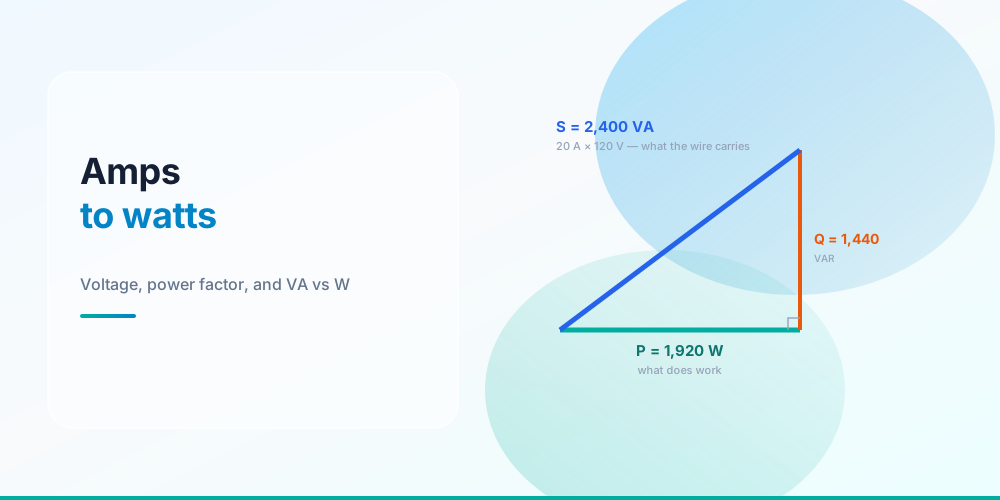
Watts = volts × amps × power factor. But amps × volts always gives volt-amperes, and only unity power factor makes them equal - plus why a 20 A breaker is 2,400 W on paper and 1,920 W in practice.

- 04 Aug, 2026
How to Estimate Electrical Jobs: Takeoff, Assemblies, and Labor Units
The five stages of an electrical estimate - takeoff, assemblies, labor units, overhead, margin - worked on a real job. Plus the markup-versus-margin error that quietly costs contractors 20% of their profit.
- 04 Aug, 2026
Watts to Amps: The Formula for DC, Single-Phase, and Three-Phase
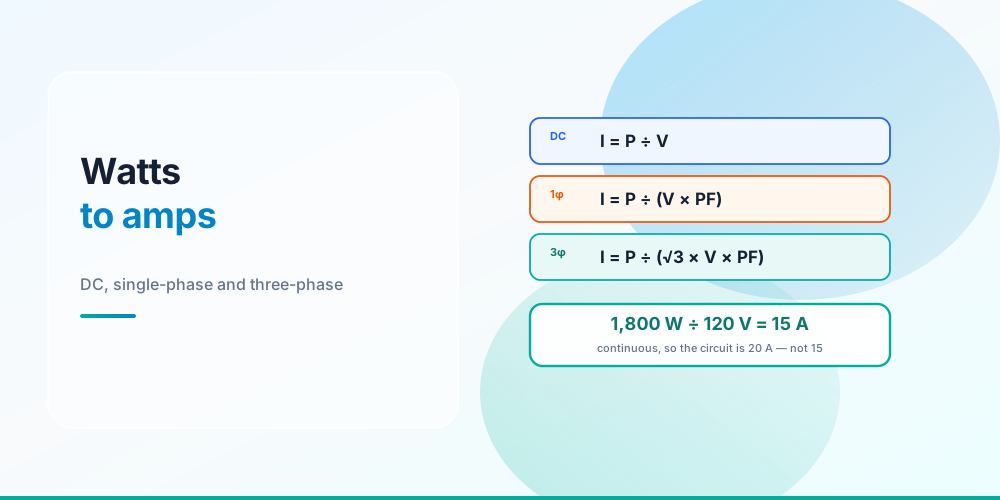
Amps = watts ÷ volts on DC, ÷ (volts × power factor) on single-phase, ÷ (1.732 × volts × PF) on three-phase. Plus the part that actually matters: why the amps you get are not the breaker size.

- 04 Aug, 2026
Electrician Hourly Rate: Apprentice, Journeyman, Master
Why a $32/hr electrician has to be billed at $105/hr, worked through step by step. The licence tiers, the payroll burden and overhead behind the rate, and why billable utilisation moves it more than anything else.
- 03 Aug, 2026
Ground Wire Size Chart: EGC vs GEC (250.122 and 250.66)
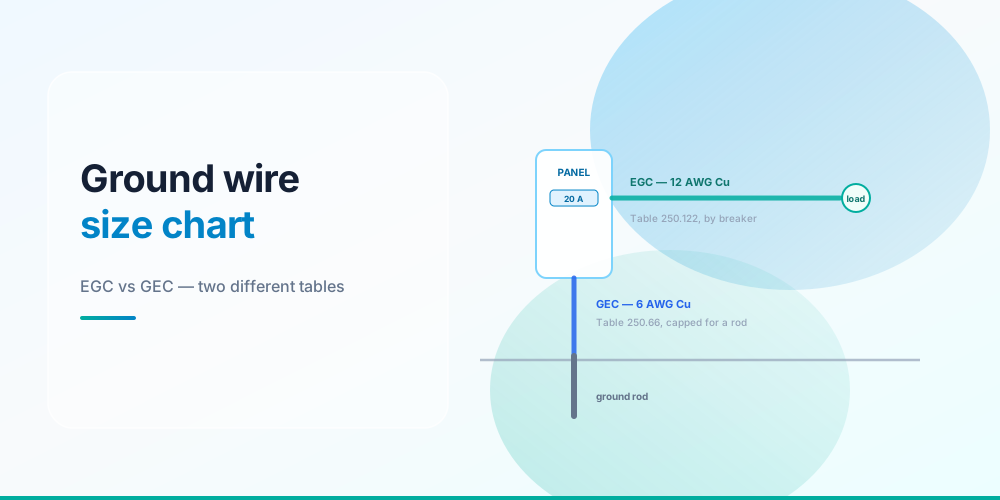
Two different conductors get called the ground wire. The EGC comes from Table 250.122 by breaker rating; the GEC comes from Table 250.66 by service conductor size, then gets capped by which electrode it lands on.
- 03 Aug, 2026
GFCI vs AFCI: What Each Protects and Where the NEC Requires It
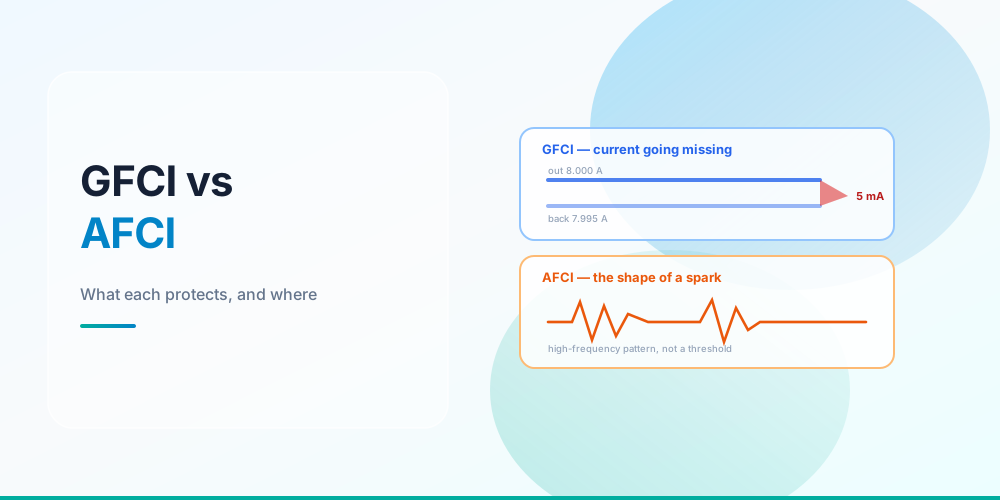
GFCI detects current leaking out of a circuit and protects people; AFCI detects arcing and protects property. Which the NEC requires in each area of a dwelling, why kitchens need both, and how to diagnose nuisance trips.
- 03 Aug, 2026
Conduit Fill Chart: How Many Wires Fit in EMT, PVC, and RMC
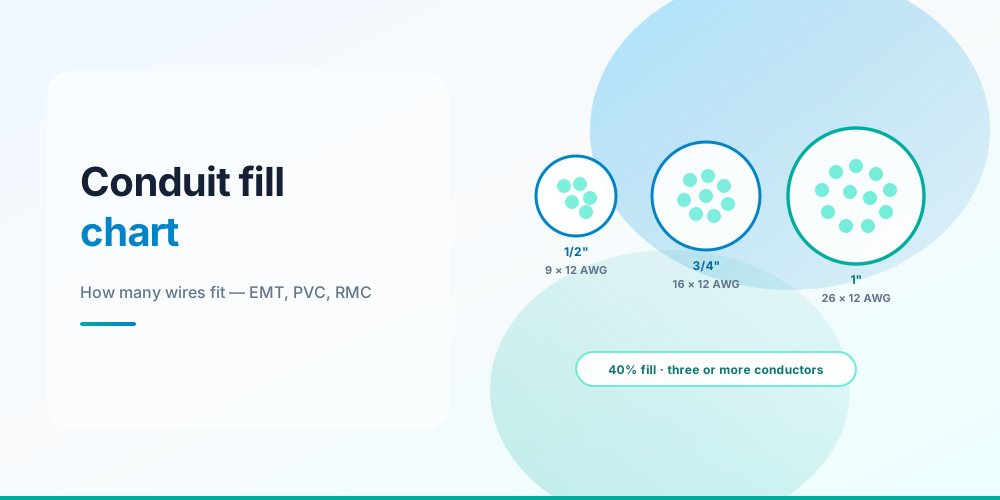
Maximum THHN conductors for every common trade size of EMT, PVC, and RMC, plus the Chapter 9 Table 1 fill limits, the 60% nipple allowance, and why bundling derating usually limits you before fill does.
- 03 Aug, 2026
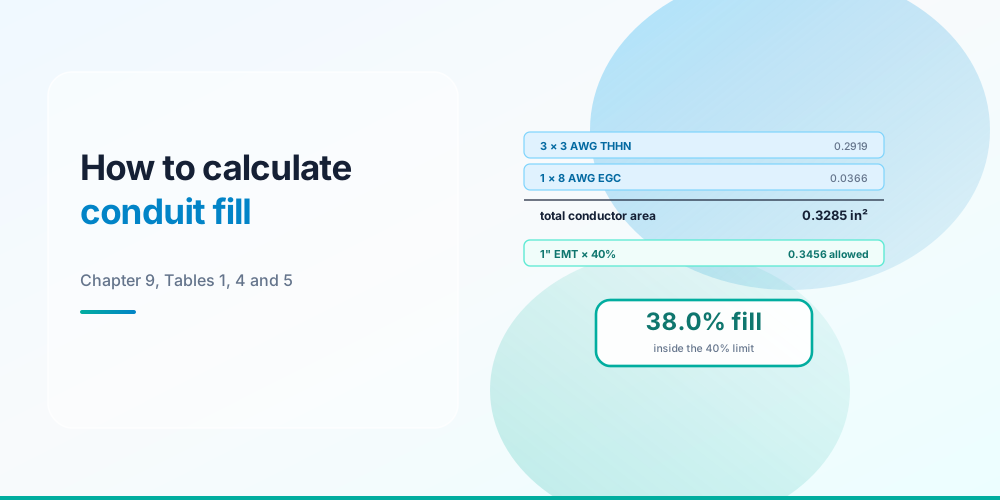
How to Calculate Conduit Fill (NEC Chapter 9, Tables 1, 4, and 5)
The Chapter 9 area method in four steps, worked on mixed conductor sizes where Annex C can't help. Includes the 60% nipple allowance and the Note 7 rounding rule that explains why Annex C sometimes reads one conductor higher.
- 03 Aug, 2026
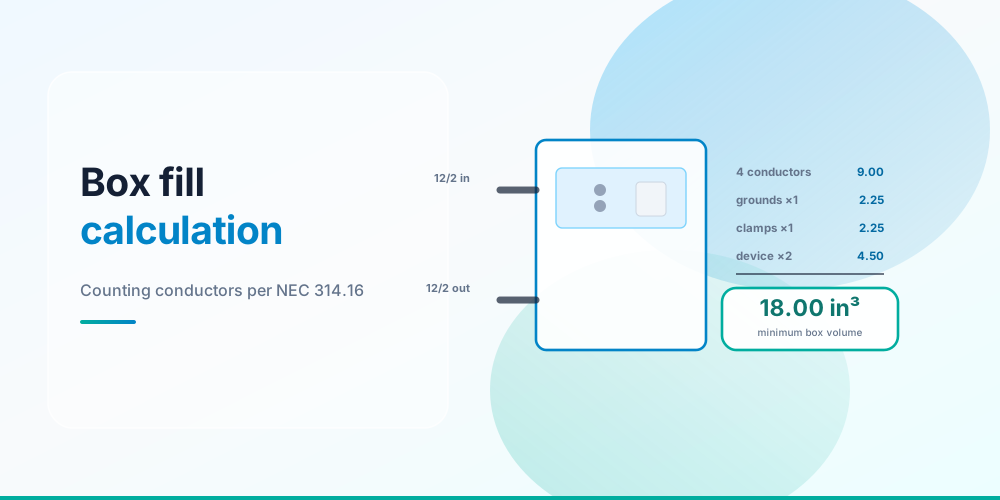
Box Fill Calculation: Counting Conductors per NEC 314.16
How to calculate box fill: the Table 314.16(B) volume allowances, what counts as one, what counts as two, what counts as nothing, and a worked single-gang example that lands on 18.00 cubic inches.
- 03 Aug, 2026
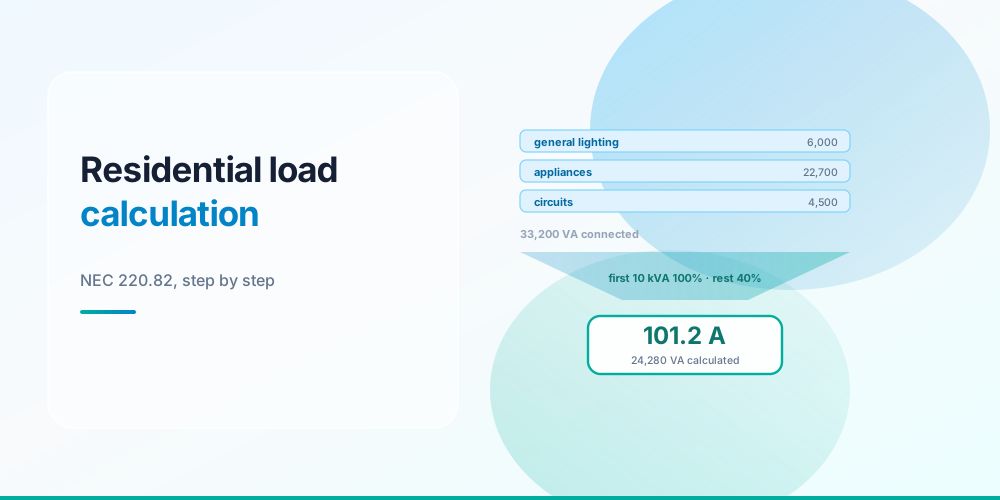
Residential Load Calculation: NEC 220.82 Step by Step
Both legal methods worked on the same house: the 220.82 optional calculation and the standard Part III method with its per-category demand factors. Why a 12 kW range counts as 8 kW, and why the two methods land 21 amps apart.
- 03 Aug, 2026
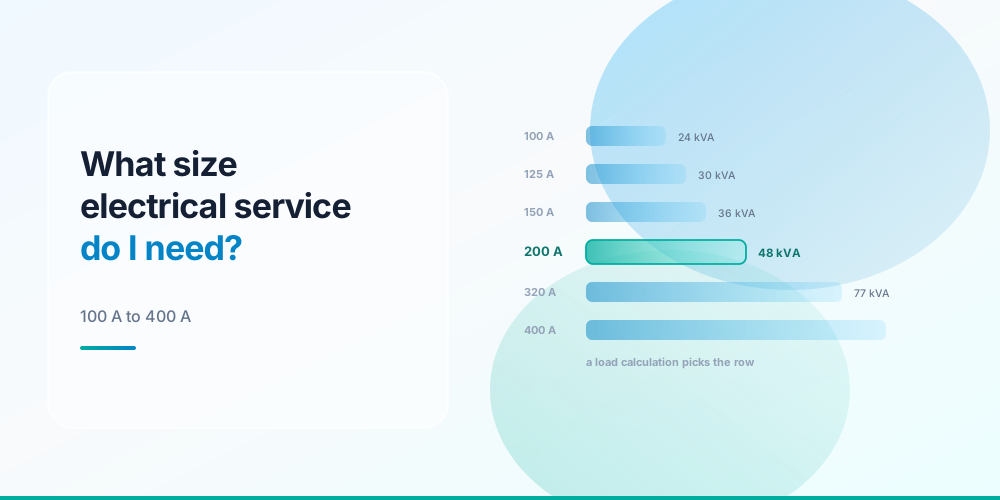
What Size Electrical Service Do I Need? 100 A to 400 A
Every standard residential service rating from 100 A to 400 A, what each one covers, the 230.79(C) minimum, why a 320 A meter is called a 400 A service, and why the service rating, main breaker, and panel busbar are three different numbers.
- 03 Aug, 2026
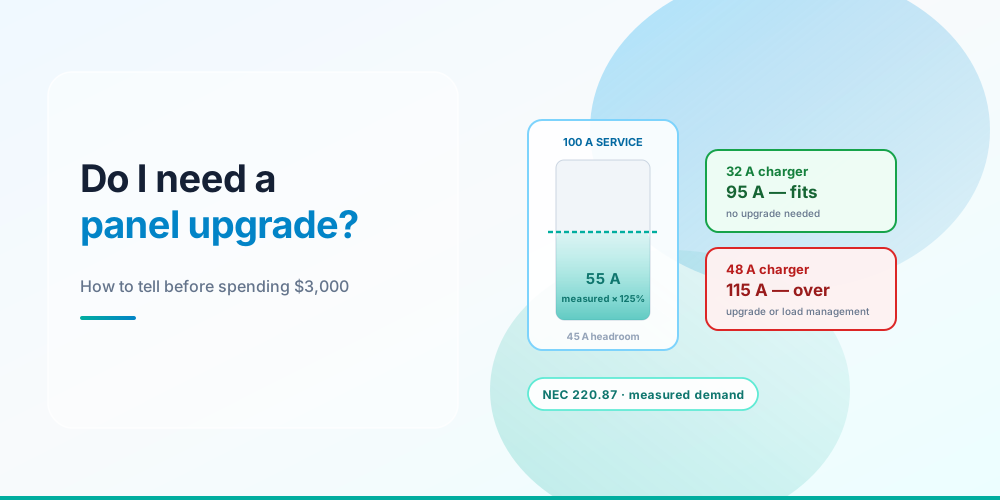
Do I Need a Panel Upgrade? How to Tell Before Spending $3,000
How to tell whether a panel upgrade is genuinely required: the NEC 220.87 measured-demand method that often proves it isn't, the difference between a full panel and a maxed service, and the panel types that get replaced regardless.
- 03 Aug, 2026
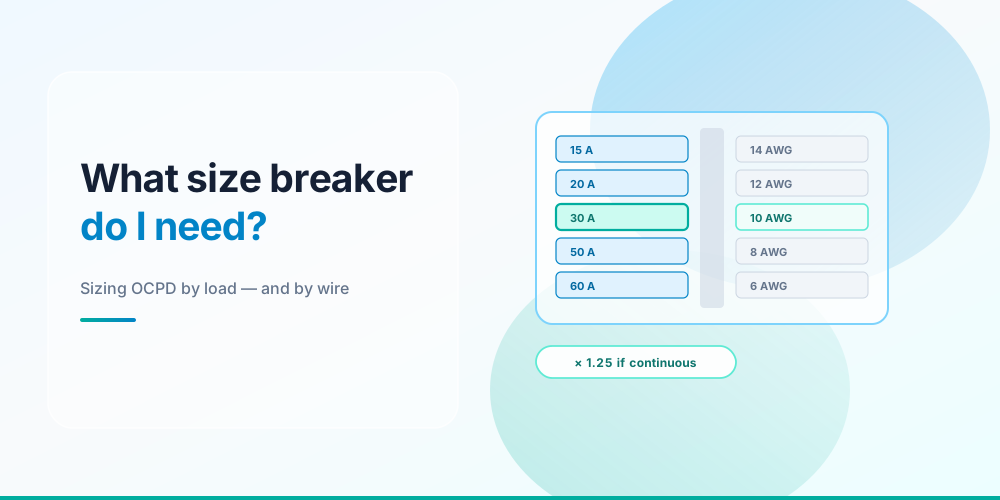
What Size Breaker Do I Need? Sizing OCPD by Load
How to size a breaker: start with the load, add 25% if it's continuous, round up to a standard 240.6(A) rating, then confirm the conductor can take it. Plus the small-conductor cap, the next-size-up rule, and why motors break all of it.
- 03 Aug, 2026
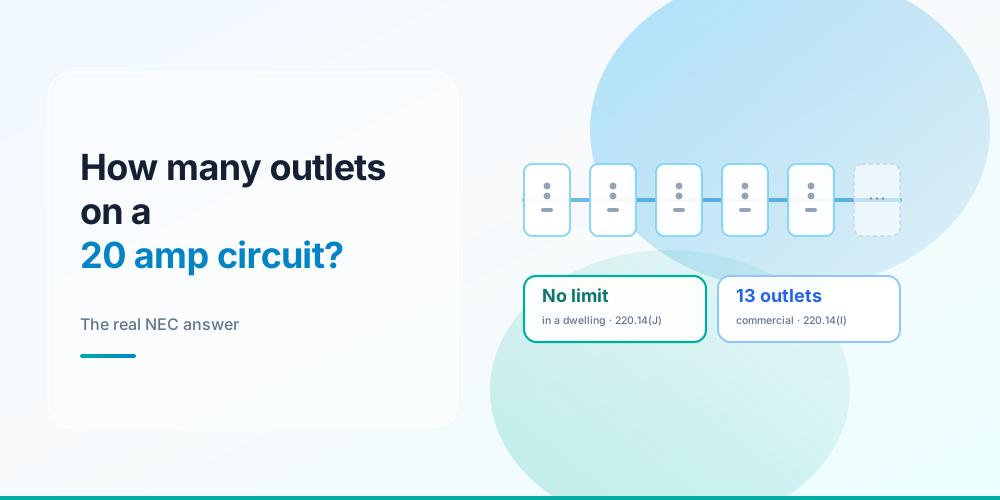
How Many Outlets on a 20 Amp Circuit? The Real NEC Answer
In a dwelling the NEC sets no limit on receptacles per circuit - 220.14(J) already counts them. In commercial work it's 180 VA each, so 13 on a 20 amp circuit. Plus the load limits that actually apply and the 8–10 working convention.
- 03 Aug, 2026
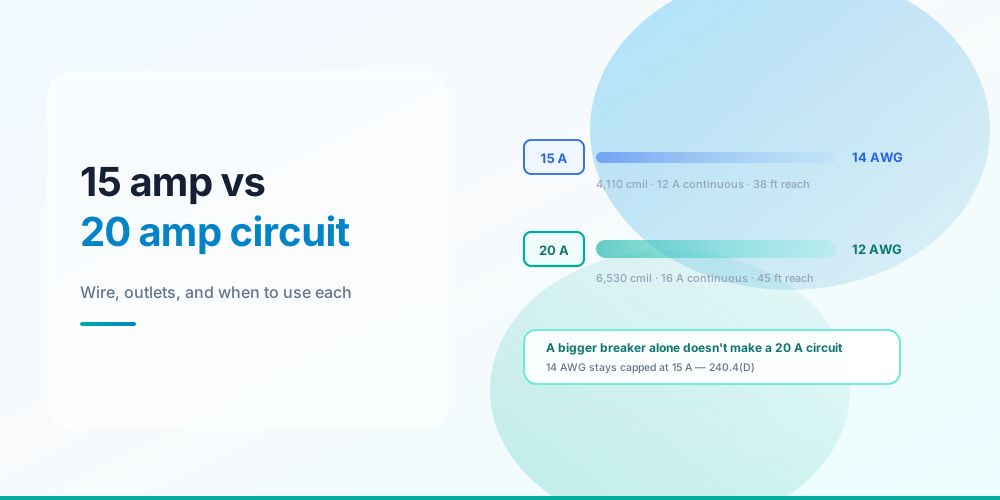
15 Amp vs 20 Amp Circuit: Wire, Outlets, and When to Use Each
The difference is the conductor - 14 AWG versus 12 AWG - not the breaker. Which receptacles are legal on each, where the NEC requires 20 amps, why you can't upgrade with a breaker swap, and how the usable load compares.
- 03 Aug, 2026
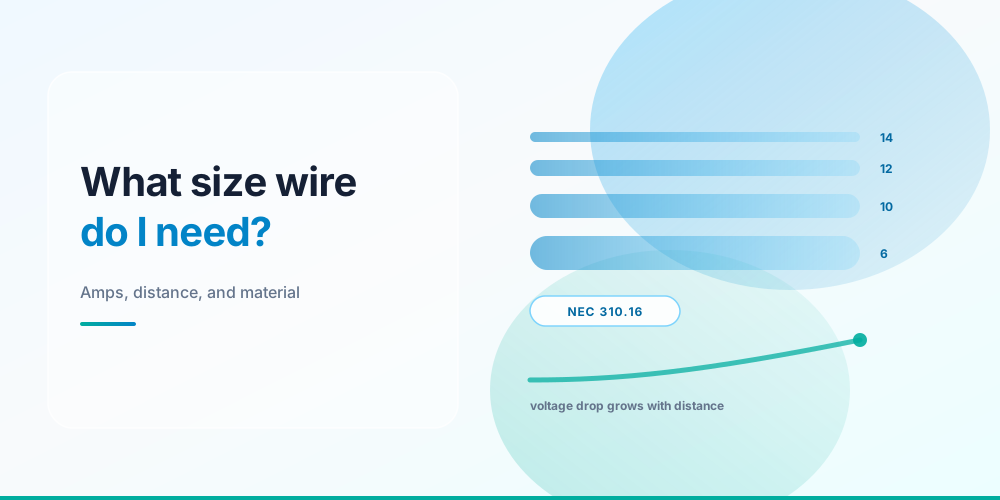
What Size Wire Do I Need? AWG by Amps, Distance, and Material
How to size wire the way the NEC does: run the ampacity test against Table 310.16, run the voltage drop test against the length, and take whichever answer is larger. Includes an amps-to-AWG chart for copper and aluminum.
- 03 Aug, 2026
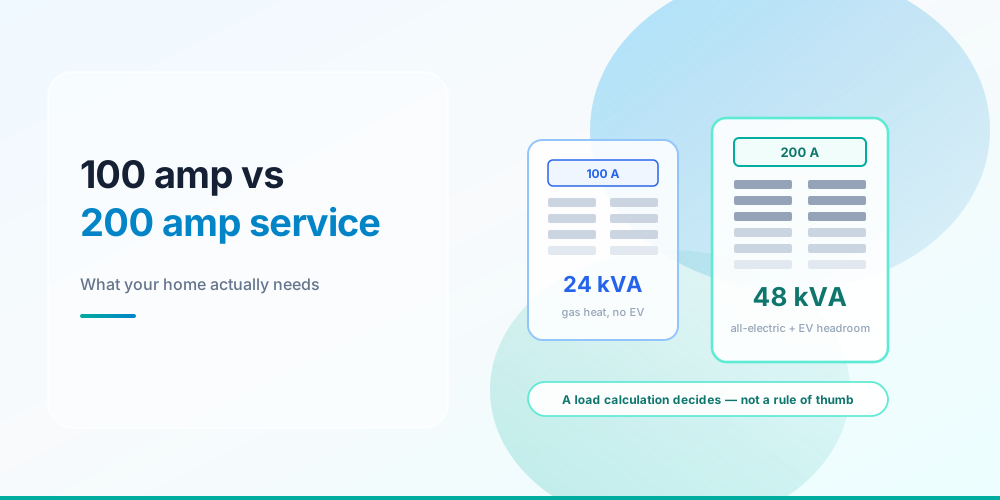
100 Amp vs 200 Amp Service: Which Does Your Home Actually Need?
A load calculation decides it, not square footage. Walk the NEC 220.82 optional method on a real house, see which loads push you past 100 amps, and learn the 220.87 method that can prove you don't need an upgrade at all.
- 03 Aug, 2026
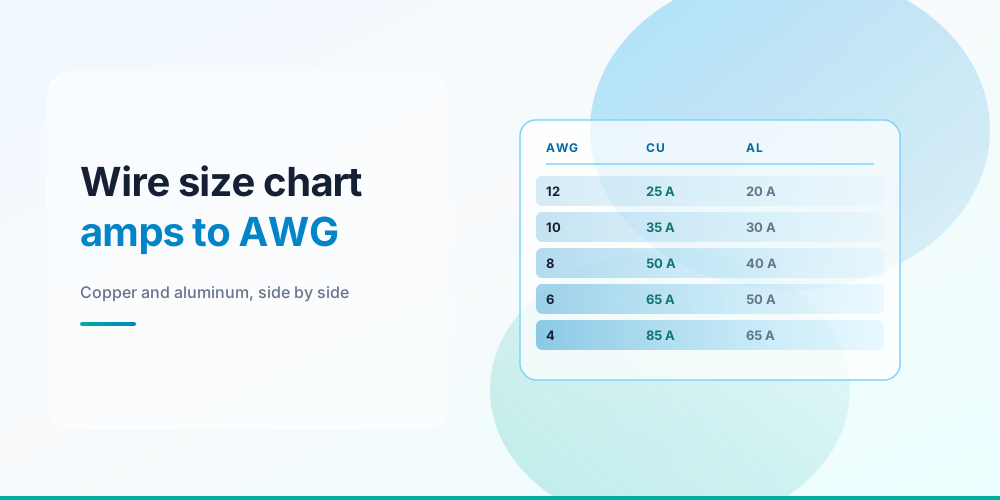
Wire Size Chart: Amps to AWG for Copper and Aluminum
The full NEC Table 310.16 wire size chart - copper and aluminum ampacity at 60, 75, and 90 °C, which column actually applies to your job, and the 240.4(D) breaker caps that override it.
- 03 Aug, 2026
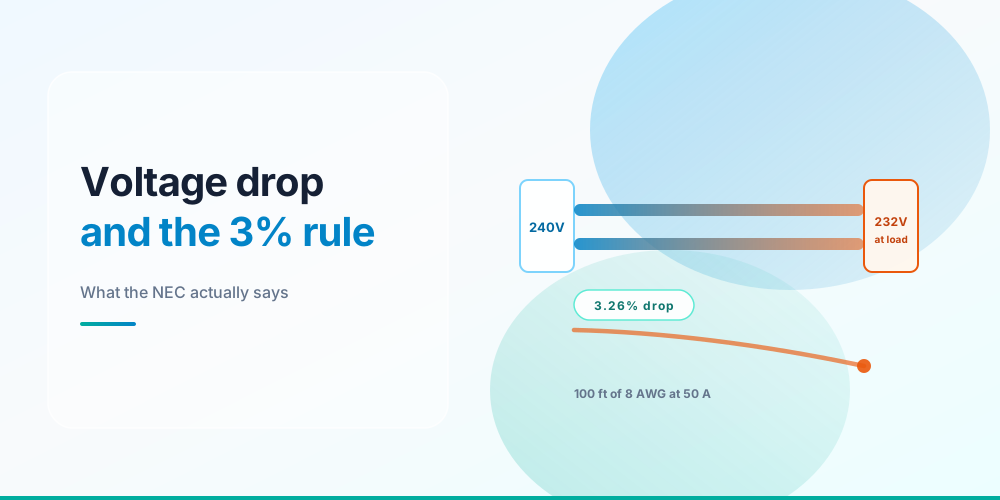
Voltage Drop: How to Calculate It and What the NEC 3% Rule Really Says
How to calculate voltage drop with the circular-mil formula, what the NEC actually says about the 3% and 5% limits (they're informational notes, not requirements), three worked examples, and how to fix a run that fails.
- 03 Aug, 2026
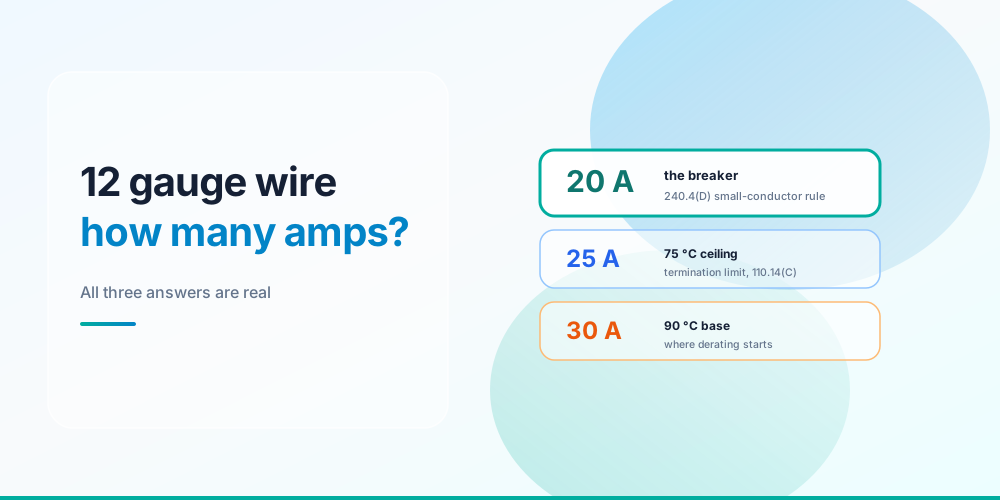
12 Gauge Wire Amps: 20 A, 25 A, or 30 A - and When Each Applies
12 AWG copper is listed at 20, 25, and 30 amps depending on the column - and all three are correct in different contexts. Which one is your breaker, which one is the derating base, and why 12 gauge never goes on a 30-amp breaker.
- 03 Aug, 2026
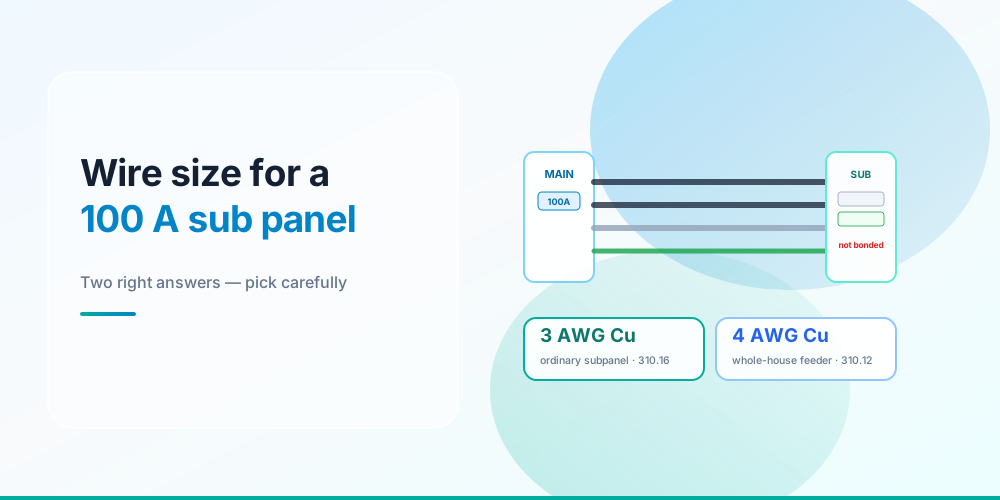
What Size Wire for a 100 Amp Sub Panel?
The answer depends on whether the feeder carries the whole house. Ordinary subpanel: 3 AWG copper or 1 AWG aluminum from Table 310.16. Whole-dwelling feeder: 4 AWG copper under the 83% rule. Plus ground size, neutral, and the bonding mistake.
- 03 Aug, 2026
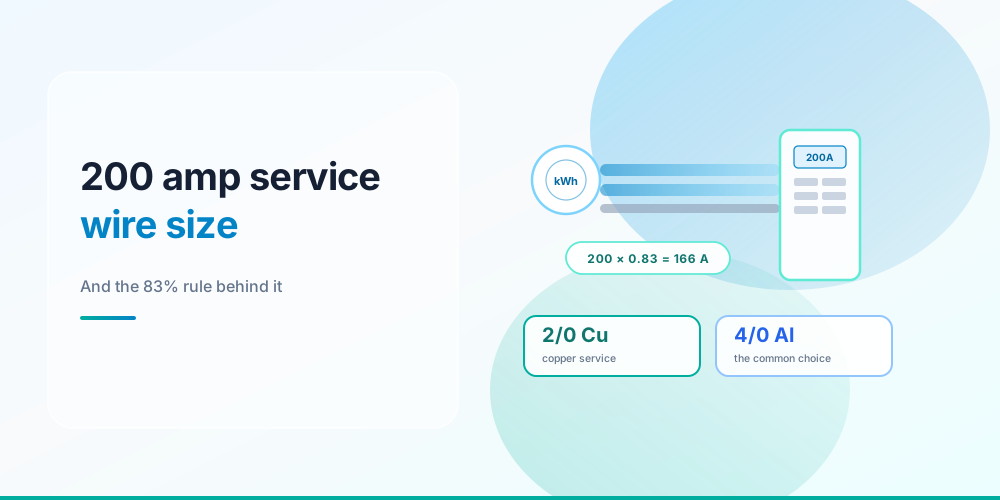
200 Amp Service Wire Size: Copper vs Aluminum and the 83% Rule
A 200 amp dwelling service takes 2/0 copper or 4/0 aluminum - smaller than the ampacity table suggests, because Table 310.12 permits 83% sizing. Where that allowance applies, the GEC size, and the neutral.
Frequently asked questions
Common questions about Electrical guides on the TradesQuote blog.
Who are these electrical articles for?+
Licensed electricians, apprentices, and trade estimators who need concise references for sizing, code-aware planning, troubleshooting context, and quoting electrical work.
Do these posts replace the NEC or engineered designs?+
No. They help you learn and estimate more efficiently. Always follow the applicable edition of the NEC, local amendments, manufacturer instructions, and engineered designs where required.